Elbow Pain
Introduction
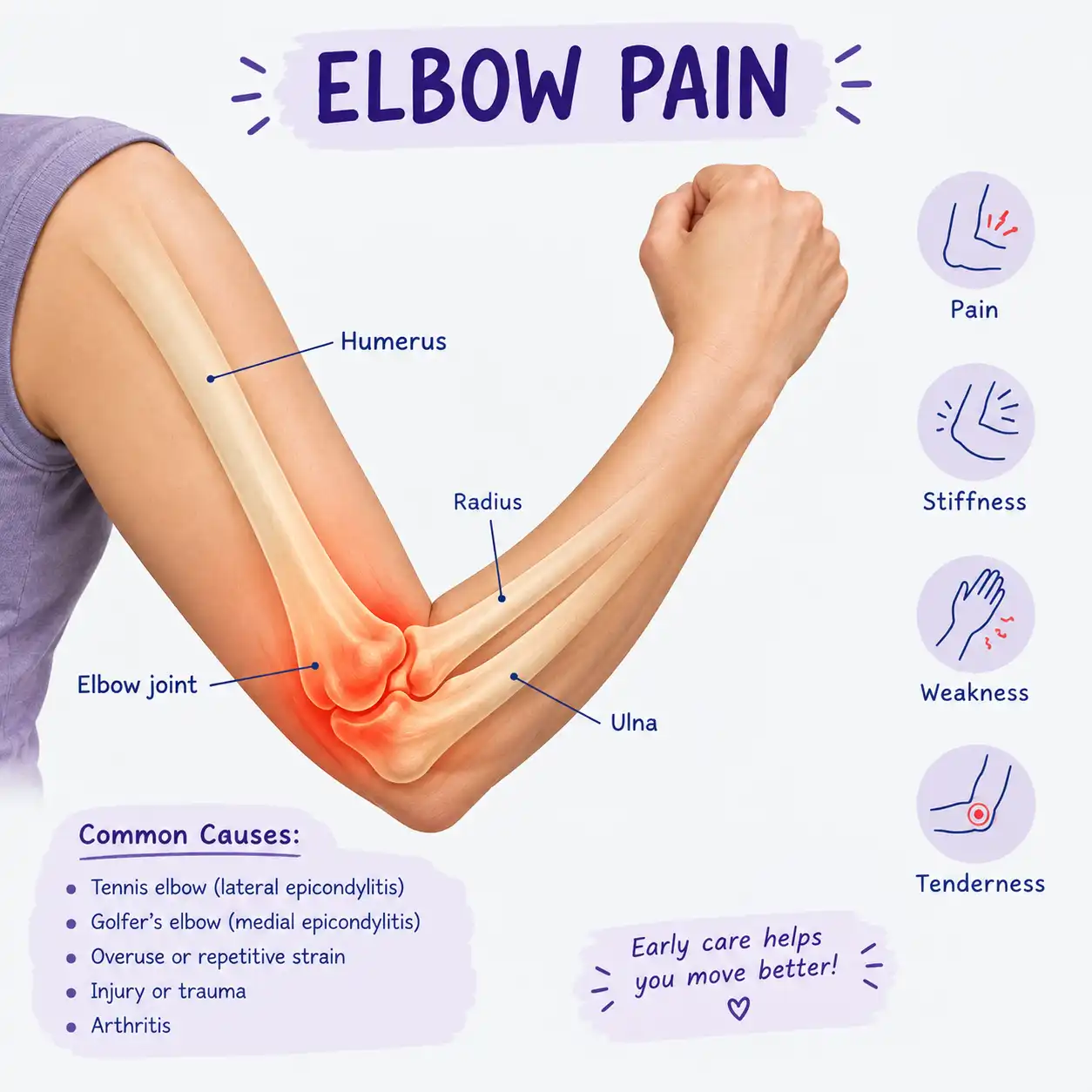
Elbow pain is a common musculoskeletal problem that can affect people of different ages and activity levels. The elbow is an important joint that connects the upper arm to the forearm and allows movements such as bending, straightening, lifting, reaching, and rotating the forearm. Because the elbow is involved in many daily activities, repeated stress or injury can cause pain, stiffness, weakness, and difficulty using the arm normally.
Elbow pain may develop suddenly after an injury, fall, or direct impact, or it may develop gradually because of repetitive movements and overuse. Common causes include tennis elbow, golfer’s elbow, muscle strains, ligament injuries, bursitis, tendon problems, arthritis, and fractures. Activities that involve repetitive gripping, lifting, throwing, typing, or wrist movements may place additional stress on the muscles and tendons around the elbow. Poor technique during sports or work can also increase the risk of developing elbow problems.
The symptoms of elbow pain can vary depending on its cause. Some people may experience aching or sharp pain around the joint, while others may notice tenderness, swelling, stiffness, weakness, or reduced movement. Pain may become more noticeable while gripping objects, lifting weights, turning a doorknob, or performing repetitive arm movements. In some cases, nerve irritation may cause numbness or tingling that travels into the forearm or hand.
Early management can help prevent elbow pain from interfering with work, exercise, and everyday activities. Treatment depends on the underlying cause and may include activity modification, appropriate rest, home-care measures, exercises, physiotherapy, medication, or other medical treatment when necessary. Physiotherapy can help improve joint mobility, flexibility, muscle strength, coordination, and functional use of the arm.
Preventing elbow pain involves using proper techniques during physical activities, maintaining good posture, taking regular breaks during repetitive tasks, and gradually increasing exercise intensity. Appropriate equipment and ergonomic adjustments can also reduce unnecessary stress on the elbow. Persistent or severe pain should be evaluated by a qualified healthcare professional to determine the underlying cause and appropriate treatment.
Causes Of Elbow Pain
Repetitive hand, wrist, or arm motions are necessary for many sports, pastimes, and occupations. Bone, muscle, tendon, ligament, or joint issues can cause elbow pain. Sometimes arthritis is the cause of elbow pain. However, compared to many other joints, your elbow joint is generally far less likely to experience wear-and-tear injury.
Elbow pain frequently results from:
- Broken arm
- Bursitis
- Cervical disc herniation
- Dislocated elbow
- Golfer’s elbow (Medial epicondylitis)
- Gout
- Osteoarthritis
- Osteochondritis dissecans
- Pseudogout
- Reactive arthritis
- Rheumatoid arthritis
- Septic arthritis
- Shoulder problems
- Sprains (and strains)
- Stress fractures
- Tendinitis
- Tennis elbow
- Throwing injuries
- Trapped nerves
Olecranon bursitis
When the bursa behind the elbow swells and becomes inflamed, it is known as olecranon bursitis. Bursae lessen friction and provide cushioning.
The bony tip of your elbow that you can feel is called the olecranon. The bone and skin are separated by a bursa.
This is why it’s sometimes referred to as “student’s elbow.”
Symptoms of Olecranon Bursitis
- The following are the primary signs of olecranon bursitis:
- Elbow movement is limited by swelling, discomfort, and warmth over the bony portion at the rear of the elbow.
- Olecranon bursitis usually resolves on its own, but if an infection is the cause, your doctor will recommend medication.
- Discuss alternative treatment choices with your physician if this doesn’t work. Aspiration is the term for this treatment.
Compression or entrapment syndromes
Weakening of your muscles and tingling in your hands and fingers.
Cubital tunnel syndrome
Rarely, arthritis may be the cause. A fracture around the nerve that has healed into a different position or the growth of new bone as the fracture heals are examples of other reasons.
Symptoms of cubital tunnel syndrome
- Cubital tunnel syndrome’s primary symptoms include:
- Numbness in your ring and little fingers becoming claw-like; this only occurs if treatment is not received.
Radial tunnel syndrome
It is an uncommon ailment. Usually, radial tunnel syndrome resolves on its own.
Symptoms of radial tunnel syndrome
Pain radiating from the outside of the elbow to the forearm is the primary sign of radial tunnel syndrome. However, radial tunnel syndrome does not cause tenderness on the outside of the elbow; instead, the issue is located further down the arm.
Distal biceps rupture
The big muscle in the front of the upper arm is called the biceps. Its lower (distal) end is connected to the upper portion of the radius via a tendon around the elbow joint, while its upper (proximal) end is joined at the shoulder. This tendon near the elbow can tear after lifting a large weight, resulting in a distal biceps rupture. The tendon snapping could be audible.
Symptoms of distal biceps rupture
- A distal biceps rupture might cause the following symptoms:
- The Popeye sign is a sudden, intense pain in the elbow that gradually goes away; bruising around the elbow and forearm within a few hours or days after the injury first occurred; the bicep changing shape and shifting up toward the shoulder; difficulty twisting the forearm to turn the palm upwards, such as when turning a door handle or using a screwdriver; your arm will feel weaker than the unaffected arm when doing this.
Tennis elbow (Lateral epicondylitis)
Overuse of the elbow’s muscles and tendons can cause tennis elbow, commonly referred to as lateral epicondylitis. Tennis elbow is frequently associated with repetitive arm and wrist motions.
The majority of persons who experience tennis elbow do not play tennis, despite the term. Tennis elbow can result from repetitive motions in certain occupations. These include butchers, carpenters, painters, and plumbers. Tennis elbow, however, frequently has no obvious etiology.
The thick, cord-like tissues of the forearm muscles join to a bony bump on the outside of the elbow, which is the primary site of tennis elbow pain. Tendons are the name for these tissues. Pain may radiate to the wrist and forearm.
Symptoms: Tennis elbow (Lateral epicondylitis)
- Pain and weakness can make it hard to:
- Shake hands or grip an object.
Turn a doorknob.
Hold a coffee cup.
Causes of tennis elbow (Lateral epicondylitis)
Tennis elbow is frequently associated with muscle strain and overuse. However, the cause is poorly known. The symptoms can occasionally be caused by repeatedly tensing the forearm muscles that are used to lift and straighten the hand and wrist. The tendon that connects the forearm muscles to the bony protrusion at the outside of the elbow may break down as a result.
The following activities can bring on tennis elbow symptoms:
- Playing racket sports with bad form, particularly when using the backhand.
- Utilizing plumbing equipment.
- Painting.
- Screws for driving.
- Chopping food, especially meat, for cooking.
- Frequently using a mouse on a computer.
Risk factors: Tennis elbow (Lateral epicondylitis)
- Age. Tennis elbow affects people of all ages.
- These include plumbers, painters, carpenters, butchers, and cooks.
Certain sports. Playing racket sports increases the risk of tennis elbow.
Golfer’s elbow (Medial epicondylitis)
Medial epicondylitis, another name for golfer’s elbow, is a disorder that hurts the inner elbow. It hurts where the tendons from the forearm muscles join the bone. Additionally, the discomfort may radiate into the wrist and down the forearm. Tennis elbow and golfer’s elbow both affect the outside of the elbow. However, golfer’s elbow occurs closer to the body on the inside of the elbow.
Golfer’s elbow is not unique to golfers, despite its name. It can develop in anyone who often utilizes their wrists or holds objects. Tennis players, pickleball players, and others whose occupations necessitate repetitive motions fall under this category.
Symptoms: Golfer’s elbow (Medial epicondylitis)
Usually, golfer’s elbow results in:
- The forearm may get sore. Certain motions, such as gripping or raising, can make pain worse, especially when using your wrist.
- Elbow stiffness. Making a fist could be painful.
- Hand or wrist weakness.
- Tingling or numbness that could reach the fingertips. The ring and little fingers are more likely to experience this.
The discomfort may begin abruptly or develop gradually. Playing racquet sports, tossing a ball, or swinging a golf club can all make it feel worse. It can also hurt to shake someone’s hand, turn a doorknob, pick up something with your palm down, and flex your wrist.
When to consult a physician
If rest, ice, and over-the-counter pain relievers don’t help your discomfort, see a doctor.
Seek immediate medical attention if:
- You have a fever, and your elbow is swollen and hot to the touch.
- Your elbow cannot be bent.
- Your elbow appears strange or misaligned.
- You believe you might have suffered a fracture.
Causes of Golfer’s elbow (Medial epicondylitis)
Overuse or injury to the tendons and muscles controlling the wrist and fingers can result in golfer’s elbow. This usually results from repeatedly performing the same action, particularly strong finger and wrist bending motions.
Golfer’s elbow may result from:
- Throwing, lifting, or striking incorrectly.
- Failing to adequately warm up before an activity.
- Having muscles that are underdeveloped or feeble.
- It’s not necessary to play golf to develop golfer’s elbow. This condition can result from a variety of occupations and sports, such as:
- Pickleball and tennis are examples of racket sports. Your tendons may be strained if you use a racket that is too tiny or heavy, have poor technique, or have too much topspin.
- Baseball, softball, football, archery, and javelin are examples of throwing sports. One typical cause is improper softball or baseball pitching mechanics.
- Lifting weights. The elbow muscles and tendons can become overworked while lifting weights incorrectly, such as by curling the wrists while performing a biceps curl.
- Jobs that need frequent arm motions. These include occupations in industries including carpentry, plumbing, and building.
- The stimulating activity usually needs to be done for a long time across several days to create golfer’s elbow.
Risk factors for golfer’s elbow (Medial epicondylitis)
Golfer’s elbow is more likely to occur if you:
- Are up to 40 year.
- Spend two or more hours a day performing repeated motions.
- Obesity.
- Possess diabetes.
- Cigarette smoking may have an impact on the health and repair of tendons.
Arthritis of the elbow
Many forms of arthritis can affect the elbow.
The most prevalent type of arthritis is osteoarthritis. The thin layer of cartilage that covers the bones of a joint begins to deteriorate. As a result, the body may develop bony spurs inside the joint, and the amount of fluid in the joint area may rise. You may experience no symptoms at all.
Unless you have a history of elbow injuries, such as a shattered bone, osteoarthritis is not particularly prevalent.
- Rheumatoid arthritis: Joints may be hot, red, stiff, and sensitive to the touch. When your immune system, which typically guards against disease and infection, becomes confused and unintentionally targets the body’s healthy tissue, it might result in autoimmune disorders.
- Psoriatic (sorry-atik) arthritis is an autoimmune disease that is linked to psoriasis (so-rye-a-sis), a skin disorder that results in red, elevated skin patches with white or silvery flakes. Joint discomfort and swelling may result from it.
- Gout is a form of arthritis that results in joint discomfort and swelling. It is caused by an accumulation of urate waste product crystals in the joints. The skin may occasionally be glossy and red, and the affected joints may be extremely painful.
Changing how you move
If you have elbow discomfort, the first thing to do is to alter or even cease any activities that may be contributing to or worsening your symptoms. Avoiding bending the elbow into specific postures can help reduce flare-ups of some illnesses, where the symptoms abruptly get worse.
It’s important to talk to an occupational therapist about any work-related activities that require repetitive motions, like painting or using a screwdriver. These medical experts can advise you on how to support your elbow while it heals and how to modify your activities.
Diagnosis Of Elbow Pain
A basic examination can diagnose and treat the majority of elbow issues, and you probably won’t require any additional testing.
An X-ray, which can reveal any new bone development, any tiny fragments of loose bone, or arthritis, may be recommended by your doctor.
Rarely, a magnetic resonance imaging (MRI) or ultrasound scan may be required to confirm or rule out a diagnosis.
A tiny gadget is applied to the skin during an ultrasound scan. An image of a portion of the interior of the body is produced by sound waves.
During an MRI, a patient must lie in a big tube while radio waves and magnetic fields create finely detailed images of the inside of the body.
If you’ve been experiencing nerve issues, you could require a nerve conduction test. To activate nerves, tiny electrodes are applied to your skin. This will gauge the speed at which messages go through the nerve, and the duration of the delay will indicate how severely the nerve is being compressed.
Treatment Of Elbow Pain
Treatment for elbow pain depends on the underlying cause, severity of symptoms, and duration of the problem. Mild elbow pain caused by overuse may improve with rest and simple self-care, while persistent or severe pain may require professional assessment.
Medical Treatment Of Elbow Pain
A healthcare professional may recommend appropriate pain-relieving or anti-inflammatory medication when required. Depending on the condition, a temporary elbow brace or support may be used to reduce stress on the affected tissues.
Physiotherapy may include therapeutic exercises, stretching, strengthening, manual techniques, and gradual functional training. In persistent or severe cases, further investigations such as X-rays, ultrasound, or MRI may be required.
Selected conditions may require injections or surgical treatment after specialist assessment. Medicines and procedures should be used under professional guidance.
Physiotherapy Treatment Of Elbow Pain
Exercise for Elbow Pain
Elbow bend
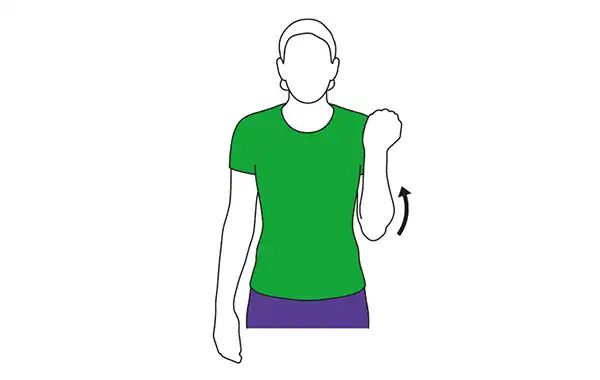
Raise one arm to the side while keeping your posture straight. Now bend your elbow. Hold for 15 to 30 seconds. Repeat ten times over, repeat.
Wrist flex
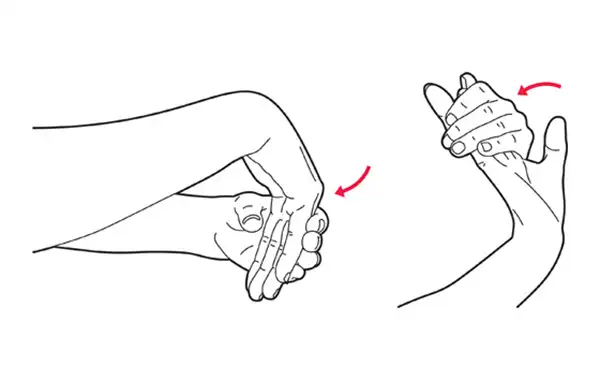
Sit on a chair and bend your wrist with your other hand on the fingers. Hold for 15 to 30 seconds. For each wrist, repeat this three times.
Wrist turn
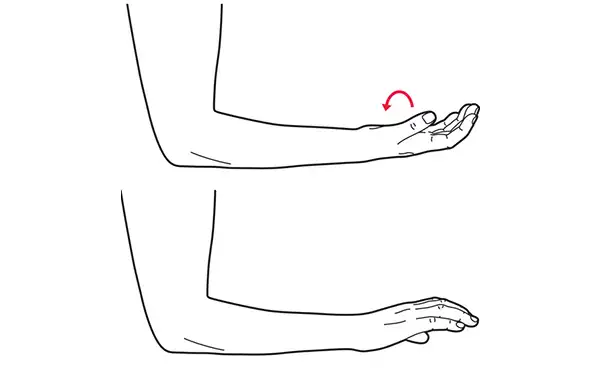
Extend your hand, palm up, while bending your elbow at a right angle. Then rotate your wrist. After five seconds of holding, gradually let go. Try to execute this thirty times in total, pausing after ten.
Wrist turn with weight
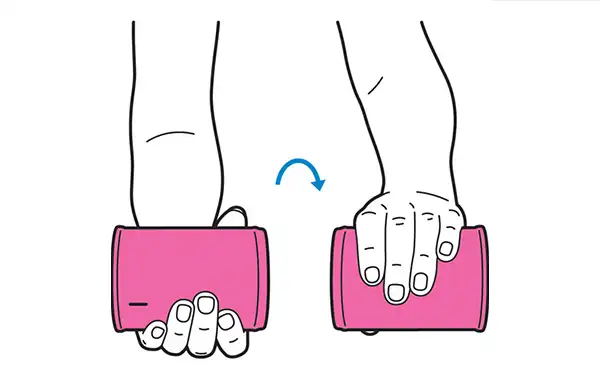
Holding a small weight, such as a tin of beans, repeat the last exercise.
Palm lift
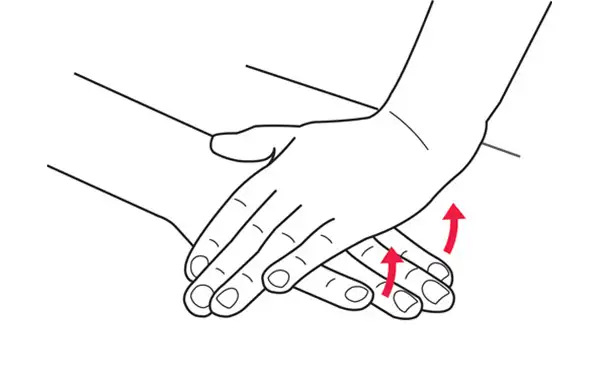
Place one hand on your other hand. As the bottom hand tries to pull up, place your other hand over the knuckles at a 90-degree angle and push down. Your forearm muscles should be contracting. Repeat after switching hands. For tennis elbow, this is a helpful basic exercise.
Wrist lift (palm down)
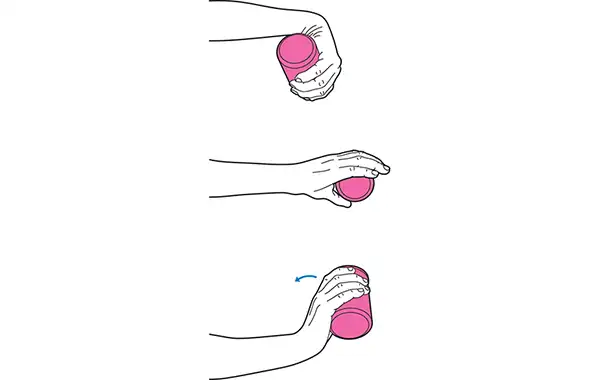
Make a straight angle with your elbow. Grasp the light weight in your hand. Slowly bend your wrist in your direction, then release it. This is an effective tennis elbow workout that should be done for eight to twelve weeks.
Wrist lift (palm up)
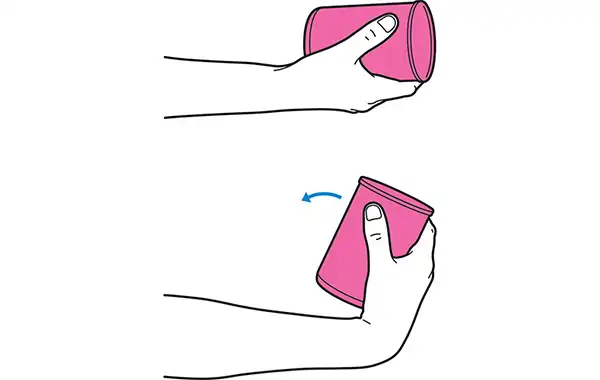
Make a straight angle with your elbow. With your hand facing up, grasp a small weight, like a tin of beans. Gently bend your wrist in your direction. After five seconds of holding, gradually let go. Do this thirty times, pausing every ten.
Home Remedies for Elbow Pain
For mild elbow pain, temporarily reduce activities that increase discomfort and allow adequate recovery time. A cold pack wrapped in a towel can be applied for about 15–20 minutes when pain or swelling is present, particularly after a recent injury or activity.
Gentle movement of the elbow, wrist, and fingers can help prevent stiffness as long as it does not worsen symptoms. For stiffness without recent swelling or injury, a warm compress may provide temporary comfort. Avoid repeatedly lifting heavy objects or gripping tightly when these activities increase pain.
Ergonomic Care Of Elbow Pain
Good ergonomics can reduce repeated stress on the elbow. Keep frequently used objects within easy reach and avoid prolonged positions that place unnecessary strain on the arm. During computer work, keep the keyboard and mouse at a comfortable height and allow the elbows to remain relaxed and close to the body. Avoid resting the elbow on hard surfaces for long periods.
When lifting objects, use both hands when appropriate and keep the load close to your body. Avoid repetitive forceful gripping, twisting, or overhead movements. Take short breaks during activities involving repeated arm movements and gently move the elbow, wrist, and fingers during these breaks.
Prevention Of Elbow Pain
Elbow pain can often be reduced by gradually increasing activity levels and avoiding sudden increases in exercise or workload. Warm up before sports or strenuous activities and use proper technique when exercising, lifting, or performing repetitive tasks. Strengthening the forearm, wrist, upper-arm, and shoulder muscles can improve support and reduce excessive strain on the elbow.
Use appropriate equipment and maintain a comfortable grip when participating in sports or work activities. Take regular breaks from repetitive movements and allow adequate recovery after strenuous activity. Maintain good posture and avoid continuing activities that repeatedly cause pain.
Seek professional assessment if elbow pain is severe, follows a significant injury, causes marked swelling or deformity, produces persistent numbness or weakness, or does not improve with appropriate self-care.
FAQs
What can I do to relieve elbow pain?
You can manage mild pain in the elbow at home by taking a break, using either ice or heat, and performing gentle stretching exercises.
Home treatment measures
Rest: Stop doing the activity that caused the injury so that the inflamed tendons can recover.
Ice: Put a cold pack without moisture, using a thin cloth,h for 15 minutes, 3-4 times a day.
Heat: Use a warm compress or heating pad for 15 to 20 minutes after the acute swelling decreases.
Painkillers: Take anti-inflammatory medications such as ibuprofen or naproxen.
Bracing: Put on a counterforce or forearm brace to prevent muscle strain.
Gentle stretches
Extensor stretch: Extend your arm and point your palm down. Gently pull your fingers down and back with another hand until you feel a mild stretch in your forearm. Stay in this position for 30 seconds.
Gently push your fingers down. Stay in this position for 30 seconds.
Which deficiency causes elbow pain?
Deficiencies of Vitamin D and Vitamin B12 are commonly associated with elbow and arm pain, but in fact, elbow pain is usually due to strain and not vitamin deficiency.
Deficiencies that can Cause Elbow Pain
Vitamin D Deficiency: Decreases bone strength, negatively affects muscle function, and inhibits recovery of tendons, which can result in pain and discomfort in joints or the development of tennis elbow.
Vitamin B12 Deficiency: Results in nerve damage and causes tingling, numbness, or similar sensations.
Calcium Deficiency: Decreases the density of bones and disrupts muscle activity, leading to joint and muscle pain.
Common Causes of Elbow Pain That Are Not Deficiency-related
Tennis Elbow (lateral epicondylitis): Pain in the outer elbow caused by overuse of the forearms.
Golfer’s Elbow (medial epicondylitis): Pain in the inner elbow caused by overexerting flexor muscles.
Repetitive Strain: Pain due to strenuous lifting, typing, or sports.
What are the main tendons in the elbow?
Tendons are robust strips of tissue that link the muscles of the elbow to the bones.
Important Tendons in the Elbow
Biceps tendon: Connects the biceps muscle at the front of your arm to the radius and helps you bend and twist the forearm.
Triceps tendon: Connects the triceps muscle at the back of the arm to the ulna and extends the elbow.
Common extensor tendon: A common tendon located on the outer side of the elbow where the forearm extensor muscles are attached.
Common flexor tendon: A reference point for tendons related to forearm flexion located at the inner side of the elbow.
Common Tendon-Related Problems
Tennis elbow (lateral epicondylitis): Pain and micro-injury of the lateral elbow tendon (the extensor carpi radialis brevis, in most cases).
Golfer’s elbow (medial epicondylitis): Pain caused by repeated flexion of the wrist.
Tendon ruptures: Injuries when either the biceps or triceps tendon is completely or partially torn off the bone, commonly requiring a medical evaluation.
Will elbow pain go away?
In fact, pain in the elbow may often resolve naturally or with simple home treatment, although the time required for healing depends entirely on the underlying reason.
Time taken to heal based on the cause
Minor sprains and strains: These generally heal within a few weeks after rest and at-home treatment.
Bursitis: The swelling and pain in the elbow often subside with self-care; however, affected cases require medical attention.
Tennis and golfer’s elbow: Injuries related to the tendons should take between six weeks and several months, and sometimes even longer period for full recovery.
Recommendations for home therapy:
Rest: Stop doing the activity that causes pain.
Icing: Apply ice packs for 15-20 minutes, several times a day to lessen swelling.
Bracing: Consider using a counterforce brace or forearm strap to relieve tension from injured tendons.
Medications: Consider using over-the-counter anti-inflammatory medications such as ibuprofen if necessary.
When to seek medical assistance:
You should see a doctor if:
You do not notice any improvement after six weeks of home treatment.
It is impossible for you to bend, straighten, or move your arm.
You feel severe swelling, numbness, tingling, or bruising.
What is the best pain reliever for the elbow?
Diclofenac gel, a topical nonsteroidal anti-inflammatory drug (NSAID), is a good choice for localized elbow discomfort since topical NSAIDs treat inflammation with fewer side effects than oral drugs.
Over-the-Counter Choices
Topical creams: Diclofenac (Voltaren) is a topical cream that relieves localized pain without entering the bloodstream.
Oral NSAIDs: Drugs like ibuprofen (Advil, Motrin) or naproxen (Aleve) relieve pain and inflammation in the whole body.
Analgesics: Acetaminophen (Tylenol) is used to reduce pain but does not help with inflammation.
Non-Medical Relief
Applying Ice: Ice packs can be used to reduce pain and swelling.
Rest and Bracing: Avoid activities that can aggravate the pain, and use a brace or elbow straps to relieve the strain on the affected muscles.
Gentle Stretches: Once the acute pain resolves, simple exercises can be used for stretching the forearm and wrist.
Should you massage elbow tendinitis?
Certainly, massage can help alleviate elbow tendinitis (e.g., tennis elbow) by alleviating muscle stress, enhancing blood circulation, and breaking down scar tissue in the forearm.
How Massage Works
Relaxes the muscles in the forearm: The tension in the forearm muscles continuously pulls on the elbow tendon. Massage the muscle belly to eliminate this tension.
Increases blood circulation: Improved blood circulation delivers nutrients to the site, promoting tissue healing.
Soothes nerve signals: Manual pressure stimulates the sensory receptors, decreasing pain signals transmitted to the brain.
Most Effective Methods to Use
Muscle stripping: Apply slow and steady pressure using your thumbs or fingers along the length of the forearm muscle from the wrist to the elbow.
Cross-fiber friction: Use your index finger or thumb to rub the tender area on the outer elbow for several minutes with pressure comfortable for you.
Trigger point therapy: Find tight areas in the forearm muscle and press with a lot of force for 30 to 60 seconds until the tension is relieved.
Precautionary measures to take
Avoid putting too much pressure during flare-ups: In the case of a recent injury or a very hot, swollen, or painful elbow, do not use too much pressure on the tendon or massage guns.
Target the muscles: Use gentle techniques on the muscles of the forearm and avoid using massage treatments directly on the elbow during painful flare-ups.
Combine with other care: Massage may give temporary relief, and it works even better when combined with rest, gentle stretching, and progressive strengthening exercises.
Do elbow tendons heal on their own?
Elbow tendons might heal without intervention, as seen in moderate cases of tendonitis. However, extremely severe injuries, including tendon ruptures,s often require surgical treatment.
Minor Injuries and Overuse Injuries (including tendonitis or tendinopathy).
Time to heal: These minor cases usually resolve in less than a year through conservative measures.
At-home treatment: Rest, ice, pain-relieving medications available over the counter (i.e., ibuprofen), and putting on a counterforce brace help to deal with excessive strain.
Physiotherapy: Special exercises and proper strengthening techniques may be needed to get a degenerative tendon out of a state of failed healing.
Severe and Complete Tears
Requires surgical intervention: A tendon that is completely torn or ruptured (for example, biceps or triceps rupture) cannot heal on its own, so surgery is required.
Visit a doctor: You should consult a specialist only if your pain persists and does not let you perform everyday tasks for a few weeks.
References
- Cadman, B. (2025, October 3). Eight exercises for tennis elbow. https://www.medicalnewstoday.com/articles/322746
- Checking your browser – reCAPTCHA. (n.d.). https://pmc.ncbi.nlm.nih.gov/articles/PMC4617264/
- DMediaWeb. (2026, March 26). Help your injured elbow: 7 physical therapy exercises. Fort Worth Hand Center. https://fortworthhandcenter.com/orthopedic/physical-therapy-exercises-injured-elbow/
- Elbow pain. (n.d.). Arthritis UK. https://www.arthritis-uk.org/information-and-support/understanding-arthritis/conditions/elbow-pain/
- Elbow pain: Causes & treatment specialists. (n.d.). UW Health. https://www.uwhealth.org/conditions/elbow-pain
- Elbow pain when bending and straightening? 5 common causes and remedies for relief. (n.d.). https://www.bswhealth.com/blog/elbow-pain-when-bending-and-straightening
- Exercises for the elbows. (n.d.). Arthritis UK. https://www.arthritis-uk.org/information-and-support/living-with-arthritis/health-and-wellbeing/exercising-with-arthritis/exercises-for-healthy-joints/exercises-for-the-elbows/
- Farotech. (2026, February 23). Elbow pain when bending and straightening? 7 possible causes. EmergeOrtho. https://emergeortho.com/news/elbow-pain-when-bending-and-straightening/
- Healthdirect Australia. (n.d.). Tennis elbow. Symptoms, Causes and Treatment | Healthdirect. https://www.healthdirect.gov.au/tennis-elbow
- King, C. (2023, September 19). What to know about elbow pain that occurs when lifting something. https://www.medicalnewstoday.com/articles/elbow-pain-when-lifting
- NHS Inform. (2026a, July 28). Exercises for elbow problems | NHS Inform. NHS Inform. https://www.nhsinform.scot/illnesses-and-conditions/muscle-bone-and-joints/arm-shoulder-and-hand-problems-and-conditions/exercises-for-elbow-problems/
- NHS Inform. (2026b, August 21). Elbow problems | NHS Inform. NHS Inform. https://www.nhsinform.scot/illnesses-and-conditions/muscle-bone-and-joints/arm-shoulder-and-hand-problems-and-conditions/elbow-problems/
- Professional, C. C. M. (2026, May 21). Elbow pain. Cleveland Clinic. https://my.clevelandclinic.org/health/symptoms/elbow-pain
- Tennis elbow (Lateral epicondylitis). (2023, October 11). WebMD. https://www.webmd.com/fitness-exercise/tennis-elbow-lateral-epicondylitis
- Video exercises for elbow pain. (2020, July 30). The Chartered Society of Physiotherapy. https://www.csp.org.uk/conditions/elbow-pain/video-exercises-elbow-pain