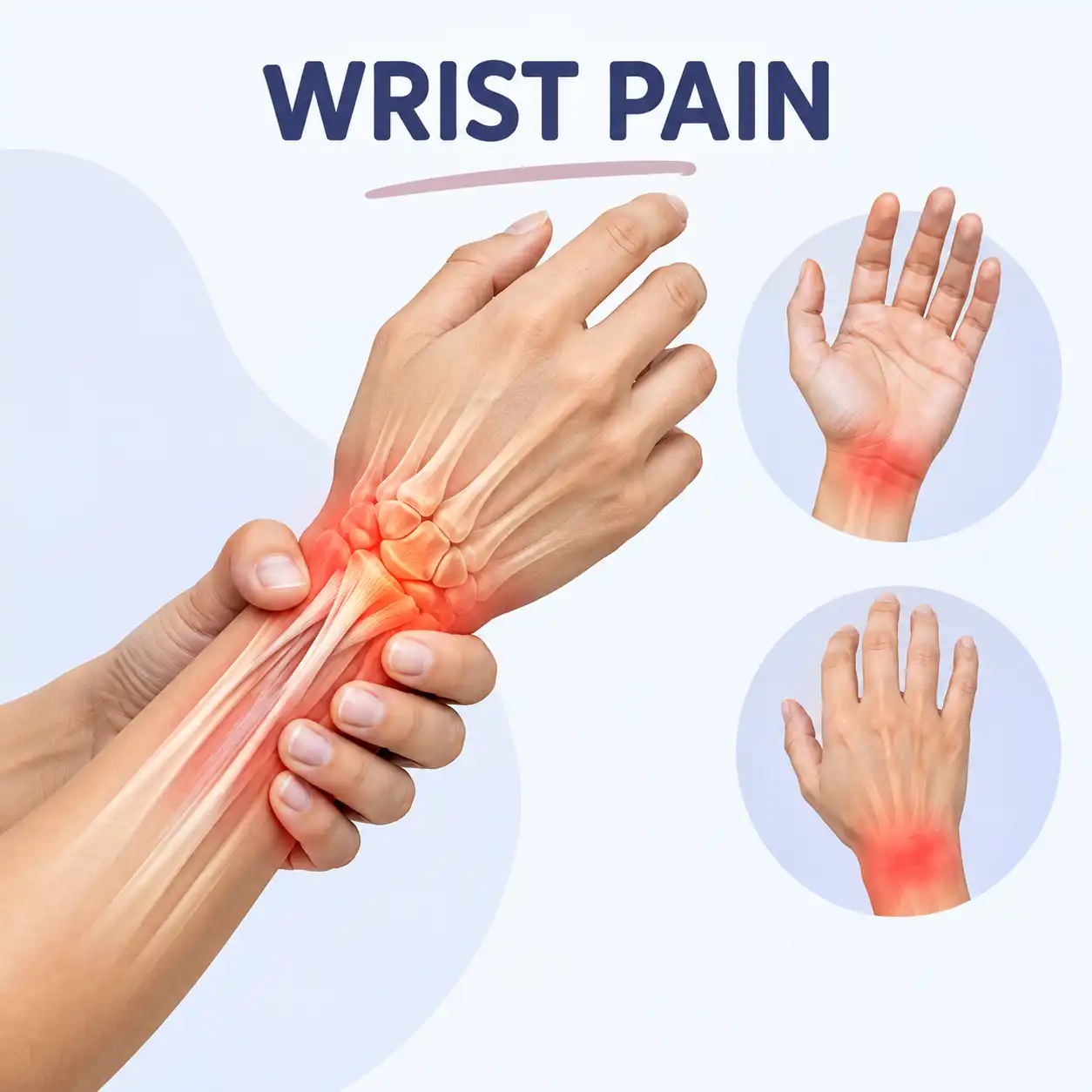
Wrist Pain
Introduction
Wrist pain is a common musculoskeletal problem that can affect people of all ages. The wrist is a complex region made up of several small bones, joints, ligaments, tendons, muscles, nerves, and blood vessels that work together to provide movement and stability to the hand. Because the wrist is involved in activities such as writing, typing, lifting, gripping, using a mobile phone, and performing household tasks, repeated stress or injury can lead to pain and discomfort.
Wrist pain may develop suddenly after an injury, such as a fall, sports injury, or direct impact, or it may develop gradually because of repetitive movements and overuse. Common causes include wrist sprains, fractures, tendonitis, arthritis, carpal tunnel syndrome, and other conditions affecting the muscles, tendons, ligaments, or nerves around the wrist. Poor posture while using a computer or mobile device and prolonged repetitive hand movements may also contribute to wrist discomfort.
Symptoms can vary depending on the underlying cause. A person may experience aching, sharp, or burning pain, swelling, stiffness, tenderness, weakness, or difficulty moving the wrist and fingers. Numbness or tingling in the hand or fingers may occur when a nerve is irritated or compressed. Pain may become more noticeable during gripping, lifting, typing, or other activities that repeatedly load the wrist.
Early management can help prevent wrist pain from interfering with daily activities. Treatment depends on the cause and may include activity modification, appropriate rest, supportive devices, exercises, physiotherapy, and medical treatment when necessary. Physiotherapy can help improve wrist and hand mobility, strength, flexibility, coordination, and functional use.
Preventing wrist pain involves maintaining good posture, using proper ergonomics, taking regular breaks during repetitive activities, and gradually increasing physical activity. Using correctly fitted equipment and avoiding excessive force during gripping or lifting can also reduce stress on the wrist.
Persistent, severe, or unexplained wrist pain should be assessed by a qualified healthcare professional, particularly when it is associated with significant swelling, deformity, weakness, numbness, or difficulty using the hand.
Symptoms Of Wrist Pain
Wrist discomfort can take many different forms. The thumb, index, and middle fingers frequently experience this tingling sensation, particularly at night. The exact location of wrist discomfort might also reveal information about the underlying cause of the symptoms.
When to consult a physician
Not every wrist ache calls for medical attention. However, consult your healthcare provider if the pain and swelling worsen or persist for more than a few days.
Causes Of Wrist Pain
Any damage to your wrist might result in pain and impair your hand and wrist function. The harm could be caused by:
Injuries Of Wrist Pain
Sudden effects. Falling forward onto your outstretched hand is a common cause of wrist injury. A scaphoid fracture affects a bone on the wrist’s thumb side. X-rays of this kind of fracture can not appear right away following the accident.
Repetitive stress. Repetitive wrist motion exercises can lead to stress fractures or inflammation of the tissues surrounding joints. Tennis ball hitting, cello bowling, and cross-country driving are a few examples. Performing the exercise continuously for hours on end increases the danger of injury. A repeated stress injury that hurts the base of the thumb is called de Quervain tenosynovitis.
Arthritis Of Wrist Pain
Osteoarthritis: This kind of arthritis develops as the cartilage that cushions the ends of the bones gradually deteriorates. Osteoarthritis in the wrist is rare and typically only affects those who have already suffered a wrist injury.
Rheumatoid arthritis, a condition where the body’s immune system targets its own tissues, typically affects the wrist. Usually, if one wrist is impacted, the other is as well.
Other illnesses and ailments
Carpal tunnel syndrome. Increased pressure on the median nerve during its passage through the carpal tunnel causes this syndrome. The wrist’s palm side contains a channel called the carpal tunnel.
Ganglion cysts. The area of the wrist opposite the palm is where these soft tissue cysts most frequently appear.
Kienbock disease. One of the wrist’s tiny bones gradually collapses as a result of this condition, which usually affects young adults. Insufficient blood flow to this bone causes Kienbock disease.
Risk Factors of Wrist Pain
Sports participation. If done frequently and with sufficient force, even knitting and cutting hair can cause severe wrist pain.
Specific illnesses or disorders. Carpal tunnel syndrome risk factors include gout, diabetes, obesity, rheumatoid arthritis, and pregnancy.
Diagnosis of Wrist Pain
Diagnosis of wrist pain begins with a detailed medical history and physical examination. A healthcare professional will ask about the location, duration, severity, and nature of the pain, along with any history of falls, sports injuries, repetitive hand movements, or previous wrist problems.
The wrist and hand are examined for swelling, tenderness, bruising, deformity, weakness, and restricted movement. Grip strength, sensation, and movement of the fingers may also be assessed. Special clinical tests can help identify conditions such as carpal tunnel syndrome, tendon problems, or ligament injuries. Depending on the suspected cause, investigations such as X-rays, ultrasound, MRI, nerve conduction studies, or other tests may be recommended.
Treatment Of Wrist Pain
Treatment depends on the underlying cause and severity of wrist pain. Mild problems may improve with temporary activity modification, appropriate rest, gentle movement, and gradual strengthening.
Physiotherapy can help restore wrist and hand mobility, improve muscle strength, reduce stiffness, and support a gradual return to normal activities.
Medical Treatment Of Wrist Pain
A healthcare professional may recommend appropriate pain-relieving or anti-inflammatory medication when required. A wrist splint or brace may be advised to support the wrist and reduce aggravating movements, particularly for certain repetitive-use conditions. Depending on the diagnosis, treatments such as corticosteroid injection may sometimes be considered. Fractures, severe ligament injuries, nerve compression, or persistent symptoms may require specialist assessment and, in selected cases, surgery. Medicines and medical procedures should be used under professional guidance.
Physiotherapy Treatment Of Wrist Pain
Exercise for Wrist Pain
Finger strengthening
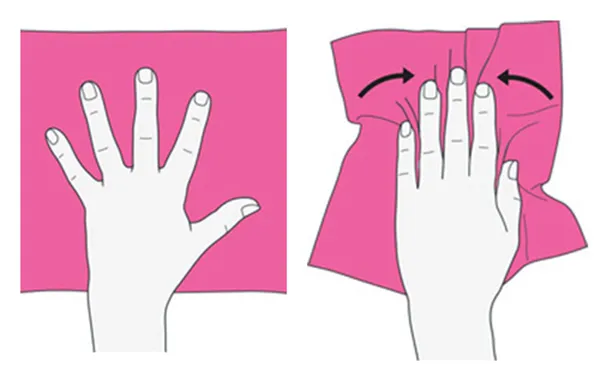
Start by placing the palm of your hand, fingers apart, on a tissue or cloth on a table. Bunch up the towel between your fingers and press your hand down into the table to pull your fingers together. Do it again. You can also accomplish this by pressing down on the table, pinching your fingers together, and then stretching them out without the need for a towel or tissue.
Finger tendon glide stretch
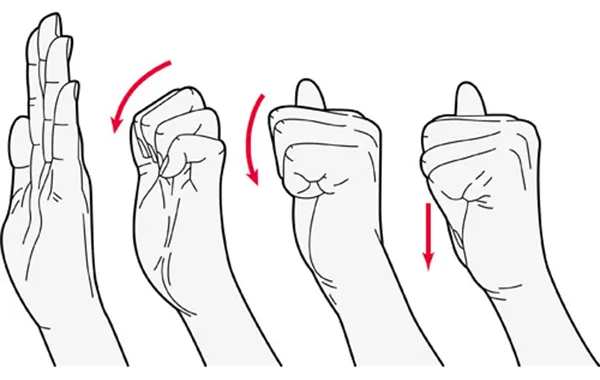
To begin, extend your fingers straight out. Form a hook fist, then straighten your hand again. Form a complete fist and then turn to a straight hand. Form a straight fist, then return to a straight hand.
Thumb stretch
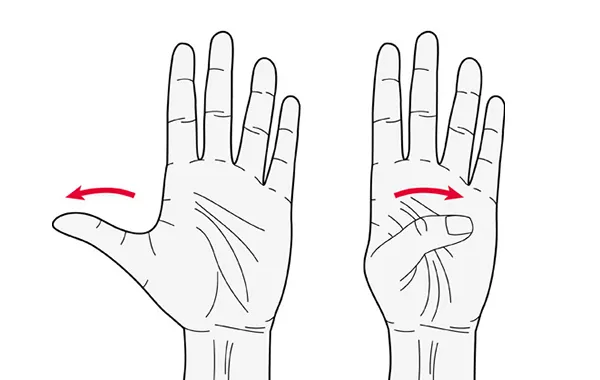
As if to say “stop,” extend your hand in front of you. Put your thumb outward to start. Return to the beginning position after moving the thumb across your palm.
Hand lift
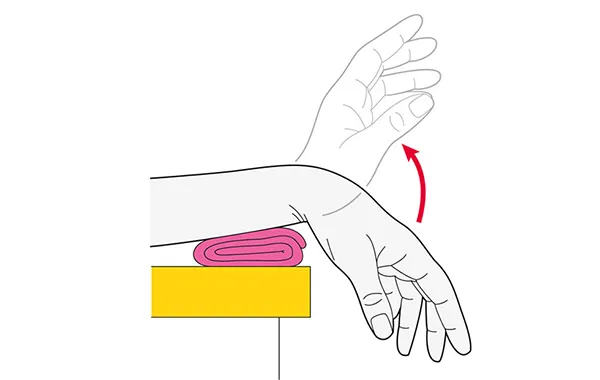
Put your forearm on a level surface, such as a table, and hang your hand, palm down, over the edge. You could find comfort by placing a rolled-up cloth beneath your wrist. Move your hand upward while keeping your fingers relaxed until you feel a slight stretch, then go back to the beginning position.
Wrist turn
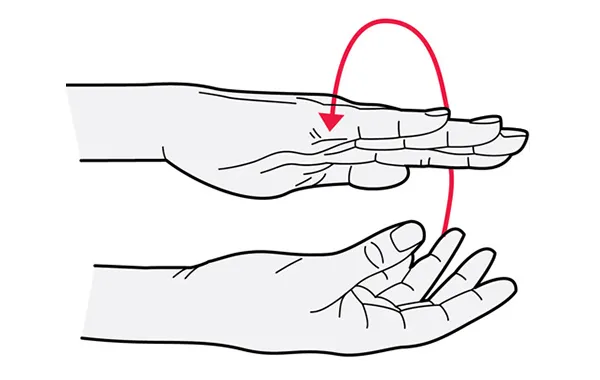
With your palm pointing down, bend your elbow to a 90-degree angle. Turn your forearm so that the palm is facing up and then down. You can do this while sitting or standing.
Hand wave
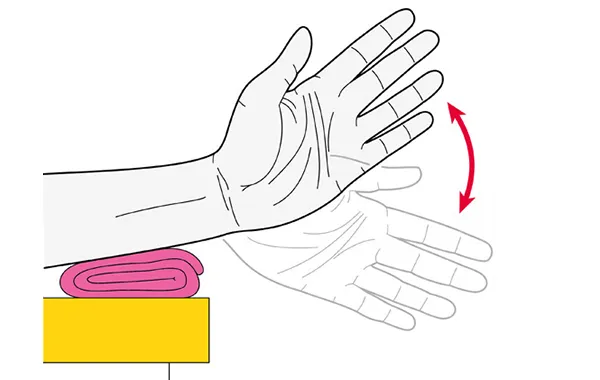
Use a rolled-up towel to support your forearm on a table or place it on your knee with your thumb facing up. As if you were waving, move your wrist up and down across its whole range of motion.
Home Remedies for Wrist Pain
For mild wrist discomfort, avoid activities that significantly increase pain and give the wrist adequate recovery time. A cold pack wrapped in a towel can be applied for around 15–20 minutes when pain or swelling is present. Gentle wrist and finger movements can help prevent stiffness, provided they do not worsen symptoms.
For stiffness without recent injury or swelling, a warm compress may provide temporary comfort. Keep the wrist in a comfortable, neutral position during rest and sleep. Avoid repeatedly gripping heavy objects or performing movements that aggravate the pain.
Ergonomic Care Of Wrist Pain
Good wrist ergonomics are particularly important during computer work, writing, mobile-phone use, and repetitive hand activities. Keep the wrist in a neutral, comfortable position rather than continuously bending it upward or downward. Position the keyboard and mouse so that the elbows remain relaxed and close to the body. Avoid excessive pressure on the wrist while typing or using a mouse. Take short movement breaks regularly and gently move the fingers, wrist, and forearm.
When lifting objects, use both hands when possible and keep heavy objects close to the body. Avoid prolonged forceful gripping and repetitive wrist movements. Use properly sized tools and maintain a comfortable working position. Adjusting the workstation and taking regular breaks can help reduce unnecessary strain on the wrist.
Prevention Of Wrist Pain
Although the unanticipated circumstances that frequently result in wrist injuries cannot be avoided, the following fundamental advice may provide some protection:
Strengthen your bones. Fractures can be avoided by consuming enough calcium. That equates to 1,000–1,200 mg daily for the majority of adults.
Avoid falling. The majority of wrist injuries are caused by falling forward onto an outstretched hand. Wear smart shoes to help prevent falls. Eliminate risks at home. Bring some light into your living area. Additionally, if needed, add handrails on your stairs and grab bars in your bathroom.
When participating in sports, wear protective gear. When engaging in high-risk sports like football, snowboarding, or in-line skating, wear wrist protection.
Be mindful of ergonomics. Take regular pauses if you use a keyboard for extended periods of time. Maintain a neutral, relaxed wrist position while typing. A foam or gel wrist support and an ergonomic keyboard could be beneficial.
FAQs
What are some ways to treat a sore wrist?
You can manage a painful wrist at home with the RICE process (Rest-Ice-Compression-Elevation), plus using painkillers available over the counter.
Home Treatments
Rest: Stop any activities that cause problems in your wrist, like typing.
Ice: Put ice wrapped in a towel on your wrist for 15–20 minutes every few hours to assist the pain and reduce swelling.
Compression: Wrap your wrist in an elastic bandage, ensuring that it is tight, but not tight enough to impede blood flow.
Elevation: Keep the wrist raised higher than the heart to inhibit fluids from accumulating in the wrist.
Painkillers: Take platelet inhibitors like ibuprofen or naproxen.
Use Support
Bracing: Wear a wrist brace to provide the wrist with stability when sleeping or performing repetitive actions.
Gentle Exercises: Do gentle stretching or movement of the wrist after experiencing acute pain to increase flexibility.
Ergonomics: Change the position of your workstation to reduce strain while working.
What could be causing pain in my inner wrist?
Pain on the palm side of the inner wrist arises primarily due to carpal tunnel syndrome or overuse injuries in tendons.
Most Common Causes
Carpal Tunnel Syndrome: Compression of a nerve in the wrist usually results in burning, throbbing, or numb sensations in the thumb and the first three fingers.
Tendonitis: Using the wrist excessively due to typing, writing, or using manual tools results in pain, swelling, or stiffness of the tendons.
Sprains or Strains: A slip or twist can cause stretching or tearing in various types of soft tissues, which support the joint.
Basic Home Care
Rest: Rest from the activity or sport that is causing you pain.
Ice pack: Place an ice pack in a towel and apply it to the wrist a few times a day for 10-15 minutes.
Support: Wearing a wrist splint, especially at night, will help you stabilize this joint and the surrounding tissues while you sleep.
Pain Relief: Pain can be eased with over-the-counter medicines, such as ibuprofen.
What could be causing my right wrist pain?
Pain in the right wrist is usually due to issues of overuse, injury, or an underlying disease.
There are several common reasons that cause pain in the right wrist.
Sprain and strain: Injuries to ligaments, muscles,s or tendons due to a sudden fall or activity excessive for them.
Carpal tunnel syndrome: This syndrome develops when the median nerve of the wrist gets compressed, leading to pain and numbness in the fingers.
Tendinitis: This condition occurs when one moves tendons are moved excessively.
Arthritis: It could be osteoarthritis that occurs in joints from injury, or there may be inflammatory diseases such as rheumatoid arthritis.
Ganglion cysts: These are non-malignant formations occurring along the tendons of the wrist and causing pain.
Where to massage for wrist pain?
When pursuing self-massage to free oneself from wrist pain, it is vital to concentrate on key points such as Pericardium 6 (PC 6), located at the inner wrist,t along with corresponding trigger areas along the forearm.
Most Important Points for Massage and Acupressure
Inner Pass (PC 6): This is situated a little over two to three finger widths below the inner crease of the wrist. Use steady thumb pressure and rub in small circular motions for 30 to 60 seconds to relieve tension and discomfort from carpal tunnel.
Forearm Trigger Point at Bottom: This position is found about 2 inches above the wrist crease on the underside of the forearm, and applying pressure here helps to release muscles involved in wrist and finger movement.
Forearm Trigger Point at Top: The position is found about 2 inches below the elbow crease at the top of the forearm,m and working on this area helps to relieve distress built up through typing and gripping activities.
Base Areas of Thumb: This area is situated between the thumb and index finger, and rubbing any tender places here can reduce pain in the fingers and wrist.
Basic Massage Techniques For Forearms
Forearm Glide: Slide your thumb gently but firmly on your forearm just below the wrist and continue all the way to the elbow joint. You may repeat this action about three to four times to loosen tight muscles.
Gentle Circular Friction: Use your palm to make light circular movements over the wrist area before applying more pressure through your thumb to the areas of tenderness.
Time to Spend: You should spend 30 to 60 seconds on each point, using comfortable pressure.
How to tell if wrist pain is serious?
Wrist discomfort is serious when there is a clear sign of deformity, severe swelling, inability to use the hand or fingers, or numbness that persistently occurs. Indicators to watch for include:
• Clear deformity: the wrist’s shape is bent.
• Inability to move: you cannot move your fingers, wrist, or hand.
• Severe pain: pain that will not go away with rest, cold treatment, or non-prescription medications.
• Numbness or tingling: you feel long-lasting tingling sensations or loss of touch.
• Fever or redness: the specific body section is hot and red, or you get fever signs.
Signs to Look for to Know When to Seek Consultations
• Pain or swelling that lasts more than a few days without reducing.
• Weakness in grip or difficulty with a daily routine.
• Pain that makes you wake up at night or occurs constantly.
What vitamins help with wrist pain?
There are certain supplements and vitamins like Vitamin B6, Vitamin D, and curcumin (turmeric) that can minimize inflammation in wrist pain that is associated with nerve issues.
Major Vitamins and Supplements That Are Effective In Treating Wrist Pain
Vitamin B6 – Beneficial for nerve health; inflammation is lowered.
Vitamin D – Works as an anti-inflammatory and has positive effects on bones and joints.
Curcumin (Turmeric) – Aids in reducing swelling and stiffness in the joints.
Magnesium – Necessary for muscle and nerve function around the joints.
Fish oil (omega-3s) – Ensures that inflammatory processes remain regulated.
Points To Consider
Vitamins are more effective when adequately diagnosed because wrist pain is a consequence of tendinitis or arthritis.
Always consult a doctor before taking any supplement to avoid side effects or interference with medications.
What is the fastest way to relieve wrist arthritis?
If you have acute wrist arthritis, the quickest way to relieve the pain is to use a cold compress and take a non-prescription pain reliever.
Strategies for Immediate Pain Relief
Cold Treatment: Keep a cold pack wrapped in a cloth on the wrist for about 10-15 minutes to eliminate any swelling and moderate acute pain.
NSAIDs: Use nonsteroidal anti-inflammatory medications, for example, ibuprofen, or use topical gels such as diclofenac for pain relief.
Wrist stabilization: Wear the rigid wrist splint to keep the joint immobile and relieve pressure off the bones.
Ways to Manage the Pain in the Future
Heat Treatment: After the swelling goes down, a heating pad can be used to relax sore joints and muscles.
Gentle exercise: Gently flex and rotate your wrist as soon as the pain reduces to stop stiffness from setting in.
Doctor’s visits: Go and see a doctor if the pain continues and over-the-counter medications are ineffective.
References
- 6 top exercises and stretches for wrist pain relief. (n.d.). Iodex. https://www.iodex.co.in/health-wellness-pain/exercise-diet/stretches-and-exercises-to-relieve-wrist-pain/
- Clinic. (2023, November 24). 11 Exercises and stretches for wrist pain. Cleveland Clinic. https://health.clevelandclinic.org/wrist-pain-exercises
- Dev, A. (2024, September 10). Exercises for wrist pain: Elite Sports Medicine + Orthopedics: Orthopedics. Elite Sports Medicine + Orthopedics. https://www.eliteorthopaedic.com/blog/wrist-pain-exercises/
- Diagnosing wrist & hand repetitive use injuries. (n.d.). NYU Langone Health. https://nyulangone.org/conditions/wrist-hand-repetitive-use-injuries/diagnosis
- Exercises for the fingers, hands and wrists. (n.d.). Arthritis UK. https://www.arthritis-uk.org/information-and-support/living-with-arthritis/health-and-wellbeing/exercising-with-arthritis/exercises-for-healthy-joints/exercises-for-the-fingers-hands-and-wrists/
- Kendrick, S., & Kendrick, S. (2026, May 1). Four wrist stretches to relieve wrist pain. My Vanderbilt Health. https://my.vanderbilthealth.com/four-wrist-stretches-to-relieve-wrist-pain/
- NHS Inform. (2026, July 28). Exercises for wrist, hand and finger problems | NHS Inform. NHS Inform. https://www.nhsinform.scot/illnesses-and-conditions/muscle-bone-and-joints/arm-shoulder-and-hand-problems-and-conditions/exercises-for-wrist-hand-and-finger-problems
- Phillips, N. (2025, April 28). Possible causes of wrist pain and treatment tips. Healthline. https://www.healthline.com/health/wrist-pain
- Professional, C. C. M. (2026, May 21). Wrist pain. Cleveland Clinic. https://my.clevelandclinic.org/health/symptoms/17667-wrist-pain
- Website, N. (2026, July 9). Wrist pain. nhs.uk. https://www.nhs.uk/symptoms/hand-pain/wrist-pain/
- Wrist pain & hand pain: When to see a doctor. (2026, September 9). University of Utah Health | University of Utah Health. https://healthcare.utah.edu/orthopaedics/specialties/hand-pain/when-to-see-a-doctor
- Wrist pain – Newcastle Hospitals NHS Foundation Trust. (2025, November 3). Newcastle Hospitals NHS Foundation Trust. https://www.newcastle-hospitals.nhs.uk/services/newcastle-occupational-health-service/information-for-staff/physiotherapy/self-help-leaflets/wrist-pain/
- Wrist pain Symptoms & Treatment | Aurora Health Care. (n.d.). https://www.aurorahealthcare.org/services/orthopedics/conditions/wrist-pain
- Wrist tendinitis: exercises. (n.d.). https://myhealth.alberta.ca/Health/aftercareinformation/pages/conditions.aspx?hwid=bo1652