
Lower Back Pain
Introduction
Lower back pain is a common musculoskeletal condition that affects the lower part of the spine, known as the lumbar region. It may develop suddenly due to an injury or gradually because of poor posture, muscle strain, prolonged sitting, or repetitive physical activities. Lower back pain can affect people of all ages and may interfere with daily activities such as walking, bending, lifting objects, standing, and sleeping.
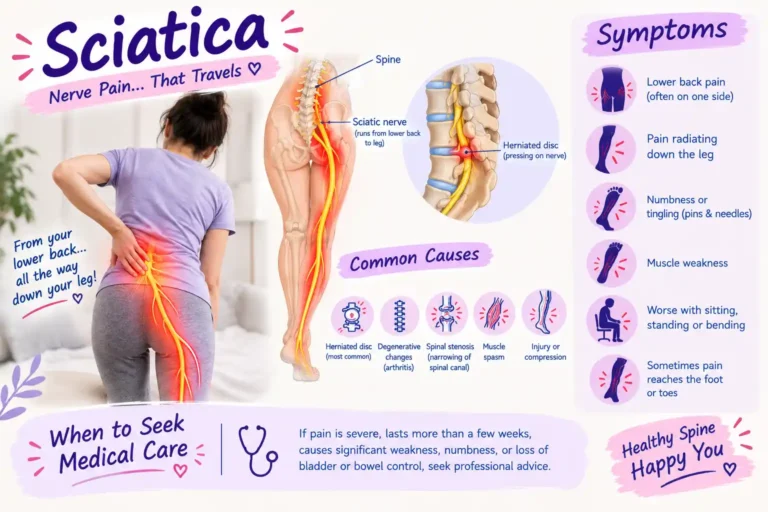
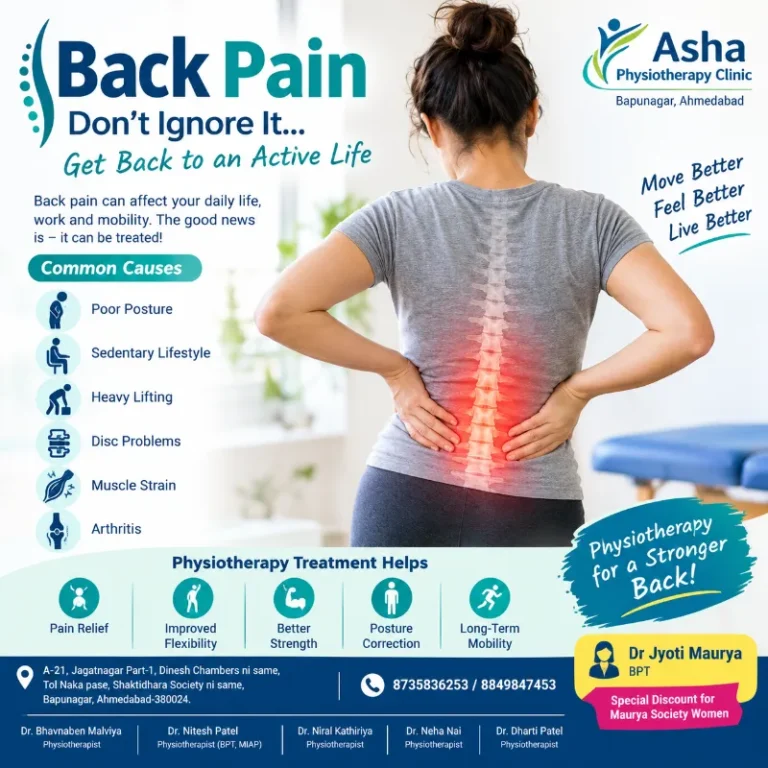
Common causes include muscle or ligament strain, poor sitting posture, improper lifting techniques, lumbar disc problems, spinal degeneration, and a sedentary lifestyle. Symptoms may include aching pain, muscle tightness, stiffness, restricted movement, and discomfort that sometimes radiates into the buttocks or legs. In some cases, lower back pain may be associated with conditions such as sciatica or a herniated disc.
Physiotherapy plays an important role in managing lower back pain by improving spinal mobility, strengthening the core muscles, increasing flexibility, and correcting posture. Treatment may include therapeutic exercises, stretching, manual therapy when appropriate, ergonomic education, and guidance on safe movement.
Maintaining regular physical activity, using proper lifting techniques, and avoiding prolonged sitting can help reduce the risk of recurring pain. Severe pain accompanied by leg weakness, saddle numbness, or bladder or bowel changes requires urgent medical attention.
What are some common causes of lower back pain?
Arthritis of the Spine
The most common cause of lower back pain is arthritis of the spine, which is the gradual deterioration of the spinal joints. As we age, we all endure wear and tear, and it’s common for your lower back to start acting up. The surrounding tissues may become irritated as the cartilage between the spinal joints deteriorates. Lower back pain may result from increased joint friction caused by inflammation and cartilage loss.
Back Injuries
Lower back injuries might result from a car accident or a severe fall. However, bringing a laundry basket upstairs is also an option. While some back problems develop gradually over time, others can be sudden and devastating. You could assume that because of their active lifestyles, athletes and active people sustain the most injuries. However, this isn’t always the case. Bending over to retrieve a sock from under the bed is just as likely to cause you to strain your back. When performed incorrectly, commonplace acts like cradling a child can result in back injury.
Slipped Disc (Herniated Discs)
A disk that has “spilled out” of its lining is called a herniated, or Slipped Disc. The lower back is where this most commonly occurs. There may not always be pain from the damaged disk. However, even if it is harmless, its contents may irritate or press on surrounding nerves, resulting in lower back and other pain.
Your risk of having lower back pain may be influenced by three main lifestyle factors:
Smoking has been linked to lower back pain in numerous studies. Smoking increases internal inflammation and impedes the body’s ability to recover itself.
Lower back pain is one of the many chronic pain conditions that are linked to obesity. High body mass index (BMI) individuals experience increased stress on their spines, which worsens wear and tear.
Your lower back health may also be influenced by how active you are. Both sedentary lifestyles and excessive or demanding physical activity may raise your chance of acquiring lower back pain. If you are not sure what your appropriate level of physical activity is, consult your physician.
Can lower back pain be related to weather?
You may imagine feeling that your lower back pain gets worse on chilly or changing days. External temperature and barometric pressure may affect back pain. Pressure changes can occasionally trigger pain in arthritic joints, particularly the spine. In general, muscles and joints respond to their surroundings by becoming stiffer and more prone to damage.
Could lower back pain be kidney pain?
It certainly can. Because your kidneys are on the back of your body, kidney pain can occasionally resemble back pain. Seeing a physician who can perform a comprehensive checkup is the only reliable way to determine the difference.
What could it indicate when pain in the lower back travels down into one or both legs?
Lower back pain can radiate to other parts of the body: up or down from its place of origin. Sometimes lower back pain can be on one side of the back, which is also normal.
If the pain is shooting from the lower back into one or both legs, it could be sciatica (nerve pain), but it is not always the case. There are many parts in the lower back that may cause the pain to radiate into the legs, such as facet joints, sacroiliac joints, muscles, or inflammation of the bursa.
Symptoms of lower back pain
- Pain that appears right away after lifting a big object.
- Pain following a clumsy twisting motion.
- Pain that radiates to one or both buttocks or thighs from the lower back.
- Pain that is typically relieved by lying flat.
- Discomfort when sneezing, coughing, or shifting the back.
- Sometimes it can develop for no apparent reason. Some people just wake up one day with lower back pain.
Most people with a bout of nonspecific lower back pain improve quickly, usually within a week or two. However, once the pain has eased or gone, it is common to have further bouts (recurrences) of pain from time to time in the future.
Also, it is common to have minor pains on and off for quite some time after an initial bad bout of pain. In a small number of cases,s the pain persists for several months or longer.
Diagnosis of Lower Back Pain
The majority of patients who experience immediate (acute) lower back pain have nonspecific lower back pain. Many people are confident enough to simply “get on with it” and treat it themselves if there are no other symptoms and the pain is not too severe. In fact, the majority of people recover fast. However, you should consult a doctor if the pain is not getting better or if there are other worrisome aspects.
In some circumstances, examinations like MRI scans, X-rays, or blood tests could be recommended. This is mostly if an examination reveals symptoms or indicators that point to a potentially dangerous underlying reason for the back pain.
Treatment of Lower Back Pain
Medical Treatment of Lower Back Pain
Medications that reduce inflammation. These include naproxen and ibuprofen, both of which can be purchased over-the-counter without a prescription. Diclofenac is no longer advised. Anti-inflammatory medications may not be appropriate for certain individuals, such as those with heart or kidney failure. Anti-inflammatory medications should only be taken for brief periods of time and at the lowest effective dose.
If anti-inflammatories are ineffective or inappropriate, a more potent analgesic like codeine may be used temporarily. This can be taken as co-codamol, which is a combination of paracetamol and codeine. One of the most frequent side effects of codeine is constipation. When straining to use the restroom, this could worsen back pain. It’s crucial to consume a lot of water and meals high in fiber to avoid constipation. Codeine should be used for as little time as possible because it might cause addiction if taken for longer than a few days.
Diazepam and other muscle relaxants were once occasionally administered for lower back pain-related muscular spasms, but they are no longer advised.
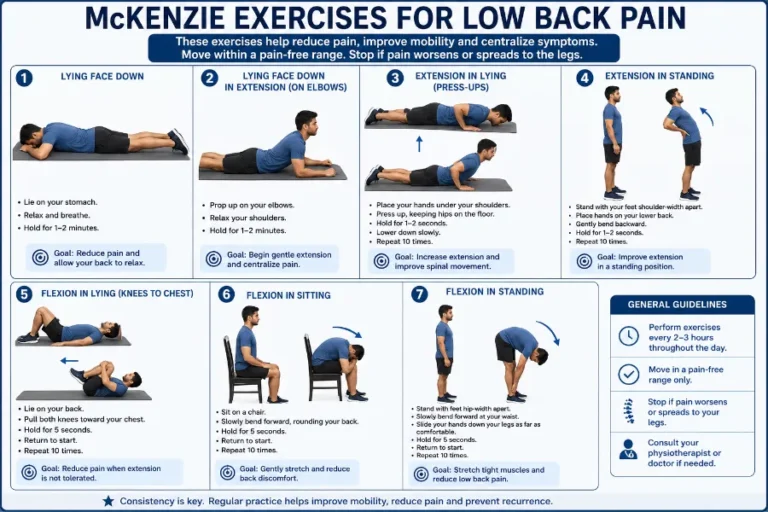
Exercise for Lower Back Pain
Stomach tone

With your head on one side and your arms at your sides, lie on your front. Pull in the muscles in your stomach, focusing on your belly button. For five seconds, hold. Do this three times. Repeat while walking or standing throughout the day, building up to ten seconds. Continue breathing while performing this workout.
Pelvic tilt

Bend your knees and lie down. Flatten your back into the floor and contract your tummy muscles. For five seconds, hold. Five times over, repeat.
Knee rolls

Bend your knees and place your feet together while lying on your back. Keeping your shoulders flat on the floor or bed, roll your knees to one side and hold the position for ten seconds. Return to the beginning position by rolling your knees, then switch to the other side and repeat. Perform this exercise three times on each side.
Knees to chest

Bend your knees and place your feet flat on the floor or bed while lying on your back. Raise one knee and gently draw it toward your chest with your hands. After five seconds of holding the leg in place, let go. With the other knee, repeat this movement. Perform the exercise five times on each side.
Buttock tone

Bend one leg up behind you while lying on your front. Raise your bent knee slightly off the ground. Hold for a maximum of eight seconds. Each side should be repeated five times.
Deep stomach muscle tone

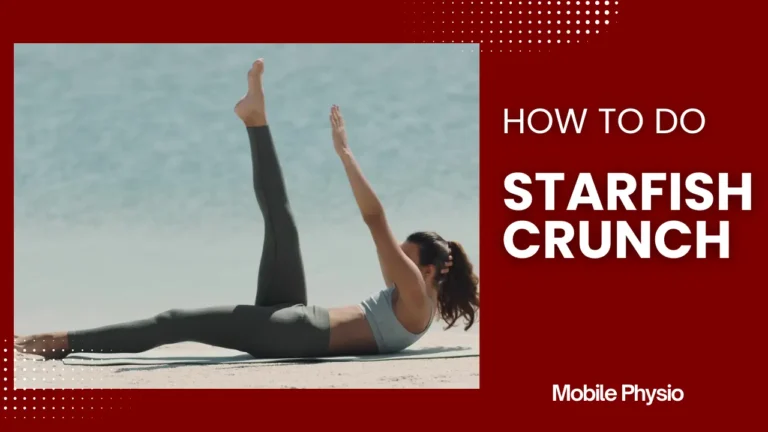
With your lower back slightly curved, kneel on all fours. Allow your tummy to fully relax. To raise your back away from the floor without arching it, pull the lower portion of your stomach upward. Hold for ten seconds. Continue breathing! Ten times over, repeat.
Back stabiliser
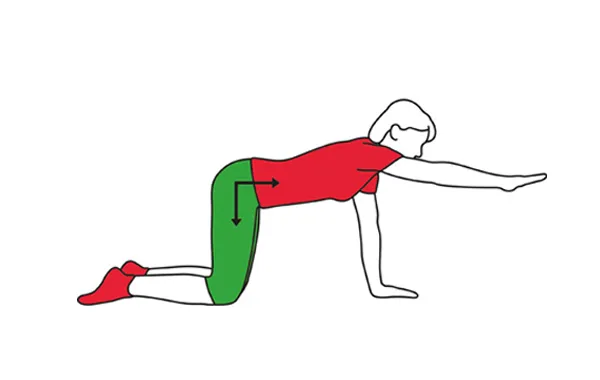
With your back straight, kneel on all fours. Make your stomach tighter. Raise one arm in front of you while maintaining this posture, then hold it there for ten seconds. Avoid rotating your body and make an effort to maintain a level pelvis. Repeat ten times on each side
Instead of elevating your arm, try lifting one leg behind you to advance.
Leg raises

Face down, lie down. If this is more comfortable, turn your head to one side. Keeping your hips level on the ground, raise one leg slightly off the ground by tensing your buttocks and stomach. Repeat three times, holding this position for five to ten seconds before switching legs.
Arm raises

With your back in a neutral position, lie on your stomach. Lift one arm and tense the muscles in your lower abdomen. After five seconds of holding this posture, let your arm relax. With each arm, perform this exercise ten times.
Hamstring stretch
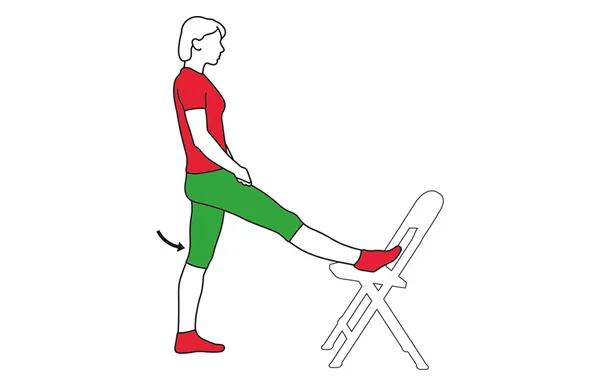
Place one leg up on a chair after you’ve stabilized yourself. To stretch your hamstrings, bend the supporting knee forward while maintaining a straight raised leg. For each side, repeat three times. Please be aware that this hamstring stretch can worsen acute sciatica by pulling on the sciatic nerve. Ask a physiotherapist if this exercise is appropriate for you if you’re unsure.
One-leg stand

Use one hand to steady yourself against a wall or other surface. One leg should be bent up behind you. Repeat three times on each side while holding your foot for ten seconds. Keep your thighs and knees level with each other.
Deep lunge

With one foot in front of you, kneel on one knee. Keep your eyes forward as you raise your back knee. Advance your hips. Repeat three times on each side after holding for five seconds. Aim to maintain an erect posture; do not bend or lean your upper body forward.
Home Remedies for Lower Back Pain
Heat and Cold Treatment
- Ice (First 48 Hours) – Apply an ice pack (wrapped in a cloth) for 15 to 20 minutes at a time to help reduce acute swelling and inflammation.
- Heat (After 48 hours): Use a warm bath, heating pad, or hot water bottle to loosen tight muscles and increase blood flow.
Prevention of lower back pain
Research indicates that maintaining an active lifestyle and engaging in regular exercise are the best ways to avoid episodes of lower back pain. Walking, running, swimming, and other common physical activities fall under this category.
There is no solid proof that any specific back-strengthening activities are more effective than staying active and fit in preventing back pain. Additionally, it makes sense to be mindful of one’s back, such as avoiding lifting objects while twisting awkwardly.
To lessen the strain on the lower back muscles, it’s also critical to maintain a healthy weight.
Lower back pain complications
Neurological and Physical Complications
- Radicular pain and sciatica: irritation or compression of the spinal nerve roots can cause sharp, electric shock-like pain, numbness, or tingling that runs down the hips, legs, or feet.
- Muscle Weakness and Loss of Mobility: Nerves may be constantly compressed, or joints may be damaged, leading to leg or foot weakness (e.g., foot drop), which can affect balance, coordination, and the ability to walk.
- Cauda Equina Syndrome: A serious and rare surgical emergency in which compression of the lower spinal nerve roots causes loss of bladder or bowel control, numbness in the groin/saddle area, and progressive weakness in the lower extremities.
- Spinal Deformity or Fusion: Advanced conditions such as ankylosing spondylitis or advanced degenerative disk disease can cause vertebrae to stiffen or fuse, permanently reducing spinal flexibility.
- Secondary Health Conditions: Chronic pain and physical inactivity can lead to secondary health problems such as obesity, cardiovascular disease,e and type 2 diabetes.
Psychological and Social Problems
- Mental Health Stress: Long-term pain often causes anxiety, clinical depression, and emotional suffering.
- Sleep Disturbances: Constant nighttime pain or discomfort with different sleeping postures leads to chronic insomnia and fatigue.
- Substance Abuse Risk: The use of prescription opioid medications or alcohol to manage untreated chronic pain is a risk for dependence or addiction.
- Disability and Social Isolation: Loss of work capacity, limited community participation, and reduced daily mobility often result in social withdrawal.
FAQs
What is the difference between specific and nonspecific lower back pain?
The most prevalent kind of lower back pain is nonspecific, which indicates that there is no discernible anatomical issue or specific underlying illness. It could result from a tiny problem with a disk or joint, or from a mild sprain or strain. Conversely, specific lower back pain is brought on by a recognizable ailment such as arthritis, cauda equina syndrome, or nerve root compression (sciatica).
Is it normal for lower back pain to come back after it has eased?
Yes, even after the initial pain has subsided or disappeared, recurrences of lower back pain are frequently experienced. After a major episode of back pain, many people may also experience intermittent mild pain.
How can I tell if my lower back pain is becoming chronic?
If nonspecific lower back pain persists for more than six weeks, it is deemed chronic. It may last for months or even years in certain situations. It is more common for chronic pain to have an unstable pattern, with periods of mild to moderate pain interspersed with more severe bouts, while some patients may experience continual agony.
What should I do if painkillers aren’t helping my lower back pain?
Stronger analgesics like codeine may be a temporary solution if over-the-counter medications like ibuprofen and paracetamol are ineffective or don’t work for you. You should see a clinician if your pain continues or gets worse, or if your symptoms change. If necessary, they can assess your condition and recommend different therapies or investigations.
Are there any specific sleeping positions or mattresses recommended for lower back pain?
It’s ideal to sleep on whatever mattress you find most comfortable in the most natural position. For lower back pain, there is no proof that a firm mattress is superior to any other kind. When sleeping on their side, some people find that putting a small, firm pillow between their knees helps reduce problems at night.
References
- A visual guide to low back pain. (n.d.). WebMD. https://www.webmd.com/back-pain/ss/slideshow-low-back-pain-overview
- American Association of Neurological Surgeons. (2024, July 9). Low back pain – AANS. AANS. https://www.aans.org/patients/conditions-treatments/low-back-pain/
- Bordal, C. (2026, July 16). The best stretches and exercises for lower back pain. Cedars-Sinai. https://www.cedars-sinai.org/stories-and-insights/expert-advice/the-best-stretches-and-exercises-for-lower-back-pain
- Dpt, L. W. P., Mba, J. L. M., & Dpt, D. P. P. (2025, July 22). 10 Best exercises and stretches for lower back pain. hingehealth. https://www.hingehealth.com/resources/articles/low-back-pain-exercises/
- Exercises for the back. (n.d.). Arthritis UK. https://www.arthritis-uk.org/information-and-support/living-with-arthritis/health-and-wellbeing/exercising-with-arthritis/exercises-for-healthy-joints/exercises-for-the-back/
- Kassraie, S. C., &. A. (2024, September 20). 8 exercises for lower back pain. AARP. https://www.aarp.org/health/conditions-treatments/exercises-for-lower-back-pain/
- Low back pain: Exercises | Kaiser Permanente. (n.d.). Kaiser Permanente. https://healthy.kaiserpermanente.org/health-wellness/health-encyclopedia/he.low-back-pain-exercises.ad1482
- Lower back pain. (2026, February 13). Cleveland Clinic. https://my.clevelandclinic.org/health/diseases/7936-lower-back-pain
- Peloza, J., MD. (2024, July 24). Lower back pain symptoms, diagnosis, and treatment. Spine-health. https://www.spine-health.com/conditions/lower-back-pain/lower-back-pain-symptoms-diagnosis-and-treatment
- Sfma, K. B. P. D. O. (2024, October 25). Stretches and Exercises for Lower Back Pain, from a PT. Hospital for Special Surgery. https://www.hss.edu/health-library/move-better/exercises-for-lower-back-pain
- Top 10 reasons for lower back pain and effective ways to find relief. (n.d.). https://apollodiagnostics.in/blogs/top-reasons-for-lower-back-pain-and-how-to-find-relief
- Van De Walle, M. S. Rd. (2026, October 20). Relieve lower back pain with these 8 simple stretches. Healthline. https://www.healthline.com/nutrition/stretches-for-lower-back-pain
- World Health Organization: WHO & World Health Organization: WHO. (2023, June 19). Low back pain. https://www.who.int/news-room/fact-sheets/detail/low-back-pain