
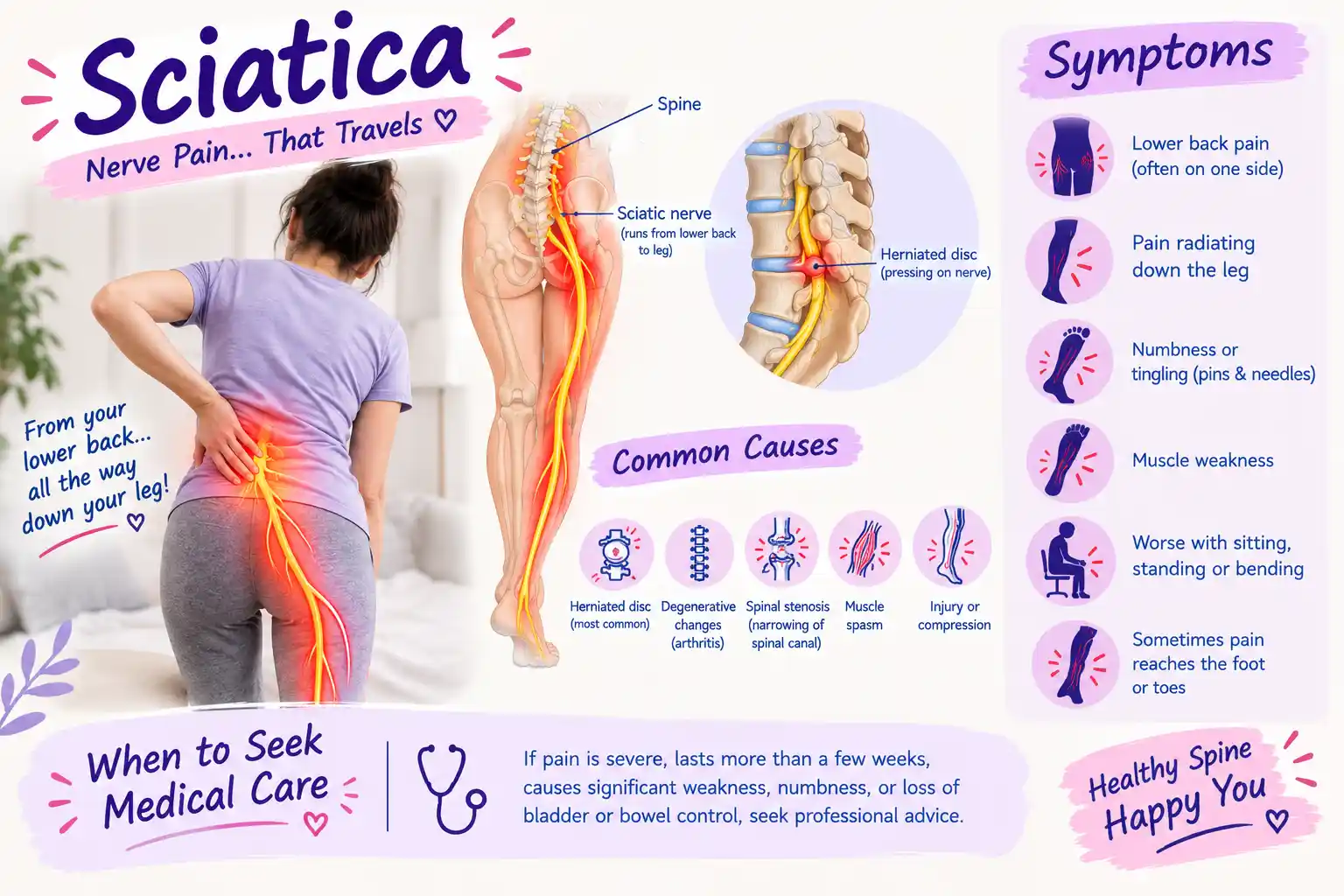
Sciatica
Introduction
The sciatic nerve is the largest in the human body and is formed by nerve roots originating from the lower lumbar and sacral regions of the spine. It passes through the buttock and continues down the back of the thigh and into the lower leg and foot. When the nerve or one of its nerve roots becomes irritated, compressed, or inflamed, a person may develop symptoms that are commonly described as sciatica.
Sciatica typically affects one side of the body. Depending on the affected nerve root, symptoms may extend toward the calf, ankle, or foot. The sensation can vary from person to person and may be described as sharp, burning, electric, shooting, or aching. Some individuals may also experience numbness, tingling, or weakness in the affected leg or foot.
Other possible causes include degenerative changes in the spine, narrowing of the spinal canal, bone spurs, and certain spinal conditions. In some cases, symptoms may occur after activities involving repeated bending, lifting, twisting, or prolonged awkward positions. However, the exact cause can vary considerably between individuals.
Sciatica can affect everyday activities such as walking, sitting, standing, bending, driving, studying, working, and sleeping. Some people experience symptoms for a short period and gradually improve, while others may have persistent or recurrent symptoms. The severity of symptoms does not always indicate the exact degree of nerve involvement, so proper assessment is important.
Healthcare professionals may assess spinal movement, muscle strength, sensation, reflexes, walking ability, and nerve tension. Imaging investigations may be considered when symptoms are persistent, severe, associated with neurological findings, or when another underlying condition is suspected.
Treatment may include maintaining appropriate activity, physiotherapy, therapeutic exercises, pain management, ergonomic modifications, and other medical interventions when required. Most uncomplicated cases can be managed conservatively, but certain warning signs require prompt medical evaluation.
Understanding the causes, symptoms, diagnosis, and treatment of sciatica can help individuals recognize the condition early and seek appropriate care. Maintaining regular physical activity, using safe lifting techniques, avoiding prolonged static positions, and following a suitable rehabilitation programme may support spinal health and functional recovery.
Symptoms Of Sciatica Pain
It is particularly likely to travel from the low back to the buttock, back of the thigh, and calf.
The intensity of the discomfort might range from a slight ache to a searing, scorching sensation. Coughing, sneezing, or prolonged sitting may make it worse.
Additionally, some people experience tingling, numbness, or weakening in their leg or foot muscles.
Causes of Sciatica
Sciatica may cause pain in your legs, butt, or lower back. The following symptoms can be moderate to severe:
- Pain (a burning or electric shock sensation that travels down one leg and may worsen when you sneeze, cough, bend, or raise your legs while lying on your back)
- Numbness
- Feeling of tingling (pins & needles)
The following are serious symptoms to watch out for:
- Weakening of the muscles
- Loss of control over the bladder
- Loss of intestinal control
When to consult a physician
Usually, mild sciatica goes away with time. If self-care techniques don’t reduce symptoms, contact your primary care physician. Call if the pain is severe, persists for more than a week, or worsens. Obtain prompt medical attention for:
Sudden weakening or numbness in a leg’s muscles.
Difficulty regulating the bladder or bowels.
Risk Factors of Sciatica Pain
Sciatica risk factors include:
- Age. Herniated disks are most common in people between the ages of 20 and 50. As people age, bone spurs become increasingly common.
- Obesity. The strain on the spine is increased by being overweight.
- Occupation. Herniated disks may result from work that involves bending the back, lifting large objects, or operating a vehicle for extended periods of time.
- Extended periods of sitting.
- Diabetes. This disorder raises the risk of nerve injury because it alters how the body uses blood sugar.
Diagnosis Of Sciatica Pain
Sciatica is diagnosed mainly through a detailed medical history and physical examination. The symptoms commonly affect the lower back, buttock, and one leg, and may include pain, burning, tingling, numbness, or weakness.
During the history-taking process, the healthcare professional asks about the location and nature of pain, when it started, activities that increase or reduce symptoms, previous episodes of back pain, injuries, and any associated symptoms. Information about difficulty walking, changes in sensation, or weakness in the leg or foot is also important.
A physical examination may include assessment of spinal movement, posture, walking pattern, muscle strength, sensation, and reflexes. The Straight Leg Raise (SLR) test may be performed to assess irritation of the lumbosacral nerve roots. Other neurological examinations can help identify changes in muscle power, sensation, and reflexes.
Imaging is not always necessary in uncomplicated cases, particularly when symptoms are recent and there are no warning signs. When symptoms persist, are severe, or suggest another underlying problem, imaging may be considered. An MRI of the lumbar spine can provide detailed information about discs, nerve roots, spinal canal, and other soft tissues. An X-ray may be useful for evaluating certain bone or structural abnormalities but does not directly show nerve compression. In selected cases, electrodiagnostic tests such as nerve conduction studies or electromyography may help evaluate nerve involvement.
The healthcare professional also considers other possible causes of pain that can resemble sciatica. These may include hip disorders, muscular problems, peripheral nerve conditions, and other spinal conditions. Identifying the underlying cause helps determine an appropriate treatment plan.
Immediate medical assessment is important when sciatica is associated with severe or progressive weakness, loss of bladder or bowel control, numbness around the genital or inner-thigh region, significant trauma, fever, or other concerning symptoms. Early and accurate assessment can help prevent complications and guide appropriate management.
Sciatica Pain Treatment
Treatment of sciatica depends on its cause, severity, duration, and the presence of neurological symptoms. The main goals are to reduce pain, maintain mobility, improve strength and function, and address factors contributing to nerve irritation.
Medical Treatment Of Sciatica Pain
Medical treatment may include medicines prescribed or recommended by a healthcare professional to control pain. Depending on the individual situation, pain-relieving or anti-inflammatory medicines may be considered. Medication choice should take into account existing medical conditions, allergies, other medicines, and potential side effects.
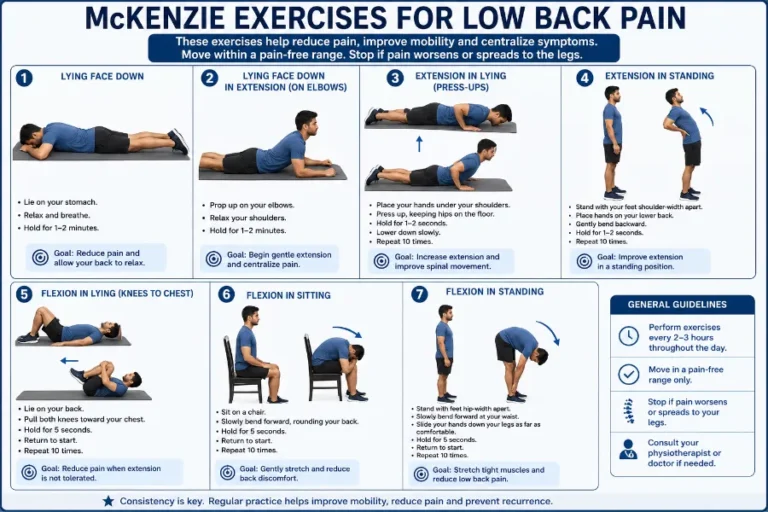
Physiotherapy is an important component of sciatica management. A physiotherapist may assess posture, spinal movement, muscle strength, flexibility, neural mobility, and functional limitations. A rehabilitation programme may include gentle mobility exercises, strengthening of the trunk and hip muscles, flexibility exercises, and activity-specific training. Exercises are generally progressed gradually according to symptoms and functional improvement.
Remaining completely in bed for prolonged periods is generally not helpful for uncomplicated sciatica. Maintaining comfortable daily movement and gradually returning to normal activities may support recovery. However, activities that significantly increase leg symptoms should be modified temporarily.
The decision depends on the individual’s examination, imaging findings, symptoms, and overall health.
Physiotherapy Sciatica Pain Treatment
Exercises for Sciatica Pain
Piriformis Stretch
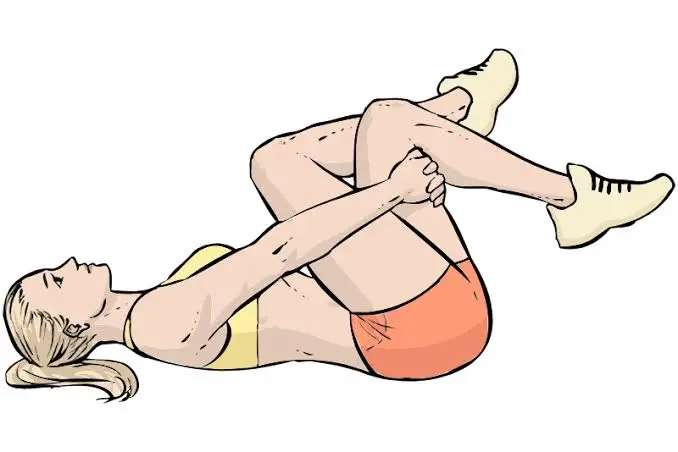
The best method for reducing sciatic nerve pain and relieving sciatica pain is generally acknowledged to be the piriformis stretch. It affects the piriformis muscle, which tightens and puts direct pressure on the sciatic nerve, worsening sciatica symptoms in the affected leg.
- Lie on your back on the floor.
- Make a figure-four formation by crossing your right ankle over your left knee.
- Using both hands, gently draw your left thigh to your chest.
- Hold while taking deep breaths for 20 to 30 seconds. Change sides.
- On each side, repeat two to three times.
Knee-to-Chest Stretch
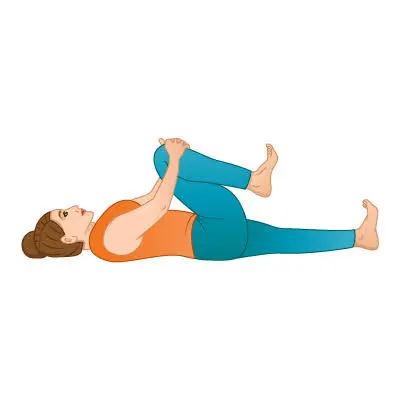
In order to relieve sciatica pain and symptoms in the affected leg, this stretching exercise reduces tension in the lower back and glutes.
- Lie flat on your back with your knees bent and your feet flat on the floor.
Bring one knee up toward your chest. - Interlace your fingers just under your knee or behind your thigh.
- Gently pull the knee closer to your trunk while keeping your lower back flat on the floor.
- Hold the position for 15 to 30 seconds while breathing deeply.
- Lower your leg slowly.
- Repeat the process with the other leg. Do this 2 to 4 times per side.
Seated Spinal Stretch
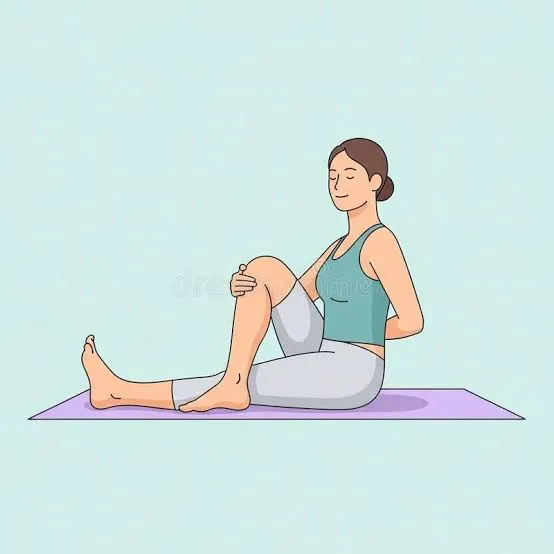
In order to relieve sciatica pain and lessen sciatic nerve discomfort, this stretching exercise targets pressure points along the sciatic nerve, opens up the hips, and stretches the spine.
- Sit down and extend your leg.
- Put your foot flat on the outside of your opposing knee while bending your right knee.
- Put your left elbow on the outside of your right knee and twist your upper body to the right.
Cat-Cow Stretch
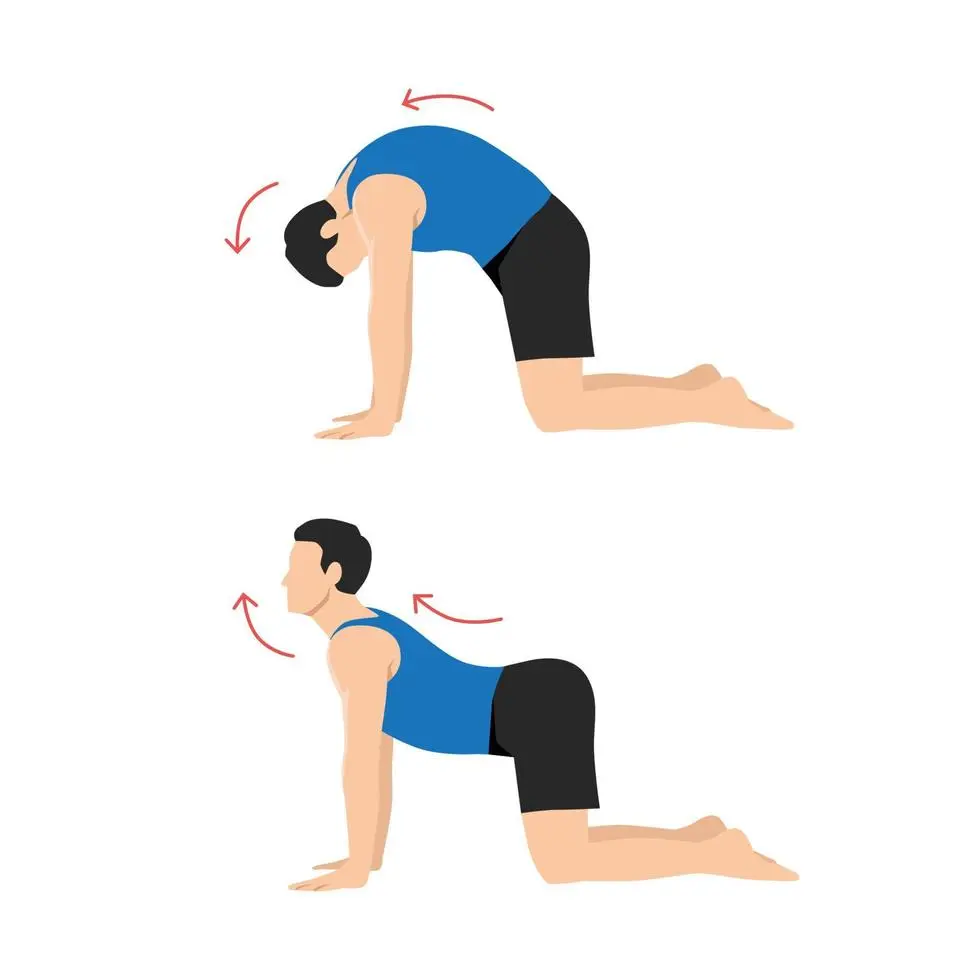
One of the finest stretches for sciatica pain, it improves sciatica symptoms and reduces sciatica pain by gently moving the spine and relieving nerve strain.
- Sit on your knees and hands.
- Take a breath and raise your head and tailbone while arching your back in the cow position.
- Breathe out and tuck your chin and tailbone into the cat position, rounding your spine toward the ceiling.
- Repeat these positions ten to fifteen times.
Standing Hamstring Stretch
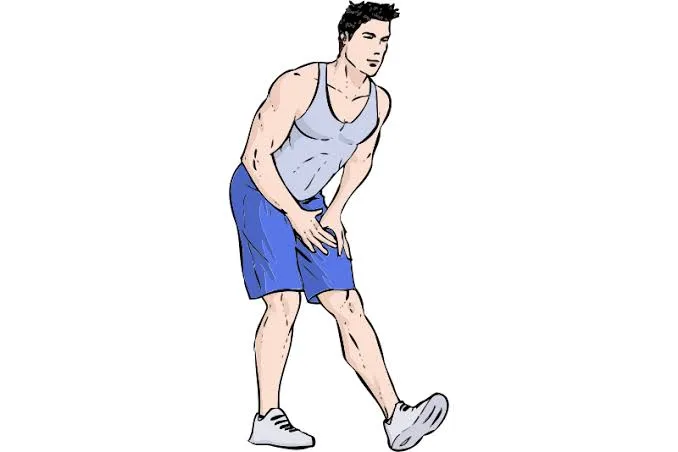
By relieving tension in the back of the affected leg and lower back, the standing hamstring stretch is one of the greatest stretches for sciatica pain for patients who are more mobile.
- On a stair or other low surface, stand with one foot slightly elevated.
- Lean forward slightly over the extended leg while maintaining a straight back.
- Feel the stretch in your buttocks and lower back as you hold for 20 to 30 seconds.
- For both legs, repeat.
Home Remedies for Sciatica Pain
Home care can complement professional treatment. Applying a cold or warm pack for a short period may provide temporary comfort, depending on which feels better for the individual. The pack should be wrapped in a cloth to protect the skin.
Gentle walking and comfortable movement may help prevent excessive stiffness. Prolonged sitting should be avoided when it increases symptoms. Changing positions regularly and using supportive sitting arrangements can also be helpful.
Adequate sleep, hydration, and a balanced diet support general health during recovery. Home remedies should not be used as a substitute for medical assessment when symptoms are severe, persistent, or associated with neurological changes.
Ergonomic Care Of Sciatica Pain
Ergonomic care is important for people who spend long periods sitting, studying, working on a computer, driving, or performing repetitive activities. The chair should provide comfortable support, and the feet should be supported on the floor or an appropriate footrest. The screen should be positioned at a comfortable height to avoid prolonged awkward posture.
During prolonged sitting, take regular movement breaks rather than remaining in one position for hours. When lifting objects, keep the load close to the body, bend through the hips and knees, and avoid sudden twisting while carrying heavy objects.
For work involving standing, alternate positions and avoid remaining in one posture for excessively long periods. Gradual strengthening and maintaining regular physical activity can also help improve functional capacity.
Good ergonomic habits do not directly cure every cause of sciatica, but they can reduce unnecessary mechanical stress and make daily activities more comfortable. Persistent or worsening symptoms should be evaluated by a healthcare professional so that the underlying cause can be appropriately managed.
Complications Of Sciatica Pain
The majority of patients who suffer from sciatica caused by herniated disks recover completely, frequently without medical intervention. However, sciatica can harm nerves. Get medical help right away for:
- Loss of sensation in the affected leg.
- Weakness in the affected leg.
- Loss of bladder or bowel control.
Prevention Of Sciatica Pain
Sciatica can recur and is not always preventable. To keep your back safe:
- Engage in regular exercise. Work the core muscles, which are the lower back and abdominal muscles required for proper alignment and posture, to maintain a strong back. Activities can be suggested by a medical expert.
- When sitting, maintain proper posture. Select a seat with armrests, a swivel base, and adequate lower back support. Put a cushion or rolled towel in the small of the back to maintain its natural curve for improved low back support. Maintain hip and knee level.
- Make proper use of your appearance. Occasionally place one foot on a stool or small box when standing for extended periods of time. Let your legs do the heavy lifting. Keep the weight near your body. Avoid lifting and twisting simultaneously. Seek assistance from someone to lift awkward or heavy objects.
FAQs
How to fix sciatica?
It is possible to relieve sciatica pain in your house with a combination of mild movements, hot or cold treatment, and simple stretches.
Home Therapy and Movements
Stay active: Do not spend too much time sitting or lying down since this only increases your stiffness. Instead, try to take short walks.
Ice and heat: Cold treatment should be used in the days immediately after the pain emerged, later changing to warm treatment.
Application of medicinal products: Use ibuprofen to reduce inflammation.
Gentle stretches
Figure four stretch: Place the painful leg over the opposite knee and stretch the hip by drawing the painful leg toward your upper body.
Nerve glides: Take the lying position on your back, pull the painful knee toward the body, and stretch the leg by keeping it straight.
Pelvic tilts: Lie on your back, bend the knees, es and rock the back against the floor.
How to help sciatic nerve pain?
Home Treatment Methods
Cold and heat: Use an ice pack for 15 to 20 minutes for the first few days in order to decrease swelling. Then use a heating pad or hot bato relaxing tight muscles.
Be active: Do not stay seated for a long time. Instead, take small gentle walks to keep your muscles active and avoid inflammation.
Gentle stretching: You may perform simple stretching exercises such as the knee-chest stretch and the seated figure four stretch, but stop executing the exercises if your pain increases.
Use OTC drugs: Non-steroidal anti-inflammatory medications (NSAIDs) like ibuprofen may be beneficial for treating mild pain and swelling if taken as advised.
Situations Appropriate for Consulting a Doctor
Consult your doctor if your pain is very severe, does not decrease within a few weeks, or causes any weakness of muscles, numbness, or loss of bladder control.
What is the main cause of sciatica?
A herniated disc in the lower back is the principal cause of sciatica, whereby the sciatic nerve becomes strained or compressed.
Causes of Sciatica
Herniated disc: The putty-like pads that exist between each vertebra bulge or tear, causing compression on the nerve roots.
Spinal Stenosis: This happens when the spinal cavity narrows, which results in pain in the nerves.
Degenerative Disc Disease: Age causes gradual damage to the vertebrae in the body, which leads to the discs becoming weaker and weaker over time.
Spondylolisthesis: One vertebra slides over the one prior to it, causing pressure on the nerves.
Piriformis Syndrome: The tightening of the piriformis muscle results in a disturbance in the sciatic nerve.
Risk Factors
Age: Aging is one of the main risk factors in the development of sciatic pain.
Obesity: Being overweight means the back suffers increased strain.
Inactivity: Jobs that require sitting for long periods contribute to the risk of sciatica.
Lifting: Lifting something heavy is likely to cause injuries in the back.
What is the best sitting position for sciatica pain relief?
The ideal position while sitting to alleviate sciatica pain is sitting straight in a normal posture, with both feet placed flat on the ground and the lower back supported sufficiently to maintain the natural curvature of the spine.
Proper Postures To Follow
Normal Spine: Maintain the sitting position straight without curling your back to form a C shape, since it puts unnecessary weight on the spine.
Feet Positioning: Both feet are required to be placed flat on the ground, with the hip width from each other and the knees placed horizontally.
Back Support: A small rolled towel can be placed in the lower back where it joins the waist to maintain the inward curve of the spine.
Do Not Cross Your Legs: Try to maintain equal distribution of weight on both buttocks and avoid crossing the legs, which might lead to pressure that makes the sciatica pain worse.
Other Recommendations to Help Relieve Sciatica Pain
Make Frequent Breaks: Limit the sitting time to around 20 minutes and move around every time you finish the sitting period.
Different Sitting Positions: Certain issues like spinal stenosis require one to sit slightly forward.
Is walking good for sciatica?
It is a fact that walking is actually beneficial for sciatica since the activity increases blood circulation and reduces inflammation.
Walking is Helpful
Helps blood circulation: When you walk, your body supplies oxygen that allows the irritated nerve to heal itself.
Produces endorphins: Mild aerobic exercises stimulate your body to generate endorphins, which reduce perception of pain.
Gives support: Walking implies the development of the muscle groups that prevent additional pressure on your back.
Eliminates stiffness: Staying in motion prevents deconditioning, which emerges as a result of long sitting.
Tips for Walking Safely
Do not walk too long: You need to start with 5 to 10 minutes several times a day.
Shorten your steps: Take small steps and keep an upright walking posture.
Walk on appropriate ground: You should walk on even surfaces and wear shoes that properly support your feet.
Be careful: In case of severe pain, you need to stop.
Walk only if:
Your pain is moderate
You do not experience weakness in both legs.
Is sciatica 100% curable?
While there is no assurance that sciatica will be cured completely for everyone, most people recover fully and obtain lasting results through appropriate treatment.
It is critical to note a few points regarding sciatica recovery:
– A high success rate: Up to 90% of patients can recover without undergoing surgery if non-invasive treatments are undertaken.
– The necessity to address the root cause: It is important to identify the exact cause underlying the problem, such as a herniated disc, spinal stenosis, or piriformis muscle spasms,s to provide a permanent solution.
– A slip-up may occur anytime: Even though the problem is resolved, some instances may recur if the core strength, posture, and spinal support are not maintained.
– Permanent damage may occur (in rare cases): Cases with severe nerve compression may lead to chronic pain and nerve damage.
Among the common methods used for treatment:
– Using movement and self-care: This approach usually works for mild cases and leads to recovery in 4 to 6 weeks.
– Visiting a physical therapist: This professional uses exercises aimed at strengthening the core and improving flexibility to relieve pressure on the sciatic nerve.
– Applying medical methods: Some cases require the use of anti-inflammatory medications.
What sleeping position is best for sciatica?
The most effective sleeping positions when suffering from sciatica are to sleep on one’s side with a pillow placed between the knees or to sleep on your back with a pillow placed under the knees.
Sleeping on one’s Side
Your sleeping position should be either on the side that is less painful to limit direct pressure or on the side where you will keep a pillow between your legs.
It stabilizes the spine and hips by preventing the top leg from twisting the pelvis.
Sleeping on your Back
Sleep in a flat position with pillows placed under the knees.
This will release the tension in the back and position it in a neutral position.
Sleeping Positions You Should Avoid
Sleeping on your stomach: This will put your back in an arched position and will increase the tension on the neck.
References
- Campbell, G. (2026, June 2). The best stretches and exercises for sciatica pain. Goodman Campbell. https://www.goodmancampbell.com/2025/11/best-stretches-and-exercises-for-sciatica-pain/
- Checking your browser – reCAPTCHA. (n.d.). https://pmc.ncbi.nlm.nih.gov/articles/PMC1895638/
- Exercises for the back. (n.d.). Arthritis UK. https://www.arthritis-uk.org/information-and-support/living-with-arthritis/health-and-wellbeing/exercising-with-arthritis/exercises-for-healthy-joints/exercises-for-the-back/
- Harvard Health. (2023, February 14). 5 causes of sciatica. https://www.health.harvard.edu/pain/5-causes-of-sciatica
- Healthdirect Australia. (2025, May 26). Sciatica. Treatment, Symptoms and Causes | Healthdirect. https://www.healthdirect.gov.au/sciatica
- Heitz, D. (2026, April 27). 9 stretches for sciatica pain relief. Healthline. https://www.healthline.com/health/back-pain/sciatic-stretches
- Hospital for Special Surgery. (2025, January 3). Sciatica. https://www.hss.edu/health-library/conditions-and-treatments/list/sciatica
- Restivo, J. (2025, January 13). Sciatica: Gentle stretches to help relieve pain and improve mobility. Harvard Health. https://www.health.harvard.edu/pain/sciatica-gentle-stretches-to-help-relieve-pain-and-improve-mobility
- Sciatica. (2026, June 9). Cleveland Clinic. https://my.clevelandclinic.org/health/diseases/12792-sciatica
- Sciatica causes and symptoms video. (n.d.). Spine-health. https://www.spine-health.com/video/sciatica-causes-and-symptoms-video
- Sciatica: MedlinePlus Medical Encyclopedia. (n.d.). https://medlineplus.gov/ency/article/000686.htm
- Shukla, S., & Medanta. (2025, November 17). What is Sciatica: Symptoms, Causes and Treatment. @Medanta. https://www.medanta.org/patient-education-blog/what-is-sciatica-symptoms-causes-and-treatment
- UnitedHealthcare. (n.d.). 7 ways to help nix sciatica pain. https://www.uhc.com/news-articles/healthy-living/7-ways-to-help-nix-sciatica-pain

3 Comments