Ankle Stiffness
Introduction
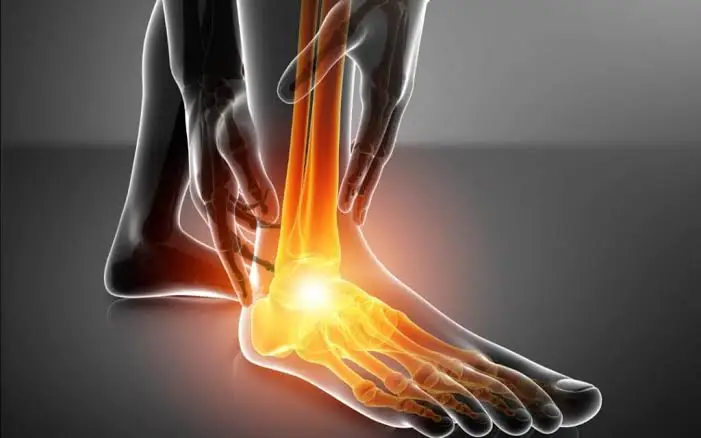
Ankle stiffness is a common musculoskeletal problem characterized by reduced flexibility and difficulty moving the ankle joint through its normal range of motion. It may affect movements such as walking, running, climbing stairs, squatting, and standing for long periods. Ankle stiffness can develop due to muscle tightness, joint inflammation, ligament injuries, prolonged immobilization, or reduced physical activity.
Common causes include ankle sprains, fractures, arthritis, Achilles tendon tightness, swelling, and prolonged rest after an injury or surgery. People with ankle stiffness may experience pain, swelling, difficulty bending the foot upward or downward, reduced balance, and discomfort during weight-bearing activities. Morning stiffness or stiffness after sitting for a long time may also occur.
Physiotherapy plays an important role in managing ankle stiffness by improving joint mobility, flexibility, strength, balance, and functional movement. Treatment may include gentle range-of-motion exercises, calf stretching, strengthening exercises, joint mobilization, and balance training, depending on the underlying cause. Applying appropriate heat or cold therapy may also help relieve discomfort in selected cases.
Maintaining regular physical activity, wearing supportive footwear, and following proper rehabilitation after an ankle injury can help prevent persistent stiffness and improve daily mobility.
What Causes Ankle Stiffness
For the ankle joint to remain lubricated, mobility is necessary. That movement ceases for six to eight hours at a time while you sleep, and the joint reacts to this stillness in a few predictable ways.
Overnight Fluid Shifts and Synovial Changes
Because the ankle is a synovial joint, a thin layer of synovial fluid cushions it and lessens friction between the surfaces of the bones. Synovial fluid is a lubricant that keeps joints functioning smoothly. This fluid does not circulate as it does during waking activity and thickens slightly as you stay motionless for hours. Additionally, fluid can accumulate around the ankles and feet overnight due to gravity and immobility, which can cause the surrounding tissue to feel constricted and swollen when you first stand.
Reduced Circulation During Sleep
Blood is pushed back up through the lower leg by the calf and foot muscles, which function as a secondary pump. That pump is virtually eliminated when you lie still for the full night. Until movement resumes, the process, the tissue surrounding the ankle joint may feel stiffer and less responsive due to reduced circulation.
Common Contributing Factors
Ankle stiffness in the morning is more apparent due to several daily events that go beyond the fundamental overnight physiology:
- The cartilage that cushions the ankle joint thins with age.
- Ankle sprains or prior ligament injuries
- The previous day’s prolonged sitting reduces the activation of the calf muscles.
- Being overweight increases the joint’s mechanical load
- Sleeping with the foot pointing down for extended periods of time
Osteoarthritis and Rheumatoid Arthritis
As the cartilage supporting the ankle joint gradually deteriorates, osteoarthritis occurs. A common sign of osteoarthritis is joint stiffness that is most apparent upon awakening. In the case of the ankle, this stiffness often goes away after 30 minutes of movement.
The inflammatory disease rheumatoid arthritis is characterized by noticeable swelling and warmth surrounding the joint, as well as prolonged morning stiffness that frequently lasts closer to an hour. As the day goes on and movement continues, both circumstances tend to get a little better.
Achilles Tendinitis and Other Tendon Issues
Joint stiffness is not the same as tendon-related stiffness. It usually focuses along the tendons that cross the top and sides of the foot or at the rear of the ankle, close to the Achilles tendon. In contrast to arthritis, tendon stiffness may become more intense during the initial few steps before becoming less intense.
Usually, it can be traced back to one of several triggers:
- Repetitive strain from jogging, walking, or standing on uneven ground
- A recent rise in the amount of activity
- Overnight strain on the Achilles tendon due to tight calf muscles
Symptoms of Ankle Stiffness
Recognising the early signs of ankle stiffness can help in seeking timely intervention and treatment. Key symptoms to be aware of include:
- Limited Range of Motion: One of the most apparent symptoms is the inability to move the ankle freely in its normal range. This can manifest as difficulty in pointing toes upwards (dorsiflexion) or downwards (plantarflexion).
- Pain or Discomfort: Stiffness is often accompanied by varying levels of pain, from mild discomfort to intense, sharp pain, particularly during movement or after periods of inactivity.
- Swelling: Inflammation or fluid accumulation around the joint can frequently cause the affected ankle to appear swollen.
- Tightness or Rigidity: The ankle joint feels tight or “locked,” making it difficult to flex or extend the foot.
- Difficulty Carrying Out Daily Tasks: Stiffness and soreness can make it difficult to perform daily activities like walking, climbing stairs, or even standing for extended periods of time.
Why is ankle mobility important?
For practically everything we accomplish with our feet on the ground, ankle dorsiflexion mobility is essential. For many daily activities, such as walking, getting out of a chair, and climbing and descending stairs, dorsiflexion is essential.
Dorsiflexion is essential for the mid-stance portion of the walking cycle when the opposing leg is swinging through. The compensating pattern puts additional strain and torque on other structures, such as the hip and knee, when there is insufficient dorsiflexion.
How Massage and Warmth Help Morning Stiffness
Before considering a massage, many opt for a warm shower or some stretches, both of which are beneficial. A hot shower frequently makes the first steps of the day feel easier because warmth improves local blood flow and helps relax tight tissue around the joint.
Although vibration-based devices are frequently used to treat recurrent foot and ankle stiffness, not all vibration is created equal.
When Persistent Ankle Stiffness Needs Evaluation
On its own, occasional morning stiffness that goes away in 15 to 20 minutes is typical and is not a cause for concern. It only takes a few minutes of movement to restore fluid circulation in the joint. However, some patterns indicate something that should be examined by a medical expert rather than being treated at home continuously.
Observe the following indicators:
- Most mornings, stiffness lasts more than 30 to 45 minutes.
- Ankle joint edema, redness, or warmth that can be seen
- Monthly worsening of stiffness instead of stability
- Discomfort that is sharp or catchy when rotating the ankle
- Ankle “giving way” or feeling unstable when walking
- Morning stiffness that began from a particular injury but never completely went away
- See a podiatrist, orthopedist, or primary care physician if you notice any of these symptoms. A proper diagnosis influences all subsequent treatments since arthritis, tendon injury, and ligament instability are diagnosed differently and respond to distinct management strategies.
Diagnosing Ankle Stiffness
- Physical assessment of joint motion
- Evaluation of alignment and edema
- Examining past injuries
- When necessary, diagnostic imaging techniques like X-rays
- Developing a successful treatment strategy requires determining the underlying problem.
Treatment for Ankle Stiffness
Medical Treatment for Ankle Stiffness
Ibuprofen and other over-the-counter nonsteroidal anti-inflammatory medicines (NSAIDs) can reduce mild to moderate ankle pain and stiffness as well as the inflammation that causes them. Additionally helpful are topical analgesic lotions, which mainly limit the effects of drugs to the ankle region. Our staff may suggest corticosteroid injections for more severe pain to increase mobility and reduce inflammation.
- Supportive footwear
- Custom orthotics
- Bracing for ankle stability
- Anti-inflammatory medications
- Activity modification
- Physical therapy
Physiotherapy Treatment for Ankle Stiffness
Exercise for Ankle Stiffness
Calf stretch

Hold onto a wall or rail for support as you stand with your toes on the edge of a step. Lower both heels gradually. The back of your lower thigh should feel stretched. Repeat five times after holding for thirty seconds.
Ankle dorsiflexion stretch with a towel
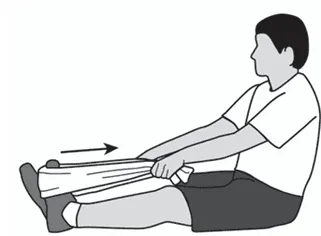
Take a seat on the floor or a chair. Gently draw your toes toward you while placing a towel beneath the ball of your foot. Feel the pull across the back of your calf as you hold the stretch for a few seconds. Ten times over, repeat.
Ankle circles
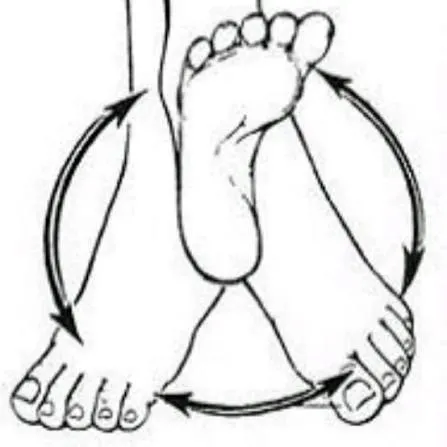
Your legs should be straight in front of you as you sit. Make a steady, deliberate circle with your foot. Make ten spins in each direction. This aids in returning the ankle joint to its full range of mobility.
Ankle alphabet
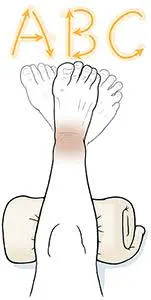
Raise your foot a little off the ground while you’re sitting or lying down. Trace each letter of the alphabet with your ankle and toes. Maintain slow and controlled motions. The ankle is worked in all directions through its range of motion.
Home Treatment for Ankle Stiffness
- Rest: When symptoms are present, stay away from activities that aggravate your ankle, especially high-impact activity.
- Ice: To assist in reducing swelling and pain, apply a cloth-wrapped ice pack to the ankle several times a day for 15 minutes at a time.
- Compression: Swelling can be controlled with a light compression bandage. Make sure it is firm without becoming constrictive.
- Elevation: To minimize fluid accumulation around the joint, try to relax with your ankle elevated above the level of your heart.
Laser treatment for Ankle Stiffness
Laser therapy targets the damaged tissue and inflammation causing ankle pain and stiffness by using highly concentrated light beams to penetrate your skin painlessly. By interacting with cells and tissues, laser energy promotes natural healing reactions and enhances circulation, which helps lower inflammation.
Arthroscopy Treatment for Ankle Stiffness
When conservative measures fail, our staff may suggest arthroscopy, a minimally invasive surgical procedure. This method views, assesses, and repairs ankle injury using small incisions and specialized tools. Compared to traditional surgery, which requires larger incisions, you can anticipate a faster recovery period because it is minimally invasive.
Injections of amniotic fluid: Treatment for Ankle Stiffness
In certain cases, we might suggest combining minimally invasive procedures with restorative therapy, such as amniotic fluid injections. Collagen, growth factors, and other materials that promote healing and recuperation are injected into the wounded area.
Complications for Ankle Stiffness
- Loss of Dorsiflexion: This is the ability to pull the top of the foot toward the shin, and a loss of this ability makes everyday movements like walking, squatting, and climbing stairs difficult.
- Knee and Hip Injuries: When the ankle is not moving properly, the knees and hips have to take on extra stress, increasing the likelihood of injury to those joints.
- Gait Abnormalities: Alterations in the way a person walks, leading to a limp or poor movement mechanics.
- Muscle Atrophy: Lower leg muscles may weaken and shrink due to disuse or change in movement.
- Chronic Ankle Instability: The ankle can become prone to repeated “giving way” due to damage or poor healing of the supporting ligaments.
- Post-traumatic arthritis: This can develop after an injury or chronic stiffness, when friction and cartilage wear and tear in the joint occur over the long term.
- Increased Risk of Stress Fracture: Rigid joints need more torque and place too much pressure on the neighboring tendons, ligaments, and metatarsal bones during high-impact activities like running.
- Longer recovery periods: Stiffness in the joints can lead to longer recovery times and significantly raise healthcare costs.
FAQs
What is ankle stiffness?
The term “ankle stiffness” describes the restricted range of motion and flexibility in the ankle joint, which is frequently accompanied by pain and tightness.
How long does it typically take to recover from ankle stiffness?
The length of recovery might vary from a few weeks to many months, depending on the reason and the type of treatment. Physiotherapy and regular treatment greatly improve healing.
What are the common causes of ankle stiffness?
Injuries including sprains or fractures, arthritis, tendinitis, morning stiffness, excessive physical activity, or recovery after surgery are common causes.
Are there preventive measures to avoid ankle stiffness after an injury?
Avoiding overexertion, wearing appropriate footwear, following recommended rehabilitation activities, and ensuring the injured ankle has enough rest and recovery time are preventive actions.
Why are my ankles stiff every morning but fine by afternoon?
This pattern is typical of thicker synovial fluid and decreased circulation during the night, both of which go away as movement resumes. Additionally, stiffness that goes away in approximately half an hour is regarded as a typical presentation in the early stages of osteoarthritis. It’s usually not a serious issue if the stiffness consistently goes away during the first hour of activity.
Is morning ankle stiffness a sign of arthritis?
It may be, but by itself, it doesn’t always indicate arthritis. Morning joint stiffness is a common symptom of both osteoarthritis and rheumatoid arthritis, with rheumatoid arthritis usually causing longer stiffness and noticeable swelling. Since tendon problems and previous injuries can create identical symptoms, a doctor can establish the cause with a physical examination and imaging if necessary.
How long should morning ankle stiffness last?
A stiffer feeling first thing in the morning may be caused by dehydration, which can make joint fluid feel thicker and less effective at cushioning movement. Drinking water regularly throughout the day is a low-effort habit that generally helps joint lubrication, but it’s rarely the only cause. Hydration is a tiny part of a bigger picture when combined with movement and warmth.
Does a foot massager help with ankle stiffness?
By maintaining blood flow in the lower leg, which supports the tissue surrounding the joint, a seated foot massager that oscillates the foot and ankle in a circular motion can be beneficial. Although it doesn’t immediately heal tendon damage or arthritis, many individuals incorporate it into their daily routine along with warming and stretching. It works better as a component of a more comprehensive stiffness-management regimen than as a stand-alone remedy.
When should I see a doctor for ankle stiffness?
If stiffness persists for more than 30 to 45 minutes most mornings, if it is accompanied by edema or redness, or if it is getting worse over the course of weeks or months, consult a medical expert. Instead of continuing to treat it at home, you should have it evaluated if you experience a feeling of instability, catching, or intense pain when rotating your ankle. Early evaluation makes it easier to determine whether the cause is arthritis, a tendon problem, or residual effects from an earlier injury.
References
- American Academy of Orthopaedic Surgeons. (n.d.). Foot and ankle conditioning program. https://orthoinfo.aaos.org/globalassets/pdfs/2017-rehab_foot-and-ankle.pdf
- Ankle pain, stiffness, and swelling: causes and treatment options. (n.d.). Podiatry Located in Madison Heights, Troy, Commerce Township and South Lyon, MI | Gentle Foot and Ankle Care. https://www.gentlefootdoctors.com/post/ankle-pain-stiffness-and-swelling-causes-and-treatment-options
- Dpt, J. P. P., Mba, J. L. M., & Dpt, M. L. P. (2025, September 1). 11 Best ankle strengthening exercises to prevent injuries. hingehealth. https://www.hingehealth.com/resources/articles/ankle-strengthening-exercises/
- Exercises for the toes, feet and ankles. (n.d.). Arthritis UK. https://www.arthritis-uk.org/information-and-support/living-with-arthritis/health-and-wellbeing/exercising-with-arthritis/exercises-for-healthy-joints/exercises-for-the-toes-feet-and-ankles/
- How to relieve your chronic ankle stiffness. (n.d.). Podiatrist Foot & Ankle Surgery Located in Staten Island, NY | Forward Foot & Ankle. https://www.footdoctornewyork.com/post/how-to-relieve-your-chronic-ankle-stiffness
- Jason.Lee. (2026, April 9). Ankle stiffness: Causes, Treatments and Exercises. ME Physio. https://mephysio.com.au/blog/ankle-stiffness/
- Marcin, A. (2017, July 13). 8 ankle stretches to try at home. Healthline. https://www.healthline.com/health/fitness-exercise/ankle-stretches
- MedMassager. (2026, September 23). Morning ankle stiffness: Causes and how to relieve it. MedMassager. https://medmassager.com/blogs/articles/morning-ankle-stiffness?srsltid=AYCX9vJfENOS3nA45KuFljpPknoqZgg2j5UoFj5UiFEHUfdHGeHUfDgb
- NHS Inform. (2026, July 28). Exercises to help with ankle pain | NHS Inform. NHS Inform. https://www.nhsinform.scot/illnesses-and-conditions/muscle-bone-and-joints/leg-and-foot-problems-and-conditions/exercises-for-ankle-pain/
- Physio, S. (n.d.-a). 5 Best Exercises to Move Your Stiff Ankle – Surrey Physio. Surrey Physio. https://www.surreyphysio.co.uk/top-5/5-best-exercises-to-move-your-stiff-ankle/
- Professional, C. C. M. (2026, January 28). Ankle pain. Cleveland Clinic. https://my.clevelandclinic.org/health/symptoms/15295-ankle-pain