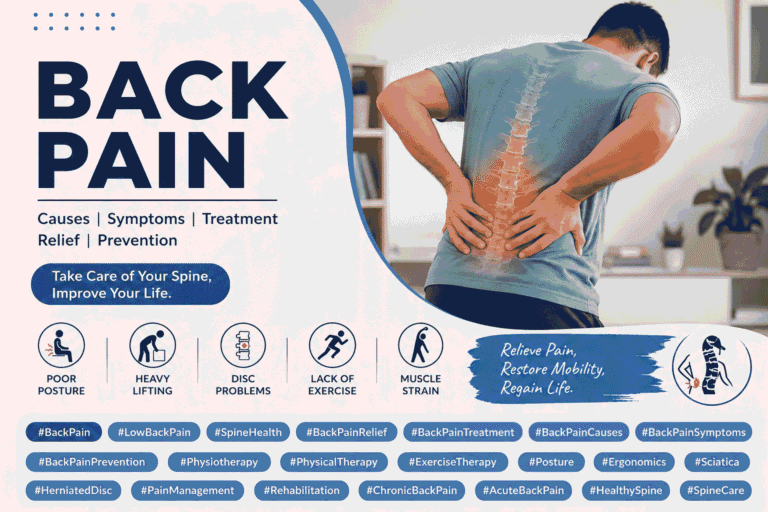
Shoulder Pain
Introduction
Shoulder pain is a common musculoskeletal problem that can affect people of all ages and may interfere with daily activities, work, exercise, and sleep. The arm may move in a variety of directions thanks to the shoulder’s great range of motion. Because of this wide range of movement, the muscles, tendons, ligaments, and other structures around the shoulder can become irritated, strained, or injured. Shoulder pain may develop gradually due to poor posture, repetitive activities, muscle weakness, or overuse, or it may occur suddenly after an injury or fall.
Common causes of shoulder pain include rotator cuff injuries, shoulder impingement, frozen shoulder, bursitis, tendonitis, arthritis, muscle strains, and sports-related injuries. Some people may experience pain while lifting the arm, reaching overhead, carrying objects, or performing activities such as dressing and combing their hair. Stiffness, weakness, swelling, and a reduced range of motion may also occur depending on the underlying cause. In some cases, shoulder pain can become worse at night and disturb sleep.
Early management can help prevent shoulder pain from becoming a long-term problem. Treatment depends on the cause and severity of the condition and may include rest from aggravating activities, appropriate exercises, physiotherapy, pain-relieving measures, and medical treatment when required. Gentle stretching and strengthening exercises can help improve flexibility, restore shoulder movement, and strengthen the muscles that support the joint.
Maintaining good posture, avoiding repetitive strain, using proper techniques during exercise and work, and taking regular movement breaks can also help protect the shoulder. Exercises should, however, be done within a reasonable range and should not result in excruciating or worsening discomfort. Persistent, severe, or unexplained shoulder pain should be assessed by a qualified healthcare professional.
Understanding the causes, symptoms, prevention, and treatment options can help you manage shoulder pain effectively and return to comfortable daily movement.
Muscles Of Shoulder Joint
Serratus anterior: Originates at the side of the chest on the surface of the upper eight ribs and inserts along the whole anterior length of the scapula’s medial edge.
It helps with shoulder rotation and abduction and secures the scapula to the thoracic wall.
Subclavius: Originates from the first rib and inserts on the clavicle’s subclavian groove, which is situated beneath the clavicle. In addition to stabilizing the clavicle, it depresses the lateral clavicle.
Pectoralis minor: Originates from the cartilage of the third, fourth, and fifth ribs and inserts into the top surface and medial border of the scapula’s coracoid process.In addition to helping with breathing, this muscle drags the scapula inferiorly, rotates it medially, and protracts it.
Sternocleidomastoid: Is connected to the clavicle (cleido-), the mastoid process of the temporal bone of the skull, and the sternum (sterno-). The majority of its movements include head rotation and flexion. But in terms of the shoulder, when the head is fixed, it also helps with breathing by raising the sternoclavicular joint.
Levator scapulae: Originates from the transverse processes of the first four cervical vertebrae and inserts into the scapula’s medial edge. It can raise the scapula and rotate it downward.
Rhomboid major and Rhomboid minor (work together): They originate from the spinous processes of the seventh cervical vertebra and the thoracic vertebrae T1 through T5. They fasten to the scapula’s inner edge. They are in charge of the scapula’s adduction and downward rotation with the levator scapulae.
Trapezius: Originates from the spinous processes of all the thoracic vertebrae, the ligamentum nuchae, the occipital bone, and the seventh cervical vertebra. It connects to the acromion process, the outer clavicle, and the scapula’s spine. Different sections of the fibers perform depressionn, upward rotation, elevation, and retraction of the scapula.
Latissimus dorsi: The spinous processes of the lumbar, all sacral, and lower six thoracic vertebrae, as well as the posterior iliac crest, give origin to this massive muscle. It fastens to the humerus’s intertubercular groove. twists, extends, and adducts the humerus inward.
Causes Of Shoulder Pain
The most frequent cause of shoulder pain is the trapping of rotator cuff tendons beneath the shoulder’s bone. The tendons sustain damage or become inflamed. This condition is referred to as bursitis or rotator cuff tendonitis.
Other possible causes of shoulder pain include:
- Shoulder joint arthritis
- Shoulder-related bone spurs
- Your shoulder muscles are out of proportion.
- Inflammation of the fluid-filled sac (bursa) that typically shields the joint and facilitates smooth movement is known as bursitis.
- Fractured shoulder bone
- Shoulder dislocation
- Separation of the shoulders
- When the muscles, tendons, and ligaments inside the shoulder stiffen, it results in frozen shoulder, which is painful and difficult to move.
- Overuse or damage to adjacent tendons, such the arms’ bicep muscles
- Abnormal shoulder mobility caused by nerve damage
- Rotator cuff tendon tears
- Inadequate shoulder mechanics and posture
- Avascular necrosis (osteonecrosis)
- Brachial plexus injury
- Broken arm
- Broken collarbone
- Bursitis
- Cervical radiculopathy
- Dislocated shoulder
- Frozen shoulder
- Heart attack
- Impingement
- Muscle strains
- Osteoarthritis
- Polymyalgia rheumatica
- Rheumatoid arthritis
- Rotator cuff injury
- Separated shoulder
- Septic arthritis
- Sprains (and strains)
- Tendinitis
- Tendon rupture
- Thoracic outlet syndrome
- Torn cartilage
Shoulder pain can also be caused by an issue in another part of the body, including the neck or lungs. We refer to this as referred pain. When the shoulder is at rest, it normally hurts, but it doesn’t get worse when it moves.
When to see a doctor
A heart attack may be indicated by shoulder pain and other symptoms. Seek immediate medical attention if you:
- Breathing becomes difficult.
- Your chest feels tight.
- Are sweating.
What is a rotator cuff injury?
The shoulder joint is held in place and has a large range of motion by the rotator cuff, a collection of muscles and tendons. The most frequent rotator cuff injury is a tear, which can happen in a number of ways.
One major risk factor is age. The rotator cuff naturally deteriorates with time to the point that the tissue tears more readily. Repetitive arm motions, such as those from playing sports like baseball or tennis or having a job that requires lifting heavy things or overhead movements, are another reason. A tear may result from an injury to your shoulder, such as falling on an outstretched arm. Additionally, rotator cuff tears are inherited.
A rotator cuff injury might present with the following signs and symptoms:
- Shoulder pain or hurting
- Discomfort as you raise your arm
- Having trouble sleeping on the affected side
- Abrupt arm weakness, decreased arm range of motion, typically due to pain and weakness.
Conservative treatments for the majority of rotator cuff problems include rest, ice, over-the-counter painkillers, physical therapy, and activity reduction. An injection of corticosteroids into the shoulder can help relieve pain and inflammation. However, medical professionals advise against getting more than three or four shots annually. The rotator cuff tendon may become weaker from too many injections.
For more serious tears that don’t heal quickly, surgery to replace the shoulder joint or repair the rotator cuff may be advised.
Separated or dislocated shoulder?
The shoulder is prone to injuries like dislocations and separations because of the same anatomical structure that gives it its flexibility.
Dislocated shoulder
When the ball of the upper arm bone extends from its shallow socket, it results in a shoulder dislocation. (A subluxation occurs when the ball merely partially slides out of its socket.)
There are several ways that dislocation can happen. Swimming, tennis, volleyball, and other repetitive sports can stretch the shoulder ligaments to the point where they are unable to support the shoulder joint. On the other hand, the head of the upper arm bone may be torn out of its socket by a traumatic injury, such as a strong blow to the shoulder or a fall. Some people have looser-than-normal joints, which makes them more at risk for dislocations.
Shoulder dislocation symptoms include:
Severe pain, inability to move the shoulder joint, bruising, swelling, numbness, paralysis, or tingling close to the injury, and a deformed or dislocated shoulder.
A closed reduction approach, which uses mild tension to allow the shoulder muscles to relax to the point where the ball falls back into place, is frequently an easy way to treat a dislocated shoulder joint. A closed decrease can occasionally be carried out by a skilled coach or trainer. Since some techniques can be uncomfortable, a doctor should ideally carry out the procedure. If this operation is done poorly, the shoulder may sustain more damage and become more unstable in the future.
The injured arm will be in a sling for a few weeks following a reduction to give the shoulder time to heal. To relieve pain, apply ice to the affected shoulder three or four times a day. Your physical therapist can demonstrate exercises to strengthen your shoulder muscles and restore your range of motion once the discomfort and swelling have gone away.
Separated shoulder
An injury to the acromioclavicular (AC) joint is called a separated shoulder, or severe shoulder sprain.
The AC joint is located at the top of the shoulder, where the acromion, a bony projection above the shoulder blade, joins the clavicle, the collarbone. The acromioclavicular and coracoclavicular ligaments stabilize the shoulder by connecting the collarbone to the shoulder blade.
A pretty severe hit to the shoulder, such as what you could receive in a vehicle accident or when participating in contact sports like football, usually causes a shoulder separation. The AC joint’s bones may separate if the ligaments are stretched or torn by a strong enough blow.
A separated shoulder might cause the following symptoms:
- Shoulder pain, weakness, bruising, swelling, restricted range of motion, a hump at the top of the shoulder, and a sense of instability in the shoulder joint.
- Most patients recover from a split shoulder in a few weeks with ice, rest, nonsteroidal anti-inflammatory medications, and physical therapy.
However, it may take up to six weeks to fully resume sports and other shoulder-intensive activities. Surgery is a possibility if more conservative treatments fail to relieve the pain.
Diagnosis Of Shoulder Pain
Diagnosing shoulder pain begins with a detailed history and physical examination. A healthcare professional will ask about the location, duration, severity, and nature of the pain, as well as any previous injury or repetitive activity. The shoulder is examined for tenderness, swelling, weakness, stiffness, and abnormal movement.
The range of motion and muscle strength are also assessed. Special clinical tests may be performed to identify problems involving the rotator cuff, shoulder impingement, instability, or other structures. If necessary, imaging such as an X-ray, ultrasound, or MRI may be recommended to evaluate bones, tendons, muscles, and other soft tissues.
Shoulder Pain Treatment
Treatment depends on the underlying cause and severity of shoulder pain. Mild problems may improve with activity modification, gentle exercises, and appropriate rest. Physiotherapy can be useful for improving shoulder mobility, reducing stiffness, strengthening weak muscles, and gradually restoring normal function. Stretching, range-of-motion exercises, and progressive strengthening are commonly included in rehabilitation.
Medical Treatment Of Shoulder Pain
A healthcare professional may recommend pain-relieving or anti-inflammatory medicines when appropriate. In certain conditions, other treatments such as corticosteroid injections may be considered.
Serious injuries, complete tendon tears, fractures, or persistent problems that do not respond to conservative treatment may require specialist assessment and, in selected cases, surgery. Medication should be taken only according to professional advice.
Physiotherapy Treatment Of Shoulder Pain
Exercises for Shoulder Pain
Arm lifts (standing)
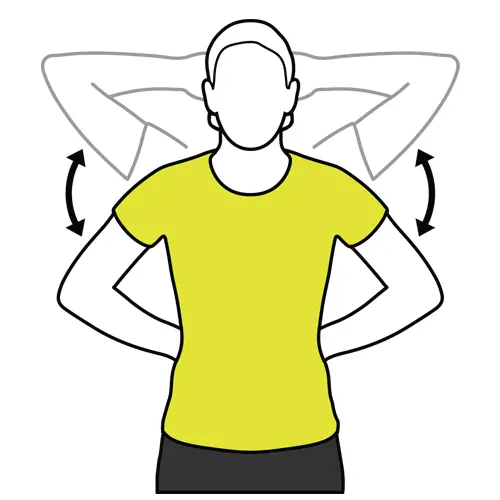
With your elbows pointed to the sides, place your hands behind your head and press them as far back as you can. For five seconds, hold.
Next, place your hands behind your back, pressing them as far back as you can while keeping your elbows pointed out. For five seconds, hold.
Perform each exercise five times.
Arm stretch (standing)
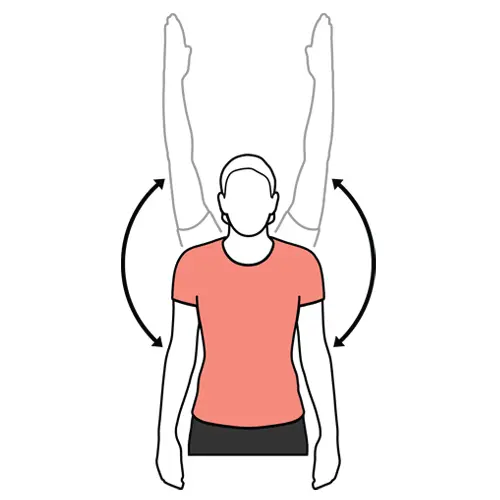
Arms at your sides should be relaxed as you stand. For five to ten seconds, raise your arms as high as is comfortable. Your palms should be facing one another when you raise your arms. Five times, then repeat.
Raising your arms to the sides or in front of you is one way to perform this exercise. You’ll stretch more muscles if you do some of each.
Arm stretch (lying)
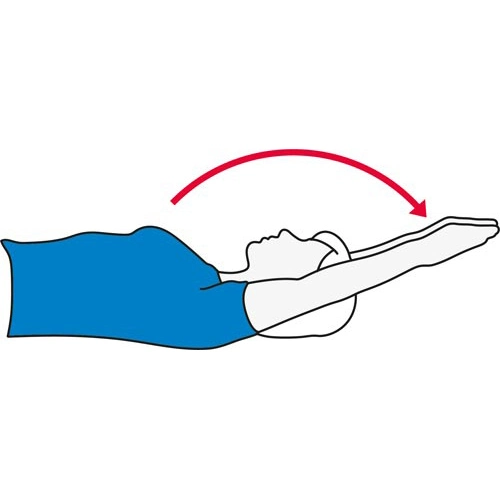
With your arms by your sides, lie on your back. With your palms facing one another, extend your arms as high as is comfortable. Hold for five to ten seconds. Repeat five times with your arms at your sides.
Shoulder circle
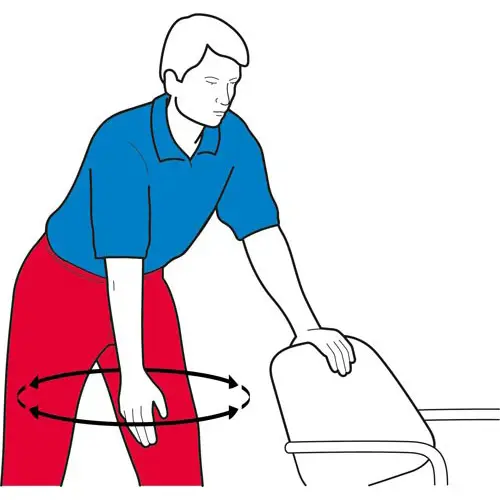
Place one hand on a chair and stand. Try swinging your other arm lightly back and forth in a circle while letting it hang down. Try to perform this two or three times a day and repeat this motion five times. Warming up with this can be beneficial.
Shoulder stretch
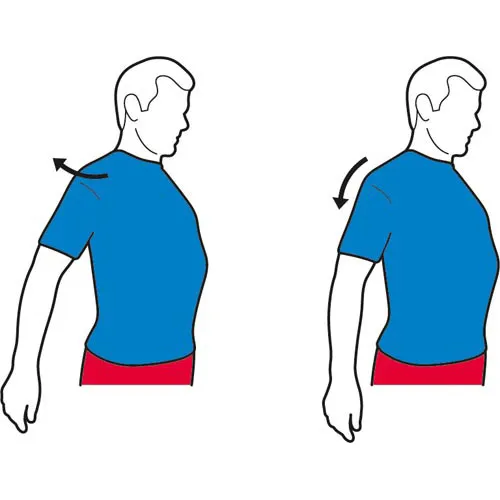
Hold your shoulder blades together and back for five seconds. Hold your shoulder blades down for five seconds. Repeat ten times while relaxing.
Resistance band stretch for shoulders
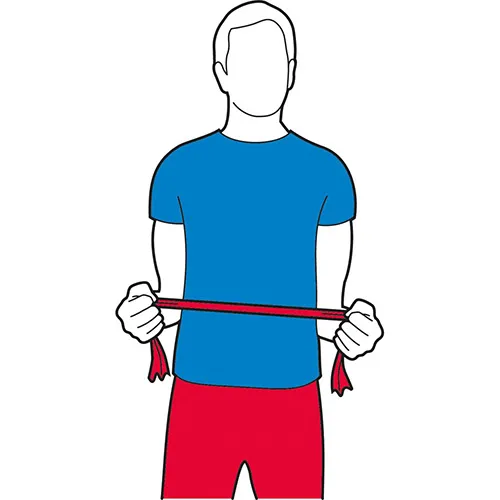
With your fingers curled around it and facing inside, grasp an elasticated resistance band that is either red or yellow. Your arms and hands should line up with your shoulders, and your elbows should be bent at waist height, slightly above your hips.
Stretch the band to the most comfortable length while keeping your elbows at your sides, then hold it there for ten counts. Bring your hands back into alignment with your shoulders gently. Do this ten times. Make an effort to perform this exercise three times per day.
Backwards table press
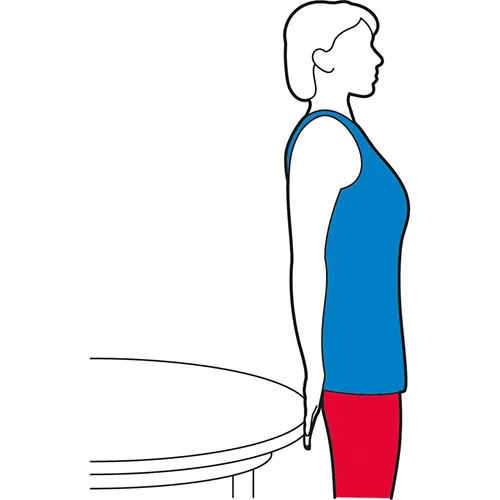
Gently push your shoulder blades back and your hands against the edge of the table while standing straight with your back to it. You are merely attempting to overcome its resistance, not to change the table. Your shoulder muscles should get stronger as a result of the exercise.
Table slide
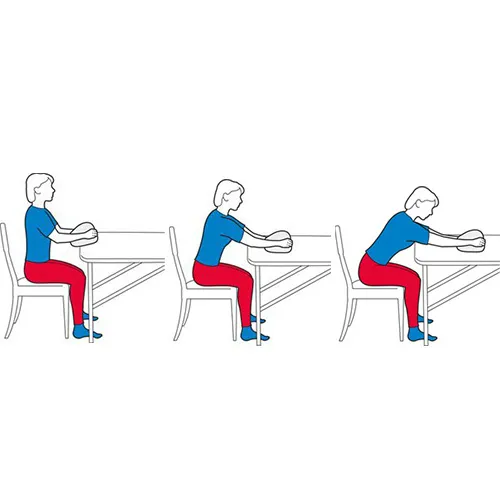
Bend your elbows and place the palms of your hands on a flattened cloth on the table in front of you while sitting straight up, knees bent, and feet flat on the floor hip-width apart.
With a straight back and a tilt from your waist, carefully move the cloth forward across the table. Try to straighten your arms by sliding both hands as far as is comfortable. Slowly lower your head forward and keep it there for five seconds. Repeat after sliding back slowly.
For this exercise, turn your palms to face each other if placing them flat on the table is uncomfortable.
Home Care Of Shoulder Pain
For mild shoulder pain, simple home-care measures may help reduce discomfort and improve movement. These remedies are generally supportive and should be combined with appropriate exercises and professional care when needed.
1. Apply a Cold Pack
If the pain is recent or associated with swelling, apply a cold pack wrapped in a thin towel for about 15–20 minutes. Avoid placing ice directly on the skin.
2. Use a Warm Compress
For stiffness or muscle tightness, a warm compress may help relax the muscles and make shoulder movement more comfortable. Use it for around 15–20 minutes.
3. Gentle Shoulder Movements
Avoid keeping the shoulder completely still for long periods. Gentle movements such as shoulder rolls and pendulum exercises can help maintain mobility, provided they do not increase pain.
4. Maintain Good Posture
Keep your shoulders relaxed and avoid prolonged slouching. When sitting at a desk, position your screen and chair comfortably to reduce strain on the neck and shoulders.
5. Take Breaks
If your work involves prolonged computer use, writing, or repetitive arm movements, take short breaks regularly. Move your neck, shoulders, and arms gently during these breaks.
6. Avoid Painful Activities
Temporarily reduce activities that make the pain worse, especially heavy lifting, repetitive overhead movements, or strenuous exercise.
7. Support the Shoulder During Sleep
Choose a comfortable sleeping position and avoid lying directly on the painful shoulder. A pillow supporting the arm may provide additional comfort.
8. Stay Physically Active
Light physical activity can help prevent stiffness. Gradually return to normal activities as your shoulder becomes more comfortable.
It is also possible to treat rotator cuff issues at home.
- Use ice and ibuprofen or other painkillers after working out if you’ve previously experienced shoulder ache.
- Learn how to strengthen and stretch your shoulder muscles and rotator cuff tendons. Such exercises can be recommended by your physical therapist or health care professional.
- To prevent frozen shoulder, keep doing range-of-motion exercises if you are recuperating from tendinitis.
- Maintaining proper posture will help you maintain the proper alignment of your shoulder tendons and muscles.
Ergonomic Care Of Shoulder Pain
Good posture and proper body mechanics can reduce unnecessary stress on the shoulder. Keep computer screens at a comfortable height and avoid prolonged slouching. Use a chair that provides adequate support and keep the shoulders relaxed while working.
Avoid holding the phone between your shoulder and ear. When lifting objects, keep them close to your body and avoid sudden or excessive overhead movements. When working at a desk for extended periods of time, take brief breaks.
Prevention Of Shoulder Pain
Shoulder pain can often be reduced by maintaining regular physical activity and keeping the shoulder muscles strong and flexible. Warm up before exercise or sports and increase activity gradually. Avoid repetitive movements that cause pain and use correct techniques when lifting or exercising.
Maintain good posture throughout the day and take regular breaks from prolonged sitting. Adequate recovery after strenuous activity is also important. If pain or weakness persists, seek professional assessment rather than continuing activities that aggravate the symptoms.
FAQs
What is the best way to treat shoulder pain?
In general, rest, ice or heat, and targeted physical therapy (depending on the underlying cause) are the best remedies for shoulder pain.
Instant Home Care
Rest and modify: Avoid lifting heavy objects, reaching overhead, or anything that increases the pain.
Ice or Heat – For the first 48 to 72 hours, ice the area with a cloth-wrapped ice pack for 15 to 20 minutes to help minimize swelling. Then, apply heat therapy to relax tight muscles and ease stiffness.
Pain Relievers: Over-the-counter medications like ibuprofen or naproxen help reduce inflammation and relieve pain. Learn more about general care.
Long Term Recovery (LTR)
Physical Therapy: The core of conservative treatment of the shoulder is a professionally designed program of stretching and strengthening exercises.
Correct your posture to avoid putting additional strain on the joint by keeping your shoulders back and in alignment.
Medical Treatments: A physician may recommend corticosteroid injections or other focused interventions if the discomfort doesn’t go away.
What is the best bandage for shoulder pain relief?
3 Ways To Use Shoulder Injury Compression Wraps: The adjustable neoprene shoulder compression brace is the best option for general shoulder pain relief, delivering therapeutic warmth and stability.
Best Types of Shoulder Braces and Bandages
Neoprene Compression Braces Firm support and retain body heat to increase blood flow. Great for rotator cuff tendonitis, arthritis, and minor sprains. Many have pockets for hot/cold therapy packs.
Elastic Shoulder Immobilizers: Prevent unwanted joint movement completely, essential for recovery from major strains, dislocations, or post-surgical healing.
Kinesiology Tape: Provides a light, flexible support that lifts the skin to decrease swelling and muscle tension without restricting your range of motion.
Conventional Elastic Wraps (Ace Bandage): Customizable, reasonably priced compression is achieved by applying a 4-inch or 6-inch elastic wrap in a figure-eight pattern.
What is the most common reason for shoulder pain?
The most common cause of shoulder pain is rotator cuff tendinitis or bursitis. This occurs when the tendons or fluid-filled sacs inside the shoulder joint become inflamed from overuse or get pinched under the shoulder bone.
Other Causes (Common)
Rotator cuff tear: A tear or damage to the tendons that support the shoulder joint.
Impingement syndrome: Compression of soft tissue during overhead arm movements.
Frozen shoulder: Pain and stiffness that gradually restrict the movement of the joint.
Arthritis: The wearing down of cartilage in the joint. Often causes deep aches.
Referred pain: Pain starting in the neck or upper back and going down into the shoulder.
How to remove shoulder pain fast?
For 15 to 20 minutes, apply an ice pack wrapped in a small towel to your shoulder to minimize swelling and numb the pain.
Can sleeping position cause shoulder pain?
Yes, shoulder pain can be directly caused by or made worse by the way you sleep.
How Pain Is Caused by Sleep Positions
Side Sleeping: The joint is compressed against the mattress when you lie straight on your shoulder. The tendons and bursae, which are fluid-filled sacs that cushion the joint, are pinched by this unusual pressure. This eventually results in bursitis, tendinitis, or discomfort.
When you sleep on your stomach, you have to rotate your neck and raise your arms. It causes the joint to become misaligned and stresses the shoulder muscles.
What drink is good for shoulder pain?
Ginger tea, turmeric tea, and tart cherry juice are anti-inflammatory drinks that can help reduce inflammation in the muscles and joints that causes shoulder pain.
Useful Drinks to Help With Pain
Ginger Tea: Contains natural compounds that help reduce inflammation and relieve joint stiffness.
Turmeric Tea (Golden Milk): Contains curcumin, a powerful compound that has been shown to reduce inflammation in the body.
Tart Cherry Juice: Loaded with antioxidants known as anthocyanins, which aid in soothing achy joints and muscles.
Green Tea: Loaded with polyphenols that assist in reducing inflammation in the body.
Water:Hydrationg lubricates your joints and assists your body in healing.
Which deficiency causes shoulder pain?
Vitamin D deficiency could be contributing to or worsening shoulder pain due to muscle weakness, joint stiffness, and increased inflammation.
Relationship to Shoulder Health
Role of Vitamin D in Muscle and Tendon Health: Vitamin D deficiency impairs repair and homeostasis of skeletal muscle and increases risk of rotator cuff problems and delayed healing.
Joint stiffness: Severe deficiencies are associated with adhesive capsulitis (frozen shoulder) and generalized musculoskeletal aches.
Inflammation: This vitamin deficiency may increase inflammatory responses in the soft tissues surrounding the shoulder joint.
Other Possible Deficiencies
Vitamin B12: Low levels cause nerve irritation, muscle weakness, and fatigue in the arms and shoulders.
Iron: Low iron levels affect the body’s ability to transport oxygen to the tissues, and this often results in marked fatigue and focal muscle weakness.
Relief and Control
Sunlight Exposure: Short daily outdoor periods are safe & can naturally boost vitamin D levels.
Food Modifications: Eat fortified foods, egg yolks, fatty fish, and dairy products.
Supplements: Blood tests can confirm levels, and a doctor can advise the correct dosage of vitamin D or B12.
References
- Cronkleton, E. (2025, February 28). Top 10 exercises to relieve shoulder pain and tightness. Healthline. https://www.healthline.com/health/shoulder-pain-exercises
- Department of Health & Human Services. (n.d.). Shoulder pain. Better Health Channel. https://www.betterhealth.vic.gov.au/health/conditionsandtreatments/Shoulder-pain
- Exercises for shoulder pain. (2025, June 10). British Elbow & Shoulder Society. https://bess.ac.uk/exercises-for-shoulder-pain/
- Exercises for the shoulders. (n.d.). Arthritis UK. https://www.arthritis-uk.org/information-and-support/living-with-arthritis/health-and-wellbeing/exercising-with-arthritis/exercises-for-healthy-joints/exercises-for-the-shoulders/
- Harvard Health. (2026, April 20). Shoulder pain. https://www.health.harvard.edu/topics/shoulder-pain
- Institute for Quality and Efficiency in Health Care (IQWiG). (2024, April 22). Overview: Shoulder pain. InformedHealth.org – NCBI Bookshelf. https://www.ncbi.nlm.nih.gov/books/NBK554693/
- Pietrangelo, A. (2023, May 22). Why does my shoulder hurt? Healthline. https://www.healthline.com/health/chronic-pain/shoulder-pain
- Professional, C. C. M. (2026, January 26). Shoulder pain. Cleveland Clinic. https://my.clevelandclinic.org/health/symptoms/25122-shoulder-pain
- Shoulder pain. (n.d.-a). https://www.iodex.co.in/treatment-by-pain-type/shoulder-pain/
- Shoulder pain: MedlinePlus Medical Encyclopedia. (n.d.). https://www.medlineplus.gov/ency/article/003171.htm
- Surgery, H. F. S. (2025, January 3). Shoulder pain causes, conditions, and treatments. Hospital for Special Surgery. https://www.hss.edu/health-library/conditions-and-treatments/list/shoulder-pain-causes
- Website, N. (2026, April 15). Shoulder pain. NHS.uk. https://www.nhs.uk/symptoms/shoulder-pain/