Pursed-Lip Breathing Exercise
Introduction
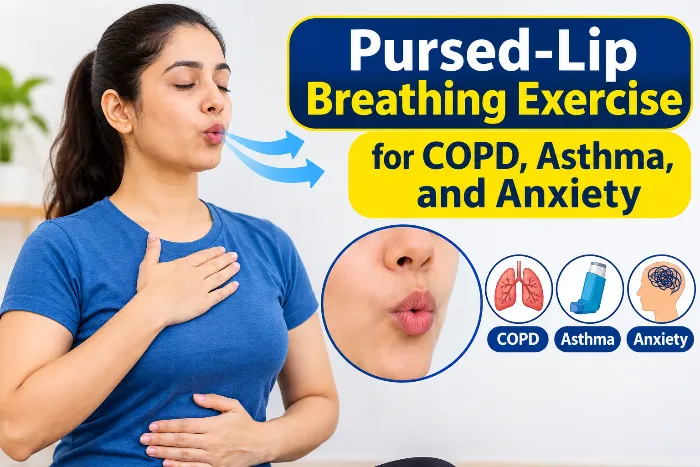
Pursed-lip breathing can be beneficial in the management of breathlessness in patients with COPD/Asthma. It can also be used as a relaxation technique in those with anxiety. This breathing technique aims to improve breath control and reduce breathlessness. It can be utilised by breathing in slowly through the nose and gently blowing out through pursed lips (like you would to blow out a candle).
This type of breathing is commonly used in pulmonary rehabilitation programs in people with COPD. It may also assist with breath control in people with asthma. In people with anxiety,y it can be used as a relaxation technique.
Advantages of this technique include it being easy to implement in everyday life. It can be done in many positions,s including sitting, standing, walking,g and while completing various activities. With regular practice,e individuals may become more confident in controlling their breathing in situations where they may otherwise experience breathlessness.
How to perform pursed-lip breathing, benefits of the breathing, correct practice, how it may be applied in people with COPD, asthma, and anxiety, as well as advice on precautions and common mistakes.
What is Pursed-Lip Breathing?
- Pursed-lip breathing is a breathing technique.
- It involves breathing in through the nose and breathing out gently with pursed lips.
- It causes mild resistance in exhalation.
- This can prevent small airways from collapsing prematurely (this is common in people with COPD).
- Therefore, air may be able to be exhaled more easily.
- In people with respiratory issues, breathing may become faster.
- Air may be trapped within the lungs,s and full exhalation may be difficult.
- Pursed-lip breathing produces a slower breathing pattern and focuses on exhalation.
- It reduces frequent forceful breathing.
- It can be beneficial during activities such as walking, climbing stairs, bending over,r and exercising.
Pursed Lip Breathing Exercise Video
How does it work?
- Pursed-lip breathing causes mild positive pressure in the airways, meaning they stay open for longer.
- Air is therefore exhaled more slowly.
- In conditions such as COPD (specifically emphysema), elastic tissue in the small airways may be damaged.
- As a result, during exhalation, the small airways may close prematurely in people with COPD.
- This may indicate that the lungs are unable to release air completely.
- This can cause air to become retained within the lungs, making it difficult to exhale fully.
- This causes over-inflation of the lungs and results in greater difficulty in taking a comfortable breath.
Pursed-lip breathing may help by:
- Slowing breathing rate.
- Lengthening exhalation.
- Creating mild positive pressure in airways.
- Preventing premature closure of small airways.
- Improving removal of trapped air.
- Improving breath control during physical exertion.
- May improve feelings of breathlessness by providing a slower, controlled breathing pattern.
Benefits
Pursed-lip breathing can provide many benefits to people struggling with breathing.
It can be beneficial for improving breath control in people with COPD. It may also aid symptom management in people with Asthma and anxiety.
Reduced breathlessness
- Pursed-lip breathing can reduce breathlessness.
- If someone is struggling to breathe, they may be breathing very quickly and shallowly.
This increases the work required to breathe and may make the person feel even more uncomfortable. - By breathing more slowly and taking longer to exhale, individuals may feel more in control of their breathing.
- In turn, breathing may feel more comfortable.
Prevents airway closure
- During exhalation, airways naturally narrow.
- For people with COPD, particularly emphysema, small airways may prematurely close.
- This can make it very difficult to fully exhale air.
- Pursed-lip breathing causes mild positive pressure and therefore keeps airways open for longer.
- Air may be exhaled more easily.
Reduced air trapping
- Air trapping is a common issue in people with COPD.
It occurs when air is unable to be fully exhaled from the lungs during breathing. - This may cause overinflation of the lungs and make breathing more difficult.
- By prolonging exhalation, pursed-lip breathing may allow people to exhale air more efficiently.
- This may reduce air trapping.
Improved breath control
- Some people with breathing problems may develop an irregular breathing pattern.
- They may be breathing very quickly, taking deep breaths repeatedly, or pausing their breathing during physical exertion.
- Pursed-lip breathing teaches people how to control their breathing pattern.
- If practiced regularly, people may become more confident in controlling breathlessness in daily activities.
Easier physical activity
- Many people with COPD may struggle with physical activity such as walking, going up stairs, bathing, and dressing.
- Pursed-lip breathing during physical activity may improve breath control and allow people to complete physical activity more easily.
- For example, take a breath in before the physical movement, and gently release air with pursed lips during the most physically demanding part of the activity.
Relaxation
- Slow, controlled breathing can help relax muscles.
- During periods of anxiety, people may have fast breathing, tightness in their chest,t and become very aware of their breathing.
- By having a simple breathing pattern, pursed-lip breathing may help people feel calmer.
- Reduction of respiratory muscle strain
- If breathing becomes difficult, extra strain may be placed on musculature in the neck, shoulders, and upper chest.
- Pursed-lip breathing may reduce excessive strain on respiratory musculature in some people by allowing slower exhalation and a more controlled breathing pattern.
Easy to do
Pursed-lip breathing can be completed in many positions and does not require specific equipment
It may be performed in:
- Sitting
- Standing
- Walking
- During recovery from physical activity
- While completing household tasks
- During mild breathlessness.
How to Perform Pursed Lip Breathing
To get the most benefit from pursed lip breathing, it is important to perform it correctly. It must be done gently, and air should not be forced out of the lungs.

Sit comfortably
- Sit comfortably.
- Place your feet on the floor and ensure you have good back support.
- Relax your shoulders.
- Alternatively, stand or lie in a comfortable position depending on your condition.
Relax muscles
- Before beginning, relax the muscles in your neck, shoulders, and upper chest.
- Avoid tensing these areas and ensure that you are comfortable.
- Try to sit/stand in a natural position.
Inhale
- Close your mouth. Inhale gently through your nose.
- Inhale for 2 slow counts. Let your tummy gently rise.
- Avoid taking very deep breaths; this may cause discomfort in some people
Pursed lips
- Purse your lips as if you were whistling or gently blowing out a candle.
- Purse your lips slightly, but do not purse tightly.
Exhale slowly
- Gently exhale through pursed lips.
- Try to exhale for double the amount of time
- For example: Inhale for 2 seconds.
- Exhale for 4 seconds.
- Do not blow forcefully.
- Do not try to fully empty your lungs.
Repeat
- Continue the cycle by breathing in slowly through your nose and releasing the air softly through your lips held in a slight pucker.
- Repeat several times to make you feel more relaxed and in control of your breathing.
- If you begin to feel dizzy, more breathless, or uncomfortable, stop.
Recommended duration and frequency
Start with a small number of slow breaths, maintaining a rhythm that feels relaxed and natural. As people become accustomed to this breathing, increase the duration of practice.
We recommend beginning with:
- Duration: Inhale 2s, Exhale 4s; Inhale/exhale ratio 1:2 Total.
- Duration: 1-2 min;s Frequency: 3-5 short sessions per day.
- Position: Sit or stand comfortably.
- This is general guidance.
- Depending on individual tolerance and based on advice from medical professionals.
- The duration and frequency can be changed.
Pursed-Lip Breathing in COPD
- Breathing becomes challenging when you have Chronic Obstructive Pulmonary Disease (COPD), a long-term respiratory illness.
- It often includes chronic bronchitis and emphysema.
- Symptoms of COPD include a chronic cough, production of phlegm, wheeze, tightness in the chest, and breathlessness.
- Due to damage to the lungs and airways, people with COPD may struggle to fully exhale.
This can cause air trapping and overinflation of the lungs. - Pursed-lip breathing is commonly advised in pulmonary rehabilitation programs.
Benefits for people with COPD
Reduces air trapping
- In people with COPD, narrowed small air passages can restrict airflow, making it difficult to breathe out completely.
- Pursed-lip breathing creates mild resistance in exhalation.
- This helps to keep airways open for longer, and air may be exhaled more easily.
Easier breath control
- Fast breathing may be difficult and uncomfortable.
- Pursed-lip breathing encourages a slower breathing pattern. It gives structure to the inhalation and exhalation.
Helpful during physical activity
- People with COPD may struggle with breathlessness during physical activity such as walking, climbing stairs, and completing household activities.
- Pursed-lip breathing may be combined with physical activity to help with these tasks.
May improve tolerance to physical activity
- With controlled breathing, some people with COPD may be able to tolerate physical activity more easily.
- However, results may vary.
- Pursed-lip breathing should be combined with appropriate physical activity and pulmonary rehabilitation.
When to perform in COPD
Pursed-lip breathing may be performed by people with COPD when they:
- Have mild breathlessness.
- Walk or climb stairs.
- After physical activity.
- Bend over or lift something.
- Complete household activities.
- Are anxious about breathlessness.
Other Physiotherapy advice for COPD
Along with pursed-lip breathing, a physiotherapist may advise:
- Diaphragmatic breathing.
- Thorax expansion.
- Relaxed breathing.
- Airway clearance as required.
- Strengthening exercises for upper and lower limbs.
- Endurance training.
- Appropriate postures to reduce breathlessness.
- Pulmonary Rehabilitation is very important.
- It includes physical activity, education, and methods to better manage symptoms.
Pursed-Lip Breathing in Asthma
- Asthma is a persistent respiratory disorder in which the airways become swollen and constricted, potentially causing breathing difficulties.
- Wheezing, coughing, pressure in the chest, and difficulty breathing are some of the symptoms.
- Symptoms of asthma can be caused by many things, including allergens, dust, smoke, infection, physical activity, cold air, and many other environmental factors.
- During an asthma attack, the airways become narrowed.
This is due to inflammation, constriction of bronchial muscles,s and increased production of mucus.
Pursed-lip breathing may help some people with asthma by reducing feelings of breathlessness. It encourages slower, controlled breathing.
Benefits in Asthma
Controlled breathing
During an asthma attack, people may become very anxious and begin to breathe very quickly.
Controlled exhalation may give a sense of less panic.
Easier breathing
Breathing slowly may make breathing easier for some people with mild symptoms, or after physical activity.
Relaxation
Sometimes people with asthma may feel anxious. By focusing on slow, gentle inhalation and prolonged exhalation, people may feel more relaxed.
Useful after physical activity
Some people may find this breathing helpful if they have mild breathlessness after physical activity.
How to Perform Pursed-Lip Breathing in Asthma
- If you are experiencing breathlessness, stop the activity.
- Sit upright in a comfortable position.
- Relax your neck and shoulder muscles.
- Inhale gently through your nose.
- Pucker your lips as if gently blowing out a candle.
- Exhale gently.
- Repeat comfortable breaths.
- Pursed-Lip Breathing in Anxiety
- Anxiety is the mind and body’s response to stressful situations, uncertainty, or a sense of potential threat.
- It can cause rapid breathing, chest tightness, palpitations, sweating, dizziness, and feelings of not getting enough air.
- During periods of anxiety or panic, some people may begin to breathe very quickly.
- This can change CO2 levels in the body, leading to lightheadedness, tingling, and breathlessness.
- Pursed-lip breathing can be a simple way to slow breathing.
- It focuses on gentle exhalation.
Benefits in Anxiety
Reduces rapid breathing
- During periods of anxiety,y people may be breathing quickly.
- Pursed-lip breathing can help people reduce this and feel in control.
Promotes relaxation. Focusing on a comfortable breathing pattern can help people relax.
Reduces breathlessness during panics
- During a panic, people may become very aware of their breathing.
- Performing a simple breathing pattern may be helpful.
Increased awareness of breathing patterns
- By regularly performing this breathing exercise, people may become more aware of when they are breathing too quickly or tensing their chest/shoulder muscles.
Can be performed anywhere
- Pursed-lip breathing can be performed in many places.
- This can include sitting in your home, at work, on journeys, etc.
How to Perform Pursed-Lip Breathing for Anxiety
- Sit in a quiet, comfortable area.
- Relax your shoulders and jaw.
- Ensure you have your feet on the floor.
- Inhale gently through your nose.
- Exhale gently through pursed lips.
- Exhale for slightly longer than you inhaled.
- Repeat several comfortable breaths.
- Allow breathing to return to normal.
- Do not take deep breaths or hold your breath.
- If you become more anxious whilst focusing on your breath, stop and try grounding techniques.
- This can involve focusing on objects around you or feeling your feet on the ground.
- Pursed-lip breathing can be a useful way to help people relax, but should not be used as a substitute for psychological therapy or correct medical treatment for an anxiety disorder.
Positions to Perform Pursed-Lip Breathing
Pursed-lip breathing can be performed in many positions depending on comfort, mobility, ability, and severity of breathlessness.
Sitting
- Sit in a comfortable chair.
- Ensure both feet are on the floor.
- Relax your shoulders and neck.
- Place your hands comfortably on your thighs. Inhale through your nose.
- Gently exhale through pursed lips.
This is great for people new to this breathing technique or with mild breathlessness.
Leaning forward while sitting
- Sit on a chair with feet slightly apart.
- Lean forward in your upper body.
- Rest your forearms on your thighs, or place your elbows on a table.
- Relax your neck and shoulder muscles.
- Inhale gently through your nose.
- Exhale gently through pursed lips.
This may be a comfortable position for people with COPD. Perform pursed-lip breathing during breathlessness.
Standing
- Stand with feet roughly shoulder-width apart.
- Relax your knees.
- Stand in a comfortable upright position.
- Relax your upper body. Inhale through your nose.
- Gently exhale through pursed lips.
This can be useful for practicing controlled breathing in standing positions.
Supported standing
- Stand near a stable table or counter.
- Place both hands/forearms on the surface.
- If comfortable, lean forward slightly.
- Relax your shoulders. Inhale gently through your nose.
- Gently exhale through pursed lips.
This may be useful for recovering from breathlessness during walking or household activities.
When to Perform
- Pursed-lip breathing can be performed regularly and during mild breathlessness.
- Walking – coordinate breathing with movement.
- Climbing stairs – Inhale before effort.
- Gently exhale during more demanding movements.
- Bending – Gently exhale.
- Lifting objects – Exhale during the lifting motion.
- Physical activity – If you have mild breathlessness, use pursed-lip breathing to control breathing.
- Recovery from physical activity – Use controlled breathing.
- If feeling anxious – Gently exhale
- Pursed-lip breathing is most effective if practised before significant breathlessness.
Common mistakes
Whilst pursed-lip breathing is a simple breathing technique, doing it incorrectly can reduce the benefits and may be uncomfortable.
Avoid:
- Fast breathing
- Some people may still breathe quickly.
- Fix: Breathe more slowly. Inhale gently and exhale for longer.
Very deep breathing
- Taking very deep breaths may cause discomfort.
- This is particularly true for people with COPD who may be experiencing overinflation of the lungs.
- Fix: Simply breathe in a comfortable amount of air through your nose.
Forceful exhalation
- Forceful exhalation can cause tension in respiratory muscles.
- Fix: Gently exhale air through pursed lips.
Tensing muscles in the neck and shoulders
- Some people may raise their shoulders and/or tense the muscles in their upper chest.
- Fix: Relax shoulders.
- Avoid unnecessary movement in the upper body.
Fully closed lips
- Lips should be slightly open.
- Fix: Purse your lips as you would when gently blowing on hot food.
Holding your breath
- Holding your breath between inhalations and exhalations may be uncomfortable.
- Fix: Ensure a smooth transition between inhalation and exhalation.
Forcing air out of the lungs
- This may be uncomfortable and cause unnecessary effort.
- Fix: Exhale comfortably and let the next inhalation occur naturally.
Pursed-Lip Breathing vs Diaphragmatic Breathing
| Comparison | Pursed-Lip Breathing | Diaphragmatic Breathing |
| Definition | A breathing technique in which air is slowly exhaled through partially closed lips. | A breathing technique that focuses on using the diaphragm for deeper and more efficient breathing. |
| Main purpose | Helps control breathing and reduce shortness of breath. | Improves diaphragmatic movement and breathing efficiency. |
| Primary muscle involved | Respiratory muscles, including the diaphragm and intercostal muscles. | Mainly the diaphragm. |
| Inhalation | Slowly inhale through the nose. | Breathe in gently through your nose, letting your belly rise and expand as the air enters. |
| Exhalation | Exhale slowly through pursed lips, as if blowing out a candle. | Exhale gently through the mouth while allowing the abdomen to move inward. |
| Breathing pattern | Emphasizes prolonged and controlled exhalation. | Emphasizes abdominal expansion during inhalation. |
| Airflow | Creates slight resistance during exhalation, helping keep airways open longer. | Encourages better diaphragm movement and ventilation. |
| Effect on breathing rate | Helps slow down rapid breathing. | Helps promote slow, controlled breathing. |
| Common conditions | COPD, emphysema, asthma (as an adjunct), and breathlessness. | COPD, dysfunctional breathing patterns, anxiety-related breathing difficulties, and respiratory muscle retraining. |
Conclusion
Pursed-lip breathing is a simple, effective breathing technique that can help people manage breathlessness and improve breathing control. It is particularly beneficial for individuals with Chronic Obstructive Pulmonary Disease (COPD), asthma, and anxiety. By inhaling slowly through the nose and exhaling gently through pursed lips, this technique helps slow down breathing, reduce air trapping, and promote relaxation.
Regular practice may improve breathing efficiency, reduce the feeling of shortness of breath, and make everyday activities such as walking, climbing stairs, and exercising more comfortable. For people with anxiety, it may also encourage relaxation and help manage breathing during stressful situations.
For the best results, practice pursed-lip breathing regularly, maintain a comfortable posture, and avoid forcing your breath. Although this technique can help manage symptoms, it should not replace prescribed medications, inhalers, or other medical treatments. People with persistent or worsening breathlessness should consult a healthcare professional.
FAQs
What is the main purpose of pursed-lip breathing?
The main purpose of pursed-lip breathing is to slow down breathing and prolong exhalation. It creates gentle back pressure that helps maintain airway openness during expiration, which can be particularly beneficial for individuals with COPD.
Is pursed-lip breathing good for COPD?
Yes. Pursed-lip breathing is commonly recommended for people with COPD because it may reduce breathlessness, improve breathing control, and help manage air trapping.
Can pursed-lip breathing help with asthma?
Pursed-lip breathing may help some individuals with asthma manage mild breathlessness and anxiety associated with breathing discomfort. However, it does not open inflamed airways or replace asthma medication and emergency treatment.
Can pursed-lip breathing reduce anxiety?
Yes. Slow and controlled breathing may promote relaxation and help some individuals manage anxiety-related rapid breathing. However, it should not be considered a standalone treatment for anxiety disorders.
How many seconds should I inhale and exhale?
A commonly recommended pattern is inhaling through the nose for approximately 2 seconds and exhaling through pursed lips for approximately 4 seconds.
However, the timing should be adjusted according to individual comfort.
How many times should I practise pursed-lip breathing?
Beginners can practise several comfortable breathing cycles for a few minutes, three to five times daily. The frequency and duration can be adjusted according to individual needs and healthcare professional recommendations.
Can I perform pursed-lip breathing while walking?
Yes. Pursed-lip breathing can be coordinated with walking. Breathe in gently and exhale slowly through pursed lips while continuing at a comfortable pace.
If breathlessness increases, stop and rest in a comfortable position.
References
- American Lung Association. (n.d.). Breathing exercises. https://www.lung.org/lung-health-diseases/wellness/breathing-exercises?utm_source
- Professional, C. C. M. (2026, September 8). Pursed-Lip breathing. Cleveland Clinic. https://my.clevelandclinic.org/health/treatments/9443-pursed-lip-breathing?utm_source
- Leaflet 3: Breathing techniques to ease breathlessness. (n.d.). Cambridge University Hospitals. https://www.cuh.nhs.uk/patient-information/breathing-techniques-to-ease-breathlessness/?utm_source