
Cervical Spondylosis
Introduction
Cervical Spondylosis is a common degenerative condition affecting the cervical spine, including the vertebrae, intervertebral discs, and facet joints of the neck. It usually develops gradually due to age-related wear and tear, although poor posture, prolonged computer or mobile-phone use, repetitive neck movements, and previous injuries may contribute to its development.
Degenerative changes can cause stiffness, reduced neck mobility, and pain around the neck, shoulders, and upper back. In some cases, bony changes or disc degeneration may irritate or compress the cervical nerves, leading to radiating pain, tingling, numbness, or weakness in the arm and hand.
Symptoms may become more noticeable after prolonged sitting, driving, or maintaining an incorrect posture for a long period. The condition can affect daily activities, work performance, and overall comfort.
Early management with physiotherapy, therapeutic exercises, posture correction, ergonomic modifications, and appropriate lifestyle changes can help reduce symptoms, improve mobility, and maintain functional independence.
Causes of Cervical Spondylosis
- Aging: The main reason is natural deterioration over time. The disks’ capacity to cushion the vertebrae is diminished as the body ages because they lose moisture and suppleness.
- Neck pain can be intermittent or chronic, and it can get worse with movement. Additionally, the upper back or shoulders may experience pain.
- Herniated Disks: Cracks and bulging can result from disks drying out and shrinking. This could put strain on surrounding nerves, causing numbness and pain.
- Bone Spurs: An excess of bone may put pressure on nerves and result in discomfort. These spurs can constrict the spinal canal and are the body’s reaction to disc deterioration.
- Ligament Stiffening: The neck’s ligaments may become less flexible and more rigid. This restricts neck mobility and adds to stiffness and discomfort.
- Injury: The degenerative process may be accelerated by prior neck traumas. Trauma can aggravate the effects of aging on the spine by damaging joints and discs.
- Genetics: A family history of cervical spine problems may increase your risk. The speed of deterioration may be influenced by genetic predisposition.
- Lifestyle factors: Being overweight, smoking, not exercising, and poor posture can all make the problem worse. Such habits speed up disc degeneration and put stress on the neck.
Symptoms of Cervical Spondylosis
The intensity and damaged structures of cervical spondylosis determine the symptoms. Typical signs and symptoms include:
- A stiff neck can be characterized by limited range of motion and pain, especially after sleep or prolonged periods of sitting. You may have a hard time turning your head or looking up and down.
- Headaches: Usually start in the back of the head. These headaches often involve neck muscle strain and may be tension-related
- Shoulder or arm pain: The nerves can get compressed, and this can cause pain to radiate down the arms. It may feel achy, burning,g or sharp.
- Numbness or a feeling of tingling, especially in the hands, fingers, wrists,s or arms. It could be from pressure on the nerve roots that come off the spine.
- Muscle weakness can manifest as a weak grip or difficulty raising the arms. This may make it difficult to do everyday things such as writing or lifting things.
- Loss of Balance – This can happen when the spinal cord is badly damaged. It may also be associated with coordination problems or difficulty walking.
Risk factors of Cervical Spondylosis
Cervical spondylosis risk factors include:
- Age: Cervical spondylosis is more common as people age.
- Work. Overhead work, awkward positioning, or repetitive neck motions are all additional stressors to the neck.
- Neck injury.
- Obesity
- Smoking
- Genetic elements. Over time, some members of particular families will go through more of these changes.
Diagnosis of Cervical Spondylosis
They may check your:
- Neck flexibility
- Muscle strength and reflexes
- In your hands, arms, or legs
- Gait (how you walk)
Investigations of Cervical Spondylosis
- X-ray
- CT or MRI scan
- Myelogram
- Electromyography (EMG)
- Nerve conduction study
Treatment of Cervical Spondylosis
Medical Treatment of Cervical Spondylosis
The primary goals of cervical spondylosis treatment are to reduce symptoms and avoid serious spinal cord injury.
Healthcare professionals typically begin with nonsurgical therapy. For instance, they might suggest:
- Strengthening your neck and upper back muscles with physical therapy
- Painkillers available over-the-counter
- NSAIDs or corticosteroids to reduce inflammation
- Muscles Relaxants
- Using a soft neck collar for a brief period of time
What is causing the injury determines the kind of operation. A laminectomy, for instance, removes the vertebral bone arch. A spinal fusion is another kind of surgery.
Physiotherapy Treatment of Cervical Spondylosis
Exercise for Cervical Spondylosis
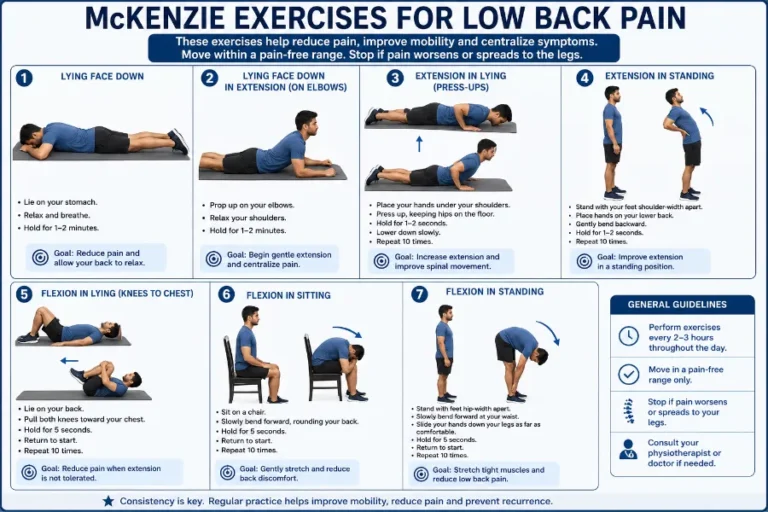
Neck Flexion and Extension
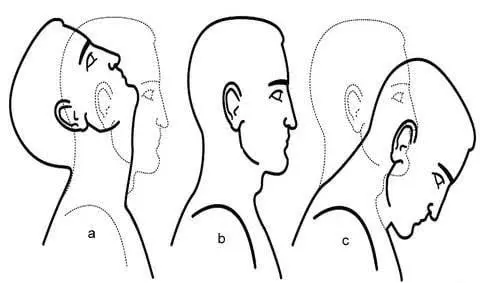
How to do it:
Sit up straight and lower your chin slowly toward your chest as far as comfortable. Hold for 3-5 seconds. Then, without forcing the movement, come back to neutral slowly and just look up until it feels comfortable. Wait for three to five seconds.
Repeat 8 to 10 times, once or twice a day. A few important disclaimers: If extension (looking up) causes neurological symptoms, dizziness, or pain down your arm, avoid this direction altogether and discuss this with your doctor. Extension is provocative in some cases of significant foraminal constriction and is an important diagnostic piece of information not to be overlooked.
Lateral Neck Flexion
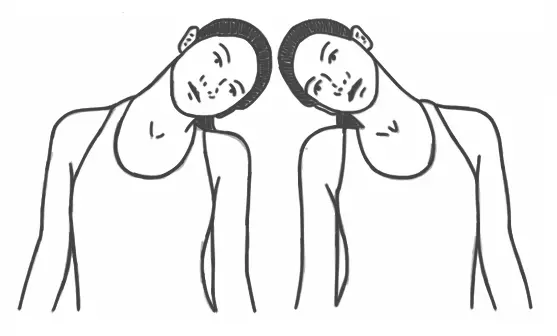
How to do it:
Tilt your right ear slowly in the direction of your right shoulder while sitting erect and keeping your shoulders level and relaxed. Keep your shoulder low and don’t raise it to reach your ear. The left side of your neck should feel somewhat stretched. Return to center after holding for 20 to 30 seconds. On the left side, repeat.
Perform three reps on each side. You can gently rest your right hand on the left side of your head to slightly deepen the stretch, but you should never actively pull—just use the weight of your hand.
Cervical Rotation
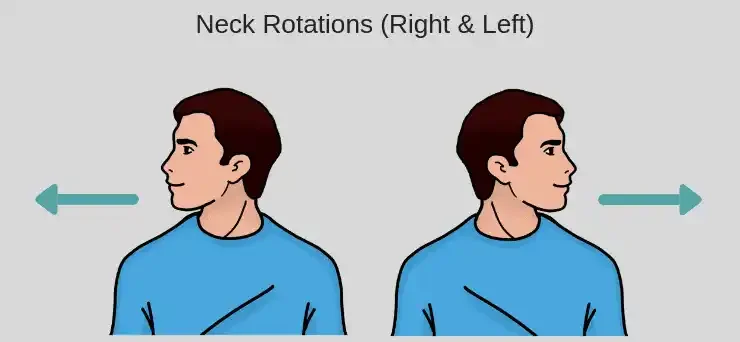
How to do it:
Rotate your head slowly to the right while sitting in a neutral position, starting with your chin. Don’t push to the end range; simply go as far as is comfortable. Hold for five seconds. Rotate left after returning to the center.
For each direction, repeat eight to ten times. Move slowly and deliberately. Fast, jerky neck rotations can exacerbate already-irritated facet joints and are ineffective.
Shoulder Rolls and Shoulder Blade Squeezes
The cervical spine is attached to or influenced by the trapezius, rhomboids, and levator scapulae. The mechanics of the entire neck region are changed when these muscles are weak or chronically tense. Cervical vertebrae are indirectly relieved of load by strengthening and releasing this region.
Shoulder rolls: Make a big, deliberate circle up, back, down, and forward while slowly rolling your shoulders backward. After ten repetitions, switch directions. Squeeze your shoulder blades: Take a tall seat with your arms by your sides. Hold your shoulder blades together gently for five seconds. Release completely. Repeat ten to fifteen times.
These are especially useful for desk workers since extended sitting causes the upper back to collapse and the neck to tilt forward, which greatly increases the compressive strain on the cervical discs.
Home Remedies for Cervical Spondylosis
Simple home-care measures can help ease the pain and stiffness of cervical spondylosis. Applying a warm compress to the neck for about 15-20 minutes can help to relax tight muscles and reduce stiffness. A cold pack wrapped in a towel can provide temporary relief when the area feels irritated after activity.
“Gentle neck movements within a comfortable range can help maintain mobility, but sudden or forceful movements should be avoided. Keep active and don’t sit too much to prevent getting stiff. When using a computer or mobile phone, make sure the screen is at a comfortable height and try not to bend your head forward for a long time.
A supportive pillow that keeps the neck comfortable can improve sleeping comfort. Avoid heavy lifting and repetitive activities,s which obviously increase neck pain. Also, maintaining good posture when sitting, standing, ng and during daily activities can help to decrease unnecessary strain on the cervical spine. If symptoms persist, or are accompanied by marked numbness, weakness, balance problems or severe pain, seek professional medical assessment.
Complications of Cervical Spondylosis
Your spinal cord or nerve roots may sustain irreversible damage if cervical spondylosis severely compresses them.
If spinal cord damage results from neck spondylosis, complications may occur. There are mostly two kinds:
Cervical myelopathy
It may result in muscle weakness or numbness in your hands.
Cervical radiculopathy
It may result in “pins and needles,” muscle weakness, and pain that travels down your arm.
Cervical spondylosis.
Your quality of life may be significantly impacted by each of these issues. Therefore, it’s critical to seek medical attention as soon as you have symptoms.
Prevention of Cervical Spondylosis
When studying or using mobile phones and computers, it is very important to keep an upright position. Give your body short breaks from sitting, and do some gentle exercises for the neck and the shoulders. The muscles that support the spine need to be exercised regularly; there should not be any heavy lifting; the body must be kept in good physical shape.
FAQs
Is cervical spondylosis serious?
Cervical Spondylosis Symptoms: What You Should Know To …Cervical spondylosis is, in most cases,s a normal, al common part of growing old and is not serious. However, ver it can cause chronic neck pain and stiffness.
When It Becomes Serious
Nerve Compression (Radiculopathy): Bone spurs or bulging disks may compress nerve roots, causing sharp pain, numbness,s or weakness down the arms and hands.
Spinal Cord Compression (Myelopathy): Severe narrowing can compress the spinal cord, rd leading to problems with balance, walking, ing or hand coordination.
Red Flag Symptoms
Call a doctor right away if you experience:
Loss of control of bowel or bladder
Sudden or severe weakness of the arms or legs
Difficulty walking or loss of physical coordination.
How is spinal spondylosis treated?
Treatment for spinal spondylosis includes conservative care like physical therapy and medications, and surgery if there is severe nerve compression.
Non-surgical and conservative treatment
Physical therapy.
Medications. Nonsteroidal anti-inflammatory drugs (NSAIDs), available over the counter or by prescription, decrease pain and swelling. Muscle relaxants or corticosteroids can also be used.
Injections: For severe acute pain and inflammation, epidural steroid injections or facet joint injections are used.
Self-care: Heat packs relax muscles, and ice packs reduce swelling during flare-ups.
Surgical Therapies
Decompression surgery: Procedures such as a laminectomy or discectomy remove bone spurs or parts of a damaged disc to relieve pressure on the spinal cord or nerves.
Spinal fusion: To stabilize the spine and prevent uncomfortable movement, some vertebrae are joined together using metal components and bone grafts.
What to avoid if you have cervical spondylosis?
If you have cervical spondylosis, you should avoid poor posture, jerky neck movements, heavy lifting, and activities that put high stress on your neck.
Movements and Exercises you should avoid
Full circular neck rotations: These can pinch nerves and unevenly pressure inflamed joints.
Jerky or rapid movements: Sudden neck snapping or twisting only worsens muscle spasms and nerve irritation.
Aggressive stretching: Deep, painful stretches can add compression in the cervical spine. High-impact exercise. Running, sprinting, and jumping can jar the spine and make pain worse.
Heavy Overhead Lifting: When you lift heavy weights, it directly loads the cervical vertebrae and strains the neck muscles.
Habits To Avoid Daily
Slouching and “text neck”: Looking down at phones or hunching over laptops puts a lot of pressure on your spinal discs.
Stomach sleeping: When you sleep face down, your neck is forced to twist awkwardly for hours.
Cradling phones: The muscles on one side of your neck are strained when you hold a phone between your shoulder and ear.
Carrying bulky single-shoulder bags: Single-strap backpacks and bulky handbags cause physical asymmetries throughout your neck and upper back.
Smoking: Nicotine accelerates disc deterioration and decreases blood supply to the spine.
What is the root cause of spondylosis?
Spondylosis is caused by the normal wear and tear of the bones, disks, and joints of the spine over time.
Biological Changes Primary
Disk Degeneration:n With age, the disks in the spine lose their water content and elasticity, causing them to shrink and flatten.
Bone Spurs ( Osteophytes): When thinning disks allow vertebrae to come closer together, the body sometimes produces small, smooth overgrowths of bone to help stabilize the area.
Stiffness of Joints and Ligaments: The cartilage in the facet joints breaks down, and ligaments thicken, resulting in decreased overall flexibility of the spine.
Genetics: If there is a family history of spinal degeneration, it increases the risk for an individual.
Lifestyle: Smoking, obesity, and a sedentary lifestyle increase the rate of disc degeneration.
Physical Strain: The spine is strained by jobs or sports that require heavy lifting or frequent twisting.
Is walking good for cervical spondylosis?
Definitely, walking is an effective and safe exercise for people with cervical spondylosis.
Key benefits of walking include:
Ensuring better circulation to your spinal tissues
Strengthening the muscles responsible for supporting your head and spine
Ensuring the flexibility of the spine
Maintaining a balanced body weight to minimize neck, spine,e and back pressure
Ways to Walk Safely
Look up: Keep your eyes looking straight ahead and not at the ground or your phone.
Try to stand straight: Don’t be hunched over when you walk.
Wear proper shoes: Wearing good shoes helps eliminate shocks to your spine as you walk.
Stop as soon as you feel pain: If you feel pain, dizziness, or tingling in your arms while walking, stop right away.
Can cervical spondylosis affect the brain?
Certainly, cervical spondylosis can cause indirect impacts on the brain through changes in neural activity, a decrease in both gray and white matter, and affect blood circulation.
Impact of Cervical Spondylosis on the Brain
Changes in brain structure: Research shows that chronic neck compression may cause both loss of gray matter and damage to the white matter.
Sensorimotor changes: The Cleveland Clinic points out how neck changes may impair the sensorimotor cortex controlling body movements.
Reduction in blood circulation: Bone spurs or misalignment may lead to the compression of the vertebral arteries in the neck, thus decreasing blood circulation in the brain and leading to dizziness or cognitive impairments.
Cervicogenic headaches: When the upper part of the spine is affected, the resulting irritation of the area can cause cervicogenic headaches, which means that the brain interprets the neck pain as headaches.
References
- Cervical spondylosis exercises for neck pain relief. (n.d.). The Spine Foundation. https://thespinefoundation.org/cervical-spondylosis-exercises/
- Checking your browser – reCAPTCHA. (n.d.). https://pmc.ncbi.nlm.nih.gov/articles/PMC3116771/
- Moore, D. W., MD. (n.d.). Cervical spondylosis – spine – orthobullets. https://www.orthobullets.com/spine/2029/cervical-spondylosis
- NHS Inform. (2026a, July 24). Cervical spondylosis | NHS Inform. NHS Inform. https://www.nhsinform.scot/illnesses-and-conditions/muscle-bone-and-joints/neck-and-back-problems-and-conditions/cervical-spondylosis/
- Ortho, P. N. J. |. M. D. (2026, May 5). Cervical spondylosis treatment: Best 5 exercises to improve your condition. ANSSI Wellness. https://www.anssiwellness.com/cervical-spondylosis-treatment-best-5-exercises-to-improve-your-condition/
- Physio, S. (n.d.). Best 5 Exercises for Cervical spondylosis – Surrey Physio. Surrey Physio. https://www.surreyphysio.co.uk/top-5/best-5-exercises-for-cervical-spondylosis/
- Spondylosis exercises. (2026, September 21). Brain and Spine Neurosurgical Institute. https://spinetogether.com/physical-therapy/spondylosis-exercises/