Forward Head Posture
Introduction
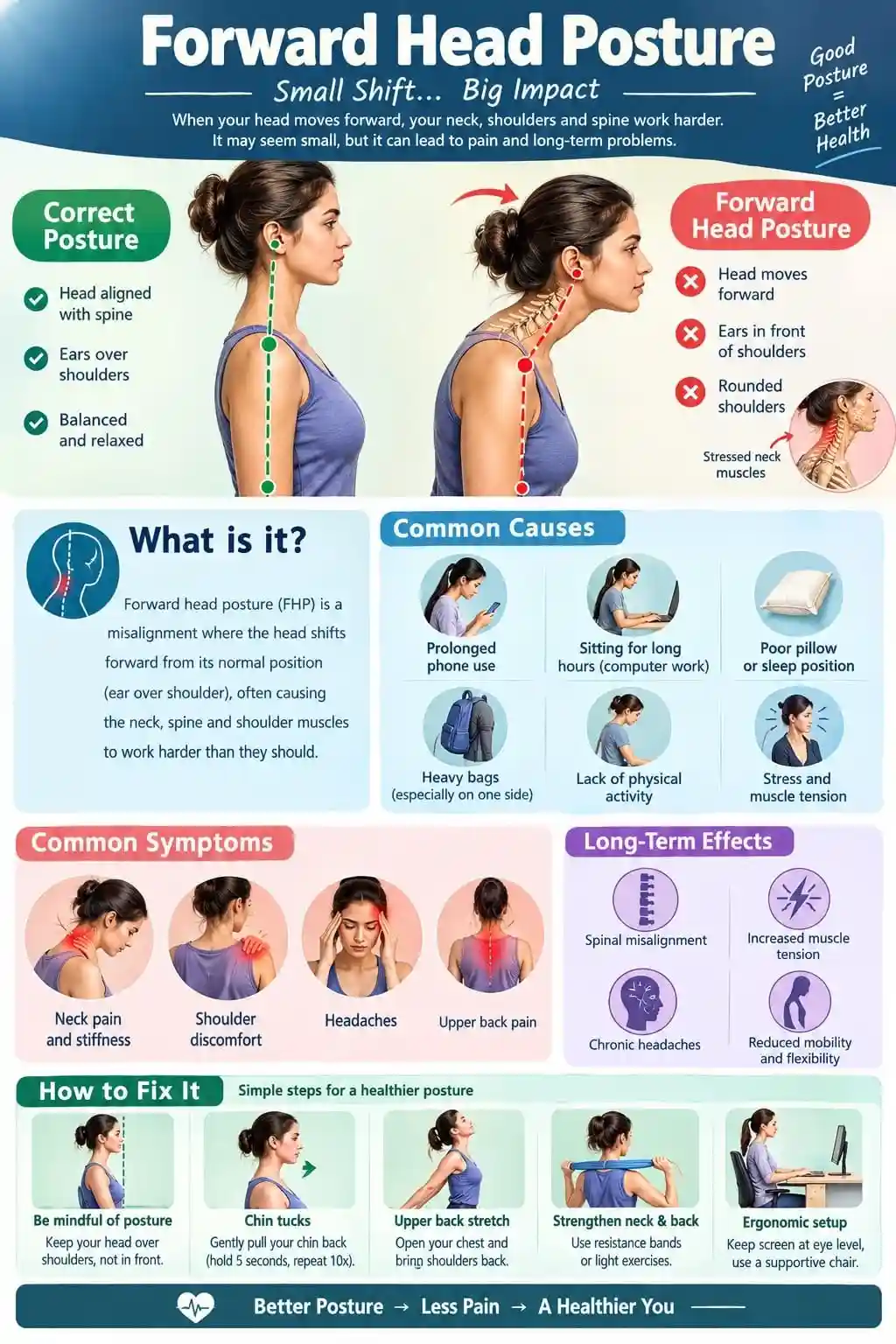
Forward head posture is a common postural problem in which the head moves forward in front of the shoulders, often due to prolonged mobile phone use, computer work, or poor sitting habits. It can contribute to neck pain, shoulder stiffness, and muscle tension.
People with forward head posture may experience neck pain, shoulder stiffness, muscle tightness, headaches, and reduced neck mobility. In some cases, it may also contribute to upper-back discomfort and fatigue during prolonged sitting or standing. The condition is frequently observed in students, office workers, and individuals who spend long periods using digital devices.
Forward head posture can be influenced by muscle imbalances, reduced postural awareness, and inadequate ergonomic arrangements. Early identification and appropriate management can help improve posture and reduce associated discomfort. Physiotherapy plays an important role through postural correction, strengthening exercises for the neck and upper back, stretching of tight muscles, and ergonomic education.
Maintaining proper sitting habits, taking regular movement breaks, and performing suitable exercises can help support healthy spinal alignment. With consistent practice and appropriate guidance, individuals can improve postural control and maintain better comfort during daily activities.
Causes Of Forward Head Posture
- Slouching
- Sleeping with the head raised
- Carrying a heavy backpack or purse
- Driving with a hunched back
- Sewing
- Reading in bed
- Whiplash or other injuries to the spine
- Weakness in the muscles of the upper back
- Arthritis and bone degeneration
Symptoms Of Forward Head Posture
They also include a variety of neurological and musculoskeletal pain. Until the pain persists or until someone else notices their rounded posture, many people ignore the early warning symptoms.
Observable indicators of posture:
- Even when standing or walking normally, the head constantly moves forward in relation to the shoulders.
- The earlobe is plainly in front of the shoulder line when viewed from the side.
- During times of concentrated labor or study, the neck bends downward, or the chin tends to protrude. Rounded shoulders that curl inward.
Symptoms of the musculoskeletal system:
- Stiffness and aching: a chronic sensation of tightness, soreness, and pain in the upper back, shoulders, and neck, especially after extended sitting.
- A low-grade soreness at the back of the neck that may radiate down between the shoulder blades or up into the base of the skull is known as dull, nagging pain.
- Reduced neck range of motion: Having trouble turning the head from side to side or feeling tight while trying to tilt the head back or bring the chin closer to the chest.
Symptoms related to the nervous system and senses (more prevalent in advanced cases):
- Headaches: In particular, tension-type headaches that radiate upward from the base of the skull to the top.
- Eye strain and dizziness: Bad posture can impair blood flow and put stress on the muscles that move the eyes.
- Concentration issues: It may be more difficult to concentrate on work or study when there is ongoing pain and suffering.
- A major warning indication is numbness or pain that radiates down the arm.
Side effects of Forward Head Posture
- Stiffness and pain
The neck muscles may therefore become painful and tight as a result. - Anterior neck pain: Tightness or pain at the front of the neck may result from increased tension in the muscle above the hyoid bone.
- Headaches and myofascial trigger points: FHP puts more strain on the higher cervical spine muscles. Cervicogenic headaches may result from this.
Temporomandibular joint disorders: The muscles above the hyoid bone become tense due to FHP. As a result, the muscles close to the jaw are under more strain. - Rounded shoulders and upper back
- Respiratory issues
- Balance issues
Treatment Of Forward Head Posture
Medical Treatment Of Forward Head Posture
In addition to medical interventions, a person can try a number of possible remedies at home.
Sitting up straight and maintaining a neutral spine are two things that people who work with computers or other devices can practice. This entails making sure the ears and shoulders line up.
Postural kyphosis can result from bad posture. Doctors may suggest surgery if this is serious.
A person may discover that taking painkillers can help them feel less pain in certain situations. For severe pain, a person may want to discuss prescription-strength medicines or muscle relaxants with their physician.
Forward Head Posture Exercise
Chin tucks
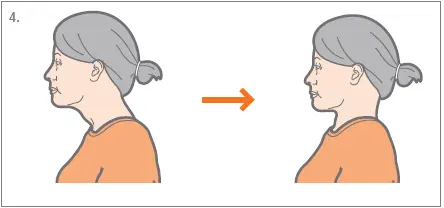
- Ensure that your back is straight and your gaze is directed forward.
- Press your chin backward.
- Keep your position for about 3-4 seconds.
- Return to the starting position gradually.
- Repeat this exercise 10 times for each set of repetitions during the day.
Supine chin tucks
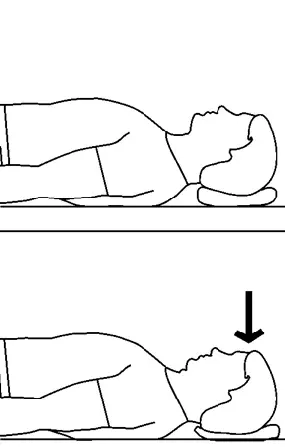
- Start by lying face up. A chin tuck can be accomplished by pushing the small of your neck in the direction of the table or by trying to generate a double chin.
- During this exercise, the tiny muscles on the front of your neck will be working.
When doing this exercise, try not to circle your neck. Reduce your range of motion if this workout causes you any discomfort. - If the neck rotations are too challenging, place your head on the table.
Chest stretch
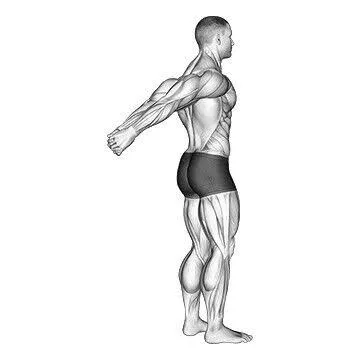
- Place your feet shoulder-width apart and stand straight.
- Raise and lower the shoulders.
- With the palms facing up, interlace the fingers behind the back.
- Make sure there is no arch in the low back and that the elbows are straight as you draw the shoulders back and down.
Upper Trapezius Stretch
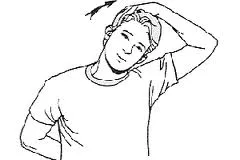
- Bring your shoulder down: Sit upright in a chair and hold onto your right hand to prevent your right shoulder from rising.
- Tilt your head: You can learn how to stretch your muscles by simply inclining the left ear towards the left shoulder.
- Alter the angle: You can easily find the point that you are interested in by rotating your chin upward or downward slightly.
- Learn to perform the same exercise three times on each side for 20-30 seconds.
Lifestyle Modifications for Managing Forward Head Posture
Although chiropractic care can significantly reduce FHP symptoms, lifestyle modifications are necessary to sustain these improvements. The following useful advice can help you control your forward head posture:
1. Reduce Screen Time
One of the main causes of FHP is prolonged use of cellphones and other devices. According to a 2021 study, using a smartphone for at least seven hours a day increases the risk of neck pain by 80%. FHP can be prevented from developing and worsening by limiting screen time and taking regular breaks.
2. Optimize Ergonomics
Maintaining proper posture requires proper ergonomics. To prevent tilting your head forward when using a computer or smartphone, make sure the screen is at eye level. To encourage improved posture throughout the day, use supportive chairs and think about ergonomic equipment like standing workstations.
3. Regular Exercise
Maintaining musculoskeletal health requires regular physical activity. Exercises like yoga, Pilates, and swimming are very helpful for enhancing flexibility and posture.
4. Maintain Proper Posture
FHP can be avoided by paying attention to your posture throughout the day. This entails avoiding slouching or bending forward, as well as standing and sitting with the ears positioned over the shoulders. Over time, small changes like maintaining a straight back and relaxed shoulders can have a big impact.
5. Manage Stress and Sleep Well
Poor sleep and long-term stress can aggravate neck pain and lead to FHP. Inadequate sleep can hinder the body’s capacity to recuperate from daily strain, and stress frequently results in tense muscles in the shoulders and neck. Using relaxation techniques can help manage stress. Better posture and general wellbeing can be supported by practicing relaxation techniques and getting enough sleep.
6. Nutritious Food
In addition to promoting general health, a balanced diet high in fruits, vegetables, and lean meats lowers inflammation, which can exacerbate musculoskeletal discomfort. The body’s capacity to control and recuperate from postural stress can be further improved by avoiding processed foods and drinking enough water.
Prevention Of Forward Head Posture
A person should concentrate on keeping good posture if they spend a lot of time at a desk.
- The chair should be adjusted to support the lower back, the knees should be slightly lower than the hips, the feet should be flat on the floor, the screen should be at eye level, the keyboard should be straight out in front, and there should be four to six inches of space on the desk for the wrists to rest.
- Keep the mouse close to your hand, utilize a mouse mat with a wrist cushion, make sure items are readily available, and take regular breaks.
FAQs
Can forward head posture actually be fixed?
Yes, forward head posture is correctable or at least improvable almost all the time, particularly if caught in the early-to-moderate stages before permanent structural bone changes occur.
Early to Moderate Cases: Cervical curve and muscle imbalances can be reversed in many cases during the first 3 to 6 months with regular physical therapy, habit changes, and specific exercises.
Severe or Structural Cases: Long-term adaptation may have caused fixed morphological changes to the vertebrae or soft tissues. Full alignment may not be possible, but pain and function can still be managed.
Excessive Screen Time: Looking down at phones, tablets,s or poorly positioned computer monitors strains the neck. For every inch your head comes forward, you are doubling the physical load on your cervical spine.
Upper Cross Syndrome: Tight chest and neck muscles (e.g., scalenes and sternocleidomastoids) and weak deep neck flexors and upper-back/thoracic extensors.
Breathing Mechanics: Lack of diaphragm movement can cause neck accessory muscles to overwork for air and pull the head forward.
How to repair it
Stretching Tight Spots:
Enhance Ergonomics:
Raise your computer monitor so that the top third of the screen is at or slightly below eye level.
What is the best sleeping position to improve forward head posture?
Best Positions to Sleep
Back Sleeping (Advised): Use a low to medium flat pillow, or a cervical orthopedic pillow that supports the natural curve of your neck without pushing your head forward. Put a small pillow under your knees to relax your lower spine and keep it from arching.
Side Sleeping: You need a pillow that’s tall enough to fill the space between your mattress and your ear, so your neck doesn’t tilt up or down at all.
To maintain your hips in alignment, place a pillow between your knees. To prevent your shoulders from rolling forward, think about clutching a little pillow. Avoid Stomach Sleeping: Lying on your stomach collapses your upper back alignment and puts your neck at a severe, rotated angle.
How long does it take to cure forward head posture?
It can take anywhere from 6 weeks to 6 months to fix forward head posture depending on the severity of the alignment and how consistent you are on a daily basis.
General Correction Time Frame
Mild or recent cases (2 to 6 weeks): Posture due to short-term habits or remote employment often responds quickly.
Moderate to severe cases (3 to 6+ months): Habits that have changed muscle length and spinal curvature for a long time require sustained daily neuromuscular retraining.
Things That Help It Go Faster
Daily consistency: Short 10-to-15-minute sets of exercises (like chin tucks and thoracic spine extensions) throughout the day are better than occasional, intense workouts.
Ergonomic setup: You may avoid undoing your work by raising computer screens to eye level, taking frequent breaks, and avoiding staring down at phones for extended periods of time.
Targeting the upper back: Since a rounded thoracic spine (mid-back) is closely linked to forward head posture, you need to strengthen your upper back and stretch your tight chest muscles instead of only your neck.
Is sleeping with a pillow better or without a pillow?
How Your Pillow Affects Your Neck
Too Thick: A thick or high pillow pushes your chin down toward your chest.
No Pillow (Back Sleepers): Skipping the pillow entirely can cause your head to drop back into a void. In some cases, mild stretching can help relieve acute muscle tension. Lying flat for 7 to 9 hours unsupported, however, can stress cervical joints or cause morning stiffness.
Stomach Sleepers: If you’re a stomach sleeper, your head is already twisted awkwardly to the side.
Is forward head permanent?
No, Forward head posture is mainly caused by muscle imbalances, weak postural support, and a rigid thoracic spine rather than permanent bone injury.
What Are the Causes of Forward Head Posture?
Weak deep neck flexors and back muscles: If the deep neck flexors and lower trapezius are weak, they will not be able to lift up the head against the force of gravity.
Tight muscles of the neck and chest: Sitting for long periods of time or slouching tightens the muscles of the chest, pectorals, and also superficial neck muscles such as the sternocleidomastoid.
What Can Be Done to Fix It?
Strengthen the weak muscles: You have to strengthen the deep neck flexors (e.g., with chin tucks) as well as upper and middle back muscles (e.,., scapular retraction exercises).
What muscles are weak in forward head posture?
Forward head posture leads to the weakening, lengthening, and underactivity of a specific group of muscles situated in the neck’s front side and upper back.
Weak and Lengthened Muscles
Deep Neck Flexors: These consist of longus capitis and longus colli located along the cervical spine. Their strength and ability to maintain neutral head position are diminished.
Retraction Muscles: They comprise the trapezius and the rhomboids, which permit the retraction of the shoulder blades.
Lower Trapezius: This muscle helps with scapular stabilization, as well as shoulder depression; however, it gets stretched due to rounding of the shoulders.
Cervical Erector Spinae: These are extensor muscles located in the lower cervical area and upper thoracic regions. They lose their ability to help keep the upper back straight when in prolonged poor posture.
In Contrast: Tight and Overactive Muscles
Meanwhile, the group of muscles mentioned above weakens, making opposing muscles contract and become overused to prevent one’s head from dropping. These muscles include:
Suboccipitals (base of the skull)
Sternocleidomastoid (SCM) and anterior scalenes (the front and the sides of the neck)
Upper trapezius and levator scapulae (shoulders and neck)
Pectoralis major and minor (chest)
References
- Fletcher, J. (2021, February 27). What is forward head posture? https://www.medicalnewstoday.com/articles/forward-head-posture
- Hecht, M. (2020, July 24). How to fix a forward head posture. Healthline. https://www.healthline.com/health/bone-health/forward-head-posture
- Mackay, B. (2025, December 4). Forward Head Posture Exercises: 3 Proven Stretches for Neck & Shoulder Relief | Transform Chiropractic. Transform Chiropractic. https://transformchiropractic.com/forward-head-posture-exercises-toronto/
- McQuilkie, S., DC, & McQuilkie, S., DC. (2024a, November 21). How to fix forward head posture – 5 exercises. Back Intelligence (Creators of PostureFlow App). https://backintelligence.com/how-to-fix-forward-head-posture/
- Poursadegh, M., Azghani, M. R., Chakeri, Z., Okhravi, S. M., & Salahzadeh, Z. (2023). Postures of the head, upper, and lower neck in forward head posture: static and quasi-static analyses. Middle East Journal of Rehabilitation and Health Studies, 10(4). https://doi.org/10.5812/mejrh-136377
- Pt, G. M. (2019, February 14). 3 ways to improve forward head posture. Spine-health. https://www.spine-health.com/blog/ways-improve-forward-head-posture
- Wikipedia contributors. (2026, September 27). Forward head posture. Wikipedia. https://en.wikipedia.org/wiki/Forward_head_posture