
Muscle Pain: Causes, Treatment, Exercises and Prevention
What is Muscle Pain?
Muscle pain, also known as myalgia, is pain felt in one or more muscles. It is one of the most common reasons for attending a physiotherapist. It can cause a dull ache, sharp pull, burning, stiffness, or a deep ache. This can occur after working out, prolonged sitting, or for no apparent reason.
Most muscle pain will improve with rest, gentle movement, and basic self-help strategies. However, some muscle pain can last weeks or months, affect your daily activities, or indicate an underlying problem. Understanding what type of muscle pain you have will enable you to start treatment early.
This guide will provide information about different types of muscle pain, causes, red flags, assessment, and what will help.
Types of Muscle Pain
Muscle pain can be categorised based on duration and extent of pain. Knowing what type of muscle pain you have can help determine likely causes and treatment.
| Type | Typical duration | What it feels like | Common example |
|---|---|---|---|
| Acute | Under 6 weeks | Sudden, sharp or aching, often worse on movement | Muscle strain, a pulled hamstring |
| Subacute | 6 to 12 weeks | Lingering ache that eases and flares | A strain that has not fully healed |
| Chronic | Over 3 months | Persistent ache, stiffness, fatigue | Long-standing neck and shoulder pain |
| DOMS | 24 to 72 hours after exercise | Tender, stiff, sore to touch | Soreness after a new workout |
| Localized | Varies | Pain in one muscle or region | Trigger point in the upper trapezius |
| Widespread | Varies | Pain across many muscles | Viral illness, fibromyalgia |
A specific type of muscle pain is delayed onset muscle soreness (DOMS). This occurs after unfamiliar intense activity or after any activity that stretches muscles under load, such as running downhill or lowering weights. The pain is typically worst 24-48hours after activity and is harmless.
Common causes of muscle pain
Most muscle pain in clinical settings will relate to the way muscles are loaded, sustained or stressed. Often there will be multiple causes.
Mechanical and lifestyle related
- Overuse/repetitive loading – too much, too quickly or repetitive movements.
- Strained/muscle tear – sudden stretching or overloading of the muscle causing damage to muscle fibres. This can occur during sporting activities, lifting or slipping.
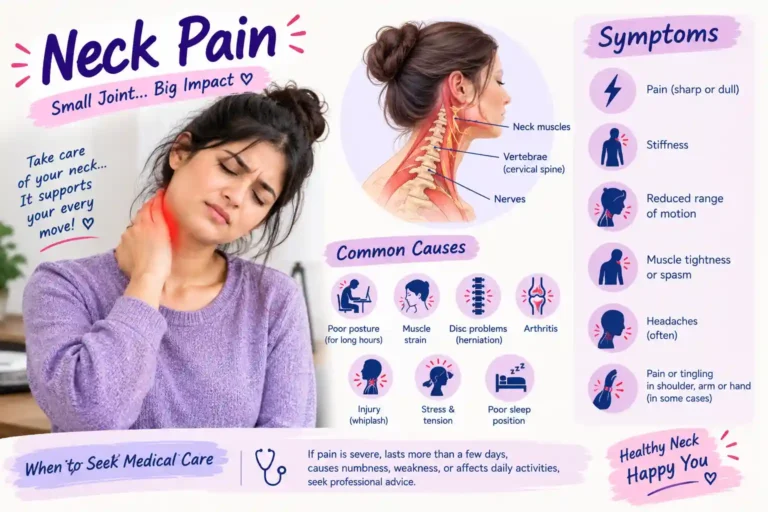
- Poor posture – prolonged sitting, mobile/phone and screen use can cause constant tension through the neck, shoulder and back.
- Lack of activity and weak muscles – lack of activity can make muscles weak and cause pain during everyday activities.
- Poor ergonomic set up – poor set up of chair, desk or workstation and lack of supportive mattress and pillow.
- Trigger points – tight, sore knots in the muscle that cause localised pain.
- Muscle cramp – involuntary muscle contractions often due to fatigue, dehydration or low electrolytes.
Stress, sleep and diet
- Increased stress and anxiety can cause increased muscle tension, particularly in the neck, shoulders and jaw.
- Poor sleep can decrease pain threshold and slow healing.
- Dehydration and low levels of vitamins D, Magnesium, Calcium and Potassium can cause muscle aches and cramps. Vitamin D deficiency is common in India, so if you are experiencing ongoing aches, it is worth discussing.
Medical causes
- Viral infections such as influenza, dengue, chikungunya, COVID-19 and other viral flus commonly cause muscle aches.
- Some people can experience muscle pain due to medications, particularly statins.
- Conditions such as fibromyalgia, thyroid issues, polymyalgia rheumatica, autoimmune disease, and diabetic issues.
- Nerve-related pain such as a pinched nerve in the neck or lower back can mimic muscle pain.
Symptoms and red flags
Muscle pain will usually cause:
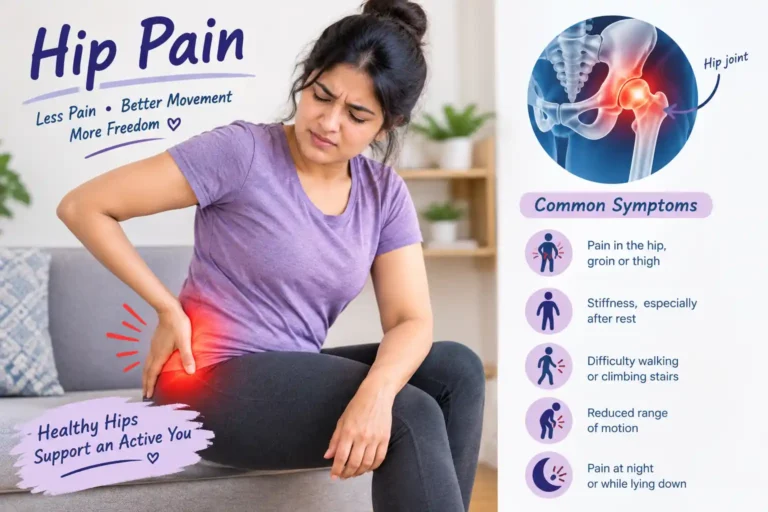
- Aching or soreness on palpation
- Stiffness especially after rest or first thing in the morning
- Tightness/knots
- Pain increases with movement/stretching
- Weakness/fatigue
- Muscle cramp/spasms
- Mild swelling or bruising after a strain.
When to seek prompt medical attention?
Whilst most muscle pain is not dangerous, there are some red flags that mean you should seek medical attention. If you have:
- Severe pain after a fall, accident or injury, or feel a pop or tearing sensation and immediate loss of function.
- Significant swelling, redness and/or warmth, especially in one calf (can be a sign of a blood clot).
- High temperature with neck stiffness or muscle pain with rash/tick.
- Dark/brown coloured urine after intense activity (can be a sign of severe muscle breakdown).
- Sudden weakness, numbness, tingling or loss of bladder or bowel.
- Chest pain, shortness of breath or pain going down your arm.
- Persistent pain that is not improving after 1-2 weeks, waking you up at night or worsening over time.
- Muscle pain that started after starting a new medication.
- Do not just rely on stretching and massage.
Assessment
During a physiotherapy assessment, we aim to identify why you are experiencing muscle pain. Often treating the painful area will only offer short-term relief, as the cause can be due to postural, weakness, or movement issues.
A typical assessment would involve:
- History – When did the pain start? What caused it? What makes it better/worse? What is your work and exercise like? How are you sleeping, and are you stressed? Have you had any recent illness or new medications?
- Observation – Assessing your posture, muscle bulk, swelling and how you stand and walk.
- Range of movement – Assessing how much movement you have and if any movements cause pain.
- Palpation – Feeling for areas of tenderness, tightness, trigger points and spasms.
- Strength and flexibility – Identifying any weak, tight or poor muscle control.
- Neurological screening – Checking reflexes, sensation and strength to rule out any nerve issues.
Most muscle pain will not require any blood tests, ultrasound or MRI. These will be considered if your symptoms are severe, persistent, injury-related, or indicate any infection, inflammatory conditions, vitamin deficiency, or thyroid issues.
Treatment – What will help?
Muscle pain can be treated depending on the cause and duration of pain. Most people will make a good recovery with a combination of self-help and guided physiotherapy.
Home Remedies:
- Stay gently active – Complete bed rest can delay recovery. Try to gently move within your comfortable range and gradually increase activity.
- Relative rest – Avoid any movements that clearly make your pain worse. Do not completely rest the muscle.
- Cold – If you have a new injury, applying ice (in a cloth) for 10-15min can help reduce pain and swelling. This should be done in the first 48hrs after a strain.
- Heat – Applying heat (hot pack or hot shower) can often help with tightness and chronic aches. Avoid applying heat to a new swollen/bruised area.
- Hydrate, sleep and eat well to help repair muscles.
- Gentle self-massage or using a soft ball on a wall can help with tight areas. Use a comfortable pressure.
Physiotherapy
Your physiotherapist will treat both the pain and cause. This can include:
- Manual therapy – Soft tissue release, myofascial release and trigger point techniques to reduce tightness.
- Electrotherapy – TENS, therapeutic ultrasound or interferential can be used to reduce pain short term.
- Dry needling – Can be used by trained professionals to help persistent trigger points.
- Therapeutic exercise – Stretching, strengthening and mobilisation exercises to help with your specific problem. This will give the longest lasting results.
- Postural and ergonomic advice – Adjusting your workstation, sleeping and daily activity.
- Progressive activity/sport – Having clear steps to increase your load.
- Education – Understanding your pain can help reduce fear and keep you active.
Medication
Over-the-counter painkillers or topical gels can help short-term. Always follow the guidance on the packet or from your doctor. This will not treat the cause. If you suffer from any stomach, kidney, liver or heart issues, are pregnant or taking other medications, please speak to a doctor or pharmacist first. It is not advisable to take for long periods of time without a diagnosis.
Exercises and stretches to help muscle pain
One of the best ways to treat muscle pain is to gently move. Move within a comfortable range of mild stretching. Do not push into pain. If your symptoms clearly get worse, stop. Below are some general examples of exercises. Your physio can tailor these to your specific problem.
Gentle, regular movement is one of the best treatments for muscle pain. Move to a mild stretch or comfortable effort, never to sharp pain, and stop if symptoms clearly worsen. The exercises below are general examples; a physiotherapist can tailor them to your problem.
| Area | Exercise | How to do it |
|---|---|---|
| Neck | Upper trapezius stretch | Sit tall, gently tilt your ear toward your shoulder, hold 20 to 30 seconds each side |
| Neck and upper back | Chin tuck | Draw your chin straight back as if making a double chin; hold 5 seconds; repeat 10 times |
| Shoulders | Shoulder rolls and blade squeezes | Roll shoulders back slowly 10 times, then squeeze shoulder blades together for 5 seconds |
| Upper back | Cat-cow Stretch | On hands and knees, slowly round then arch your back, 10 repeats |
| Lower back | Knee-to-chest stretch | Lying on your back, hug one knee toward your chest, hold 20 to 30 seconds each side |
| Hips and buttocks | Figure-four stretch | Lying down, cross one ankle over the opposite knee and draw the thigh toward you; hold 30 seconds |
| Thighs | Hamstring stretch | Lying on your back, raise one leg with a towel around the foot and hold 30 seconds |
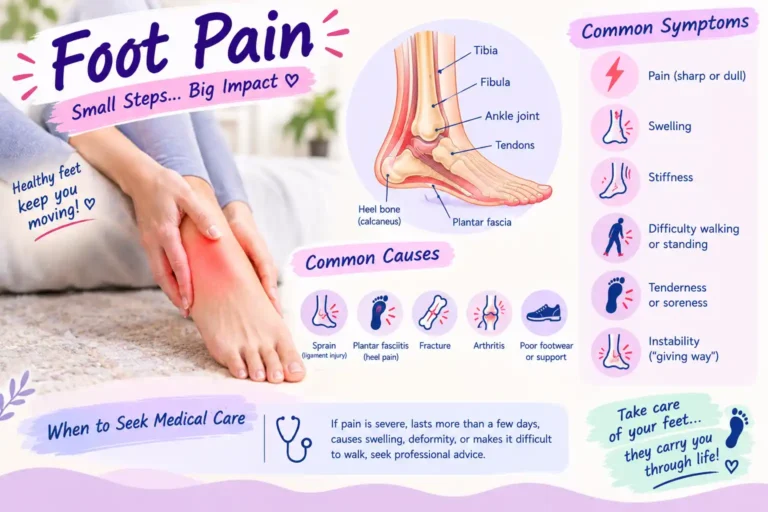
| Calves | Wall calf stretch | Hands on a wall, one leg back with heel down, hold 30 seconds each side |
Pro Tips
- Warm up for 5-10 mins, then cool down after exercising.
- Stretch with control and breathe normally.
- Build up slowly. Core, hip and shoulder muscles will become stronger to take the pressure off smaller muscles.
- Include some low-impact cardio exercises like walking, cycling, and swimming for around 150 minutes per week.
How to prevent muscle pain?
- Change position often. Stand up, walk, and stretch for a minute or two every 30 to 45 minutes of sitting.
- Try to stand up and move around for a couple of minutes every 30-45 mins.
- Make sure your workstation is set up correctly. Keep your screen at eye level, elbows in a 90-degree angle, feet flat and lower back supported.
- Keep your phone higher so you are not hunching over.
- Exercise regularly, including strength, flexibility and cardio exercises.
- Start slowly. Gradually increase the amount of time, weight, or intensity of your exercises.
- Warm up and cool down.
- Lift with good technique. Keep the weight close to your body, hinge from your hips and knees, and do not twist.
- Stay hydrated with plenty of water, eat a balanced diet with plenty of protein, and if you have regular aches, check your vitamin D levels.
- Try to get 7-9 hours of sleep on a firm mattress and pillow.
- Manage your stress by doing breathing exercises, going for a walk, doing yoga, or hobbies. Often stress will come into the neck, shoulders, and back.
- Listen to your body! If you start to feel any early signs of pain, slow things down and tackle those little aches.
FAQs
How long does muscle pain usually last?
Mild strains and DOMS will usually settle within a few days to 2 weeks. If your pain has lasted longer than 6 weeks or is getting worse, you should seek a professional’s opinion.
Should I rest or keep moving?
It is beneficial to have a short period of relative rest, but keeping yourself moving gently will aid recovery. Usually, if you rest for a long period of time, your muscles will become tighter and weaker.
Is heat or ice better?
Ice should be used for acute injuries and if there is swelling within the first 48 hours. Heat should be used for tight, stiff, or chronic muscle aches.
Can stress really cause muscle pain?
Yes! Stress will cause your muscles to tighten and become more sensitive to pain. Often during periods of stress, we will experience more pain in our neck, shoulders, and jaw.
Is muscle pain a sign of a vitamin deficiency?
It can be, particularly if vitamin D is low; however, it can be caused by lots of different things. A doctor can confirm this with a blood test.
When should I see a physiotherapist?
If your pain is lasting longer than a week or two, coming back regularly, affecting your daily activities/work, or following an injury. As long as you do not have any red flag symptoms requiring urgent medical attention.
Conclusion
Muscle pain is very common and can usually be managed. By understanding the cause of your pain and keeping gently active, improving your posture and building strength, you will find it much more effective than just resting and taking painkillers. If you know the signs that you need to seek medical attention for, and get help early if you are still in pain, most people will recover to being pain-free with the correct assessment and structured plan.
Disclaimer: This article is for general knowledge only. If you are experiencing ongoing or severe pain, please see a qualified physio or doctor.
References:
- Cleveland Clinic. Myalgia (Muscle Pain), updated Jan 2024.
- https://my.clevelandclinic.org/health/symptoms/myalgia-muscle-pain
- Cleveland Clinic. Muscle Pain.
- https://my.clevelandclinic.org/health/symptoms/17669-muscle-pain
- Villa-Forte A. Musculoskeletal Pain. MSD Manual Consumer Version, Apr 2025.
- https://www.msdmanuals.com/home/bone-joint-and-muscle-disorders/symptoms-of-musculoskeletal-disorders/musculoskeletal-pain
- Harvard Health Publishing. What is myalgia and how is it treated?
- https://content.health.harvard.edu/blog/what-is-myalgia-and-how-is-it-treated
- Cheung K, Hume P, Maxwell L. Delayed onset muscle soreness: treatment strategies and performance factors. Sports Medicine 2003;33(2):145-164.
- https://pubmed.ncbi.nlm.nih.gov/12617692/
- Hotfiel T, et al. Advances in delayed-onset muscle soreness (DOMS), Part I: pathogenesis and diagnostics. Sportverletz Sportschaden 2018;32(4):243-250.
- https://pubmed.ncbi.nlm.nih.gov/30537791/
- Contrò V, Mancuso EP, Proia P. Delayed onset muscle soreness (DOMS) management: present state of the art. Trends in Sport Sciences 2016;3(23).
- https://iris.unipa.it/retrieve/handle/10447/204727/350041/Doms%202016.pdf
- Geneen LJ, et al. Physical activity and exercise for chronic pain in adults: an overview of Cochrane Reviews. Cochrane Database Syst Rev 2017;(4): CD011279.
- https://pmc.ncbi.nlm.nih.gov/articles/PMC5461882
- French SD, et al. Superficial heat or cold for low back pain. Cochrane Database Syst Rev 2006;(1): CD004750.
- https://doi.org/10.1002/14651858.CD004750.pub2
- Dry needling in the management of myofascial trigger points: a systematic review of randomized controlled trials. Complement Ther Med 2017;33:46-57.
- https://pubmed.ncbi.nlm.nih.gov/28735825/
- Is dry needling applied by physical therapists effective for pain in musculoskeletal conditions? Phys Ther 2021;101(3):pzab070.
- https://pubmed.ncbi.nlm.nih.gov/33609356/
- Bull FC, et al. World Health Organization 2020 guidelines on physical activity and sedentary behaviour. Br J Sports Med 2020;54(24).
- https://bjsm.bmj.com/content/54/24/1451
- World Health Organization. Physical activity fact sheet.
- https://www.who.int/News-Room/Fact-Sheets/Detail/Physical-Activity
- Kourbanova K, Alexandre C, Latremoliere A. Effect of sleep loss on pain: new conceptual and mechanistic avenues. Front Neurosci 2022;16:1009902.
- https://www.frontiersin.org/journals/neuroscience/articles/10.3389/fnins.2022.1009902/full
- Aparna P, et al. Vitamin D deficiency in India. J Family Med Prim Care 2018;7(2):324-330.
- https://pmc.ncbi.nlm.nih.gov/articles/PMC6060930
- G R, Gupta A. Vitamin D deficiency in India: prevalence, causalities and interventions. Nutrients 2014;6(2).
- https://www.ncbi.nlm.nih.gov/pmc/articles/PMC3942730/
- Fernandez G, et al. Statin myopathy: a common dilemma not reflected in clinical trials. Cleve Clin J Med 2011;78(6):393-403.
- https://www.ccjm.org/content/ccjom/78/6/393.full.pdf
- Statin-associated muscle symptoms: a review. Individualizing the approach to optimize care. Pharmacotherapy 2022;42(5):428-438.
- https://pubmed.ncbi.nlm.nih.gov/35388918/
- American Academy of Physical Medicine and Rehabilitation. Rhabdomyolysis. PM&R Knowledge NOW.
- https://now.aapmr.org/rhabomyolysis/