Frozen Shoulder
Introduction
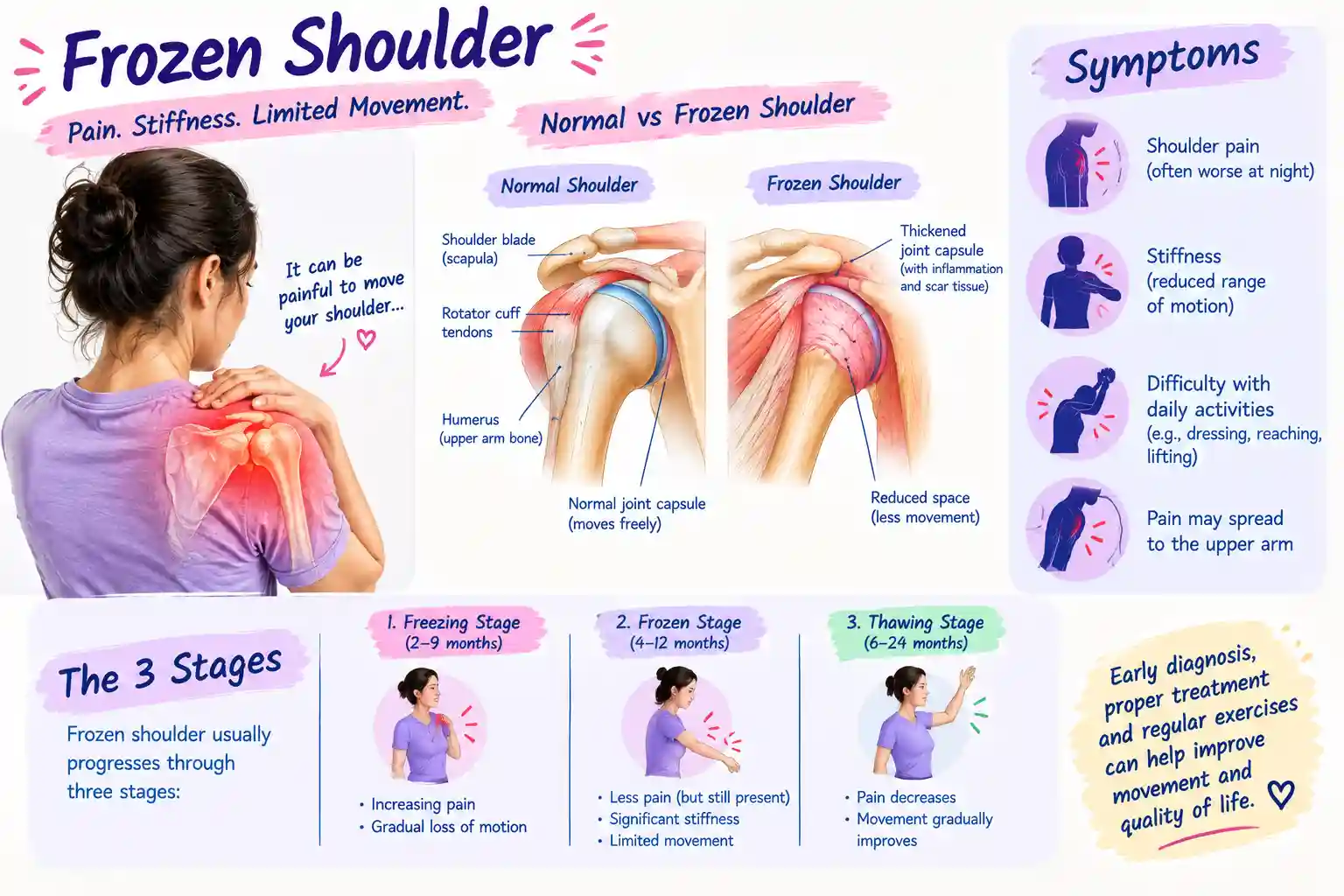
Frozen shoulder, medically known as adhesive capsulitis, is a condition characterized by pain, stiffness, and progressive restriction of shoulder movement. It can make everyday activities such as dressing, combing the hair, reaching overhead, lifting objects, or placing the hand behind the back difficult. The condition develops when the capsule surrounding the shoulder joint becomes inflamed and thickened, reducing the normal mobility of the joint.
Frozen shoulder usually develops gradually and may progress through three stages: the freezing stage, when pain and stiffness increase; the frozen stage, when shoulder movement becomes significantly restricted; and the thawing stage, when movement gradually improves. The condition may occur without an obvious cause, or it may develop after a shoulder injury, surgery, or prolonged immobilization.
Common symptoms include shoulder pain, stiffness, difficulty moving the arm, and pain that may become worse at night. Frozen shoulder may be more common in people with diabetes and some other medical disorders.
Stages Of Frozen Shoulder
Usually, frozen shoulder develops gradually over three stages.
- Freezing stage. Your shoulder hurts whenever you move it, and your range of motion is restricted. Usually, this phase lasts between two and nine months.
- Frozen stage. During this phase, pain may decrease. But the shoulder stiffens. It gets more difficult to use. This phase lasts four to twelve months.
- Thawing stage. Your shoulder mobility starts to improve. Usually, this phase lasts between five and twenty-four months.
- Some people experience worsening pain at night, which occasionally interferes with their ability to sleep.
Symptoms Of Frozen Shoulder
One shoulder will probably hurt, either dullly or painfully. The shoulder muscles that encircle the top of your arm may also hurt. Your upper arm may have a similar feeling. It may be difficult for you to fall asleep at night if your pain gets worse.
- Pain over shoulder
- Swelling
- Redness
- Reduced shoulder range of motion
- Sometimes sleep disturbance because of severe pain
Causes Of Frozen Shoulder
This capsule thickens and tightens around the shoulder joint, limiting its range of motion and causing frozen shoulder.
Why this occurs in certain individuals is unknown.
- Heart disease
- Thyroid disease
- Parkinson’s disease
- Women more than man
- Rotator cuff tendinitis or bursitis.
- Stroke
- Mastectomy
Risk Factors of Frozen Shoulder
People with diabetes, heart problems, or thyroid issues are more likely to experience frozen shoulder. Additionally, Parkinson’s disease may raise the risk.
Sex and age at birth.
Reduced mobility or immobility
- Damage to the rotator cuff.
- Fractured arm.
- Stroke.
- Recovery following surgery.
Systemic illnesses
The following illnesses could raise the risk:
- Diabetes.
- Hyperthyroidism is another term for an overactive thyroid.
- Hypothyroidism is another name for an underactive thyroid.
- Heart-related conditions.
- Parkinson’s disease.
Diagnosis Of Frozen Shoulder
A healthcare professional will ask about when the pain started and how long the symptoms have lasted, as well as any previous shoulder injury or surgery and any conditions that may increase the risk of frozen shoulder. Movements such as shoulder elevation, external rotation, and internal rotation are assessed.
An X-ray can reveal arthritis, fractures,s or other problems with the bone, but if there is suspicion of a rotator cuff or other soft-tissue problem, an ultrasound or MRI may be used.
- X ray
- MRI
- CT scan
Treatment Of Frozen Shoulder
Treatment consists of pain relief and preservation or improvement of shoulder motion and the ability to perform daily activities. Management is usually gradual, al as forcing a painful shoulder can increase symptoms.
Physiotherapy is often an important part of treatment and may involve gentle range-of-motion exercises, stretching, joint mobilization, and progressive strengthening, depending on the stage of the condition.
Medical Treatment Of Frozen Shoulder
If needed, a healthcare professional may recommend pain-relieving or anti-inflammatory medications.
In some cases, a short-term injection of corticosteroid into the shoulder joint can help relieve pain and allow movement and exercise, especially in the painful early stage. Other procedures (eg, hydrodilatation) may be considered in selected cases.
Where symptoms persist despite appropriate conservative treatment, specialist assessment may be required, and procedures such as manipulation under anesthesia may be considered.
Frozen Shoulder Exercise
Can/wand Shoulder Flexion
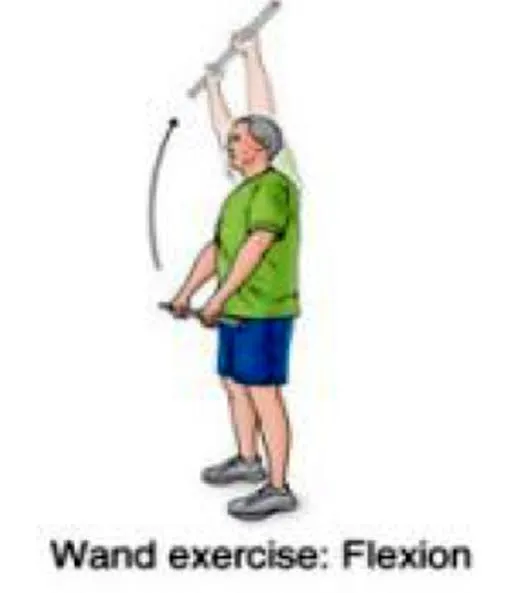
- The goal is to maintain or increase shoulder flexion, or the ability to raise your arm forward.
- Phases 1-2.
- Starting Position
- Hold a cane or wand shoulder-width apart once more.
- The motion
- Raise your arms as high as you can without experiencing any pain.
- Go back to the beginning position with control.
- Repeat the motion. Aim for two to three sets of ten repetitions.
- Security
- Proceed only as far as your discomfort permits.
Shoulder Abduction
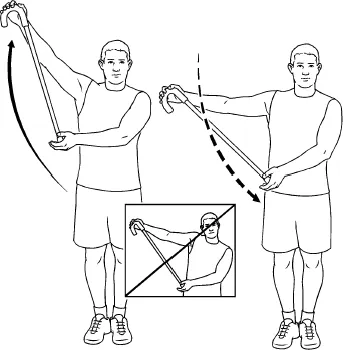
- The goal is to restore or enhance shoulder abduction.
- Phases 1-2.
- Starting Position
- Hold the cane shoulder-width apart while maintaining a lofty posture.
- The Movement
- As much as you can within the pain-free range of motion, raise the affected arm sideways. Hold for two to three seconds.
- Go back to where you were.
- For a second rep, repeat. Aim for two to three sets of ten repetitions.
Loaded Front Raises

- Goal: Strengthen the shoulder flexors
- Phases 2-3.
- Starting Position
Take a tall stance while holding a dumbbell in each hand. The palms should be turned back. - The motion
- Lift your arms straight up to your shoulders. Hold for one to two seconds.
- Return to the starting position gently.
- For a second repetition, repeat the exercise. Three to four sets of ten repetitions should be your goal.
Rotations
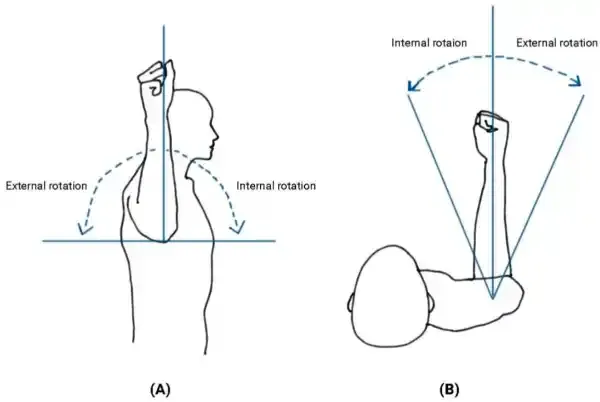
- Goal: Maintain or increase shoulder external rotator muscle strength
- Phases 2-3.
- Starting Position
- Make a 90-degree bend with your elbows. With your palms facing each other, tuck your arms into the sides of your midsection.
- The Movement
- Spread your hands apart and rotate your upper arms. Once more, stay within the range of motion that doesn’t cause pain.
- Return to the starting position gently.
- Do it again. Aim for 3–4 sets of 10 reps.
- Just holding a dumbbell in each hand will increase the load.
Lateral Raises
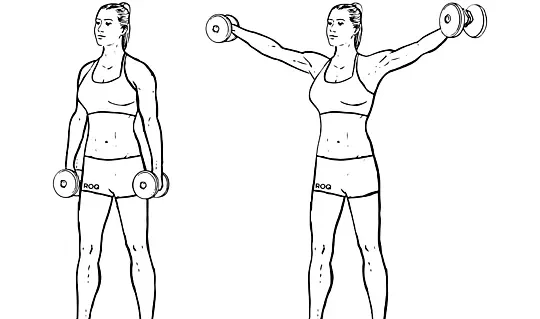
- Goal: Increase muscular strength and enhance abductor function.
- Phases 2-3.
- Starting Position
- With your hands facing one another, hold a dumbbell in each hand at your sides.
- The Movement
- Bring the dumbbells up to your shoulders. Hold for one to two seconds.
- Go back to where you were.
- Repeat 3–4 sets, 10–15 repetitions.
Home Remedies for Frozen Shoulder
Simple home care may help to manage symptoms. Moving the shoulder gently will help, but a warm pack applied beforehand can help to make it more comfortable. After activity, a cold pack can be used if the shoulder is feeling painful, but this will only provide temporary relief.
Avoid keeping the shoulder completely still for long periods of time, as this can contribute to stiffness. Move gently within a comfortable range. Don’t push a stretch to the point of sharp pain.
Comfort at night may be improved by supporting the affected arm with a pillow and adopting a comfortable sleeping position. Resume normal light activity as tolerated. Avoid movements that markedly increase your symptoms.
Ergonomic Care Of Frozen Shoulder
Maintain good posture when sitting, standing, and working. Don’t sit slouched for long periods of time. Shoulders should be relaxed and not up. When working on a computer, arrange your keyboard and mouse so you don’t have to stretch your affected arm too much.
Store frequently used items nearby so you don’t have to continually reach above your head. When you are in pain, try not to lift overhead suddenly or heavily, and keep things close to your body when lifting. During long periods of sitting at a desk, take frequent breaks, and during these breaks do gentle shoulder movements.
Prevention Of Frozen Shoulder
Consult your healthcare provider about exercises that can help you retain your capacity to move your shoulder joint if you have an injury that makes it difficult for you to do so. We refer to these as range-of-motion exercises.
FAQs
How do you treat frozen shoulder?
The ideal method for curing a frozen shoulder (adhesive capsulitis) hinges on its current phase and entails pain reduction, physiotherapy, and certain procedures. Most cases need no surgery and are treated with the 3-step method.
Stages of Treatment
Freezing Stage (Pain Phase):
Concentrates on pain management and early inflammation reduction.
Employs OTC NSAIDs (in particular ibuprofen) as well as prescribed oral corticosteroids.
Utilizes ultrasound-guided corticosteroid injections for controlling severe inflammation.
Carries out heat treatment before performing easy movements that involve the joint.
Frozen Stage (Stiffness Phase):
Moves on to restoring mobility and relieving stiffness.
Makes use of some physiotherapy exercises, including pendulum therapy and assisted stretching.
Involves hydrodilation (injecting sterile fluid into the joint capsule to stretch tight tissues) during physiotherapy sessions.
Thawing Stage (Recovery Phase):
Is centered on progressive stretching as well as gradual strengthening to obtain full range of motion.
How to unfreeze frozen shoulder?
To reduce the limitations in movement caused by a frozen shoulder (adhesive capsulitis), it is necessary to utilize pain management, stretching, and rehabilitation techniques to recover the range of motion slowly.
Pain Relief and Decreasing Inflammation
Over-the-counter medications: Nonsteroidal anti-inflammatories (NSAIDs) such as ibuprofen and pain relief drugs like acetaminophen can be taken to ease the pain.
Heat therapy: Use a heated towel or heating pad on your shoulder for up to 20 minutes before practicing stretching to ease tense muscles and tissues.
Medical treatments: Consult your physician about injection and hydro dilatation techniques if movement is limited.
Gentle Stretches and Exercises
Do these exercises daily up to the point that pain is moderate or worsens.
Pendulum stretch: Allow the affected arm to hang down, then swing in tiny circles or back and forth.
Cross-body reach: Use the good arm to raise the affected one at the elbow to the opposite side over your body.
Wall walk: Stand facing a wall, put fingers on the surface, climb up, and slide down the fingers as high as comfortable.
Can frozen shoulder heal on its own?
A frozen shoulder may resolve without intervention; however, it does take quite a long time.
Duration: Typically, the recovery time without any treatment is between 1-3 years.
Stages: The development of the condition can be divided into three stages as follows: the Freezing” stage, which is characterized by pain; the “Frozen” stage, which is marked by stiffness; and the “Thawing” stage, which represents gradual improvement.
Risks: Some people can suffer from long periods of discomfort without regaining their normal mobility.
How to speed up your recovery process
Physical Therapy: performing various stretching movements to rehabilitate your shoulder.
Medications: taking non-prescription medicine like ibuprofen is a good idea when it comes to reducing pain and inflammation.
Medical Procedures: there is a possibility of faster recovery if you use some medical procedures, like steroid injections, that should ease the recovery process.
What are the four stages of frozen shoulder?
Five stages divide the condition known as frozen shoulder, or adhesive capsulitis,s into pre-freezing, freezing, frozen, thawing, and beyond, each of which has its own features.
1. Pre-Freezing Stage
Length: 1-3 months
Symptoms: Individuals may suffer from severe pain while moving their shoulder, but the episodes may be time-limited and intermittent.
Main features: The shoulder is still capable of moving normally, though many patients confuse it with a simple injury.
2. Freezing Stage
Length: 2-9 months
Symptoms: Pain becomes steady and unbearable, making it very difficult for people to sleep.
Main features: Rapid loss of movement occurs in the shoulder, restricting the possibility of carrying out daily tasks.
3. Frozen Stage
Length: 4-12 months
Symptoms: In the frozen stage, pain tends to ease gradually and become less intense.
Main features: A person suffers from severe stiffness, and the shoulder feels locked.
4. Thawing Stage
Duration: 5 months to 2 years (or more)
Symptoms: Pain continues to diminish significantly.
Characteristics: The patient gradually regains shoulder movement.
What is the main reason for frozen shoulder?
The first cause of frozen shoulder (medically called adhesive capsulitis) is the thickening and tightening of the tissues that surround the shoulder joint.
How it occurs
Changes in the capsule: the flexible capsule that surrounds the ball-and-socket joint becomes swollen, thickened, and tightened.
Formation of scar tissue: tight bands of scar tissue appear, leaving less synovial fluid in the joint.
Inactivity: pain makes you use your arm less. Lack of movement means that the capsule will tighten itself even more.
Typical triggers and risk factors
Long periods without using the shoulder, like after the fracture, surgery, or stroke.
Diabetes: diabetes puts a person at a higher risk of having frozen shoulder; the condition causes collagen fibers to become stiff due to high glucose levels in the blood.
Other medical conditions: the presence of thyroid dysfunction, Parkinson’s disease, and heart disease puts you at a greater risk of developing frozen shoulder.
Age and sex: People between 40 and 60 years old are more likely to develop frozen shoulder, while more women suffer from the disease than men.
Is massage good for frozen shoulder?
Indeed, massage is effective for frozen shoulder. While it is unlikely to cure it, massage reduces muscle tension, enhances blood supply, and alleviates pain.
Mechanism of Massage Action
Muscle relaxation: Reduces tension in tight muscles of the chest, neck, and rotator cuff that tense up due to a sore joint.
Blood supply improvement: Provides fresh blood and oxygen to the inflamed tissues to reduce inflammation.
Pain relief: Calms the active nerves and stimulates the release of natural endorphins.
Preparation for movement: Prepares the soft tissue by warming it before making the stretching and physiotherapy process easier for the patients.
Key Safety Recommendations
Gentle touch: Avoid deep tissue techniques in areas of solid tissue inflammation that can aggravate the condition.
Target surrounding body areas: Concentrate on surrounding muscles instead of working with the tissue of the shoulder.
Combine methods: If you need the best results, have a massage and a course of stretching exercises explained by a doctor or physical therapist.
Is frozen shoulder a permanent condition?
Frozen shoulder is not usually a permanent condition.
The Stages of Recovery
The condition develops in three separate stages:
The freezing stage: Pain intensifies in a gradual way, and the range of movement declines. This stage lasts anything from 2 months to 9 months.
The frozen stage: Pain in the shoulder is often reduced, but the shoulder gets stiffer. This makes it difficult to perform daily activities. This stage lasts around 4 months to 12 months.
The thawing stage: Movement starts to return, and pain decreases. This stage lasts 5 to 24 months.
Total duration: The complete journey lasts anywhere from 1 to 3 years.
Residual effects: Most patients heal fully, but in 10% to 20% of cases, complications consist of mild and long-lasting stiffness.
Treatment methods: Physical therapy and anti-inflammatory drugs can speed up the healing process.
References
- Checking your browser – reCAPTCHA. (n.d.). https://pmc.ncbi.nlm.nih.gov/articles/PMC5917053/
- Frozen shoulder (Adhesive capsulitis). (2025, November 19). Cleveland Clinic. https://my.clevelandclinic.org/health/diseases/frozen-shoulder-adhesive-capsulitis
- Frozen Shoulder: Exercises | Kaiser Permanente. (n.d.). Kaiser Permanente. https://healthy.kaiserpermanente.org/health-wellness/health-encyclopedia/he.frozen-shoulder-exercises.zp4450
- Harvard Health. (2024, August 1). 7 stretching & strengthening exercises for a frozen shoulder. https://www.health.harvard.edu/stretching-exercises-frozen-shoulder
- Mehta, P. (2026, August 20). Best frozen shoulder exercises for pain relief. PharmEasy Blog. https://pharmeasy.in/blog/bone-health-best-frozen-shoulder-exercises-for-pain-relief/
- SportsMed, Y. (2025, October 28). Top 5 frozen shoulder exercises for mobility and pain relief | Physiotherapists in Toronto | Yorkville Sports Medicine Clinic. Physiotherapists in Toronto | Yorkville Sports Medicine Clinic. https://www.yorkvillesportsmed.com/blog/top-5-frozen-shoulder-exercises-for-mobility-and-pain-relief5
- Walker-Journey, J. (2023, November 7). Frozen shoulder (Adhesive capsulitis). WebMD. https://www.webmd.com/a-to-z-guides/what-is-a-frozen-shoulder
- Website, N. (2026, May 12). Frozen shoulder. nhs.uk. https://www.nhs.uk/conditions/frozen-shoulder/