Whiplash Injury
Introduction
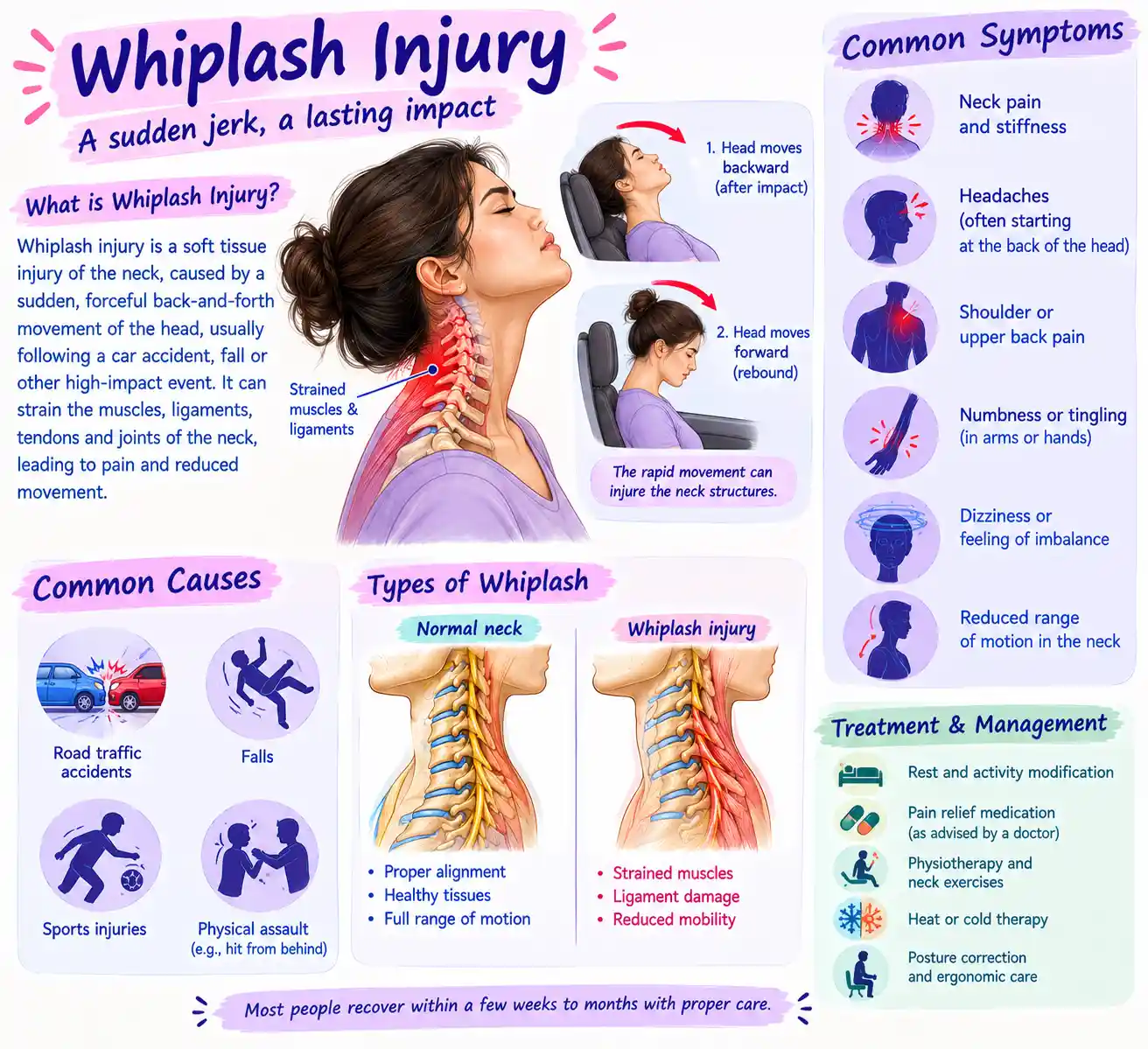
Whiplash injury is a neck injury that occurs when the head is suddenly forced backward and then forward, causing rapid movement of the neck beyond its normal range.
It commonly occurs during road traffic accidents, particularly when a vehicle is struck from behind, but it may also result from falls, sports injuries, or other sudden impacts. The rapid movement can strain the muscles, ligaments, tendons, and other soft tissues surrounding the cervical spine.
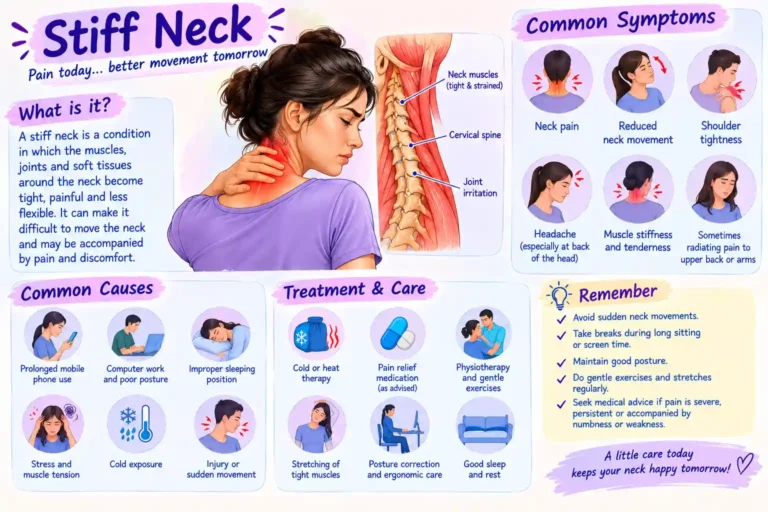
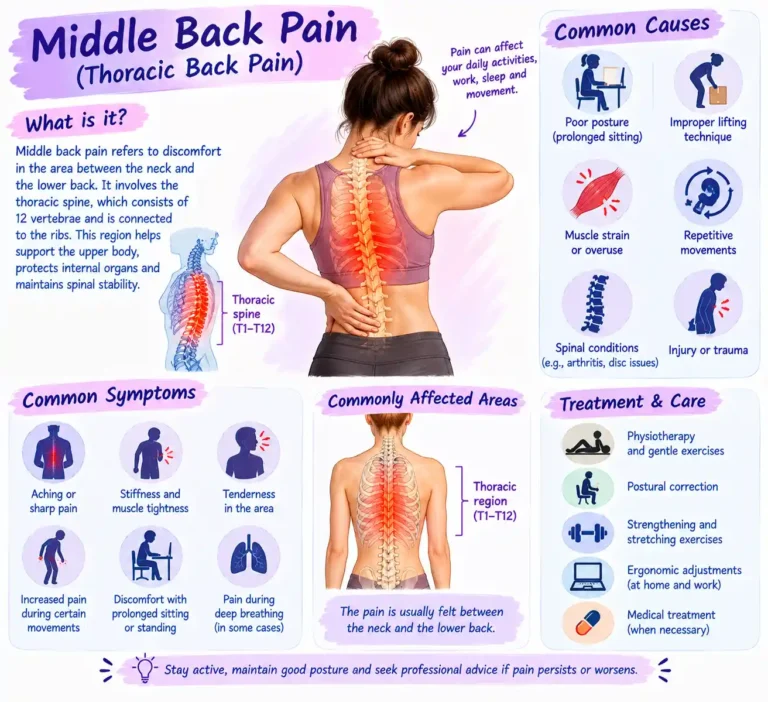
The symptoms of whiplash may develop immediately after the injury or appear several hours later. Common symptoms include neck pain, stiffness, reduced neck movement, headache, and tenderness around the neck and shoulders. Some people may also experience upper-back pain, dizziness, fatigue, or pain, numbness, and tingling extending into the arms.
The severity of symptoms can vary from person to person. Most uncomplicated cases improve gradually with appropriate care and rehabilitation. Treatment may include activity modification, pain management, gentle neck exercises, physiotherapy, and gradual return to normal activities. Maintaining comfortable movement is generally important, while prolonged immobilization should be avoided unless specifically advised by a healthcare professional.
Early assessment is recommended after a significant neck injury, especially when symptoms are severe or worsening. Appropriate management can help reduce pain, restore neck mobility, and support a safe return to daily activities.
Clinically Relevant Anatomy of Whiplash Injury
Various cervical spine anatomical structures are affected by whiplash and whiplash-associated diseases (WAD), depending on the power and direction of impact as well as numerous other factors. Any of these tissues can be the source of pain, and the strain injury can lead to inflammation, bleeding, and subsequent edema:
- Joints: cartilaginous endplates, intervertebral disks, zygapophyseal joints, Atlanto-axial joints, and Atlanto-occipital joints
- Alar ligament, anterior longitudinal ligament, anterior atlanto-axial ligament, anterior atlanto-occipital ligament, apical ligament, and transverse ligament of the atlas
- Bones: vertebrae (C3–C7), Atlas, and Axis
- Parts of the nervous system, including the brain, sympathetic nervous system, spinal cord, and nerve roots
- The structures of the vascular system include the internal carotid and vertebral arteries, the thoracic spine, the ribs, the shoulder complex, the temporomandibular joint, and the peripheral vestibular system.
Pathology of Whiplash Injury
Flexion of the upper and lower cervical spines occurs in stage 1.
In stage two, the cervical spine extends into an S-shape before straightening and regaining its lordotic curve. With concurrent hyperextension of the lower cervical segments and flexion of the upper segments, the cervical spine creates an aberrant S-shaped curve that surpasses normal physiological limitations.
Complete spinal extension, which results in large shearing forces that compress the facet joint capsules, is a characteristic of stage 3.
Based on the intensity of signs and symptoms, the Quebec Task Force categorizes patients with WAD (whiplash) as follows:
- Grade 1: The patient reports neck pain, stiffness, or tenderness; a physical examination yields no favorable results.
- Grade 2: The patient has musculoskeletal symptoms such as point discomfort and reduced range of motion.
- Grade 3: The patient also exhibits neurologic symptoms, such as muscle weakness, diminished deep tendon reflexes, and sensory impairments.
- Grade 4: The patient has a fracture.
Etiology of Whiplash Injury
After an MVA or acceleration-deceleration injury, a variety of neck-related clinical symptoms are referred to as whiplash-associated diseases. There are numerous views regarding the pathophysiology of this illness, which is not yet fully understood. It is believed that damage to the following structures may be the source of some of the symptoms:
- Cervical Spine Facet Joint Capsule
- The facet joints
- Spinal ligaments
- Nerve roots
- Intervertebral discs
- Cartilage
- Paraspinal muscles causing spasms
- Intraarticular meniscus.
Symptoms of Whiplash Injury
In order of mildness to severity, whiplash symptoms include:
- Tenderness and stiffness close to the wound
- Spasms in your muscles that prevent you from moving your head
- Swelling around the injury
- Muscle weakness
- Neck, upper back, shoulder, or upper arm numbness
- Your neck, upper back, shoulders, or upper arms may burn, tingle, or feel like “pins and needles.”
- Headaches
- Vision issues
- Swallowing difficulties and hoarseness or loss of voice
- Vertigo or dizziness
Whiplash injury symptoms might start immediately following a collision. Some take a minimum of twelve hours to show up. It can occasionally take many days or even an entire day for all of the symptoms to manifest.
The Danger of Ignoring Symptoms
Whiplash symptoms frequently appear gradually. This happens because it takes time for inflammation to accumulate in the damaged tissues.
Stiffness and a delayed recovery might result from prolonged inactivity or from neglecting ongoing pain. A subgroup of untreated whiplash injuries may develop into chronic pain, which is defined as pain that lasts longer than three months, according to research. Restoring function is the main goal of early intervention in order to help avoid this shift.
Whiplash Injury Causes
Your neck compresses or extends too quickly as a result. It strains your spine’s bones, muscles, and ligaments beyond their capacity.
The force applied to your neck increases with the strength and sharpness of the movement. The following are a few of the most frequent occasions or pursuits that can result in whiplash injuries:
- Accidents involving vehicles, particularly rear-end crashes
- Contact sports, such as rugby, hockey, and football
- Falls and roller coasters
Risk factors for Whiplash Injury
Any age can be affected by whiplash. However, females and older persons are more likely to sustain severe or long-lasting injuries.
In auto accidents, women are more likely than men to get whiplash-like injuries. This could be caused by things like:
- Height and spine differences: The average height of females is lower than that of males. Additionally, the anatomy of their spinal columns differs.
- Muscle differences: Generally speaking, women have less muscle. They therefore have less tissue to aid in absorbing the stresses of movement.
- Vehicle construction: Women may be impacted differently by seat back and headrest height due to their lower average height.
Diagnosis of Whiplash Injury
- X-rays
- CT scans
- MRI scans
These examinations can also assist in determining any issues connected to whiplash.
Whiplash Injury Treatment
Treatment aims to minimize symptoms while letting your neck heal as much as possible on its own. Chronic problems that arise may also require medical attention.
The following are the most popular whiplash treatments:
- Medication: Anti-inflammatory drugs, muscle relaxants, and painkillers can help control symptoms.
- Cold and heat therapy: During the first seven to ten days, your doctor may ask you to apply hot or cold packs to your neck.
- Physical therapy: After an injury heals, guided activities can help strengthen it.
- Surgery for the spine may be necessary in rare instances due to disc herniations or shattered vertebrae.
Recovery time
The majority of people who get a minor whiplash injury can heal in a few days or weeks. The healing process for more serious whiplash injuries may take weeks or even months.
Chronic pain is one of the long-term issues that some people experience. Recovery from chronic problems can take a significantly different amount of time.
Interventional Pain Management
Interventional procedures may be taken into consideration if conservative methods are ineffective or if you have a specific diagnosis:
- Epidural Steroid Injections: A cervical steroid injection may be used to lessen inflammation if it is determined that a herniated disk is pinching a nerve (radiculopathy).
- Nerve Blocks: Inflamed nerves producing radiating pain can be identified and treated with selective nerve root blocks.
- Radiofrequency Ablation (RFA): By using heat to block pain signals, RFA may be able to alleviate chronic neck pain associated with the facet joints.
Complications of Whiplash Injury
Severe incidents of whiplash can lead to problems like persistent (long-term) dizziness, headaches, and pain. These concerns can interfere with your daily life.
The majority of whiplash sufferers recover in a matter of weeks. Their injuries don’t appear to have a permanent impact. However, following an injury, some people experience agony for months or even years.
The course of healing from whiplash is difficult to predict. Generally speaking, if your initial symptoms were severe, appeared suddenly, and included:
- Severe ache in the neck.
- More restricted range of motion.
- Pain that extended to the arms.
A worse outcome has been associated with the following risk factors:
- Having already had whiplash.
- Older age.
- I already have neck or low back pain.
- An injury caused by high speed.
FAQs
How to cure whiplash neck?
You can treat whiplash neck pain at home with ice or heat, over-the-counter pain medication, and gentle neck range-of-motion exercises.
Pain Relief and Home Care
Ice and heat. For the first 48 to 72 hours, apply an ice pack for 10 to 15 minutes every few hours to help reduce swelling. After that, try low heat or warm showers to help loosen tight muscles.
Medication. Over-the-counter pain relievers such as ibuprofen or acetaminophen may help, but check with your doctor first.
Supportive sleep: To keep your spine straight while sleeping, put a rolled towel or a special neck pillow under your neck.
No strain: Rest briefly, but avoid heavy lifting, strenuous exercise, or anything else that worsens the pain.
How long does it take to heal from whiplash?
Most people recover from whiplash within 6 to 12 weeks, although minor cases can improve in a few days or weeks.
Recovery Time by Severity
Mild (Grade 1): Heals in 2 to 4 weeks, with mild neck pain and full range of motion.
Moderate (Grade 2): 6 to 10 weeks if muscle tear restricts range of motion.
Severe (Grade 3): 10 to 12 weeks or more if nerve compression causes arm tingling or weakness.
Traumatic ( Grade 4 ): Needs orthopedic treatment for a fracture or dislocation before usual rehabilitation.
Healing Factors
Early treatment: Initiating physical therapy within the first 7 days can greatly accelerate recovery.
Overall health: Healing duration is influenced by age, pre-existing neck arthritis, and overall physical condition.
Chronic complications: A tiny proportion of patients endure pain that lasts longer than three to six months.
When to see a doctor for whiplash?
When to Seek Immediate Medical Attention
Intense pain spreading to your shoulders, arms, or hands.
Numbness, tingling, or weakness in the arms or legs.
Dizziness, vertigo,o or problems with balance that are not improving.
Changes in vision or severe worsening headaches
Loss of bowel or bladder control (get emergency care right away).
When to Make an Appointment for a Routine Visit
You experience mild neck tightness or soreness one or two days after a small accident.
Pain or limited movement that doesn’t improve after a few days of home care.
Symptoms interfere with your sleep or daily activities.
Will whiplash ever go away?
Whiplash typically improves fully within several weeks to several months.
Mild cases: Most mild symptoms subside in a few days to two weeks with simple rest and care.
Moderate cases: Full recovery generally takes six to eight weeks.
Severe cases:s If there is damage to nerves, discs, ks or deep ligaments,nts it can take several months to heal.
When ItLong-TermTerm
Chronic whiplash: About 15 to 30 percent of people still have pain after 12 weeks.
Long-term effects: A very small number of people have long-lasting stiffness, headaches, or pain for years if the injury was severe or left untreated.
Is massage good for whiplash?
Can Massage Therapy Help with Whiplash? Yes, massage therapy may help reduce pain and stiffness from whiplash,h but it works best as part of a more comprehensive medical recovery plan.
Benefits of Massage for Whiplash
Relieves muscle tension: Soft tissue techniques can help relieve painful spasms and knots in the neck and shoulders.
Improves mobility: Targeted work restores your range of motion, letting you turn and tilt your head more comfortably.
Improves circulation: Improved blood flow helps to deliver oxygen and nutrients to injured tissues to aid healing.
Calms the nervous system: Massage reduces stress hormones and relaxes the body after the shock of an accident.
Important Safety Tips
Get medical clearance first. Always see a doctor to rule out fractures, severe tears, or neurological damage before booking a massage.
What is stage 4 whiplash?
Stage 4 whiplash (also referred to as Grade 4 WAD or Quebec Task Force Grade 4) is known as the highest severity level of a whiplash injury that involves a fracture or a dislocation of cervical vertebrae (neck vertebrae).
Unlike the less severe stages of whiplash that only consist of soft tissue injuries or irritations of the nerves, Stage 4 is classified as a major structural bone injury caused by violent trauma (e.g., a car accident or a severe fall).
Main features
Bone injury: Involves broken or dislocated bones in the neck.
Symptoms: Severe neck pain, pronounced tenderness and muscle spasms, and a high chance of serious nerve problems due to spinal cord damage and compression.
Need for medical care: Requires immediate medical help, sometimes involving imaging (CT scan or X-ray) and surgical operation.
Recovery duration: Takes much longer than in the case of soft tissue injuries, as there is a higher risk of developing serious complications.
What not to do after whiplash?
In order to speed up recovery, it is crucial to avoid complete rest, lifting heavy weights, and remaining immobilized for too long with the neck collar.
What Not to Do
Do not keep the neck immobilized for too long: Wearing a soft neck brace or collar should be avoided for longer than a couple of days unless prescribed by a doctor. Prolonged immobilization leads to muscle atrophy and stiffening of joints.
Do not lie in bed for far too long: Some rest is always welcome to start the recovery process, but too much bed rest should be avoided.
Do not engage in vigorous activity: Heavy lifting, vigorous exercises, contact sports, or sudden upper-body movements should be avoided.
Do not overlook incorrect posture: Avoid working on a computer or constantly looking down at the phone.
Do not ignore the importance of movement: It is important to alternate between resting and doing movements without pain.
Do not forget the emergency signs: If you start experiencing strong radiating pain, numbness, buzzing in arms, dizziness, or confusion, seeing a doctor is a must.
References
- 5 Facts About Whiplash. (n.d.). Rush. https://www.rush.edu/news/5-facts-about-whiplash
- Dpt, C. J. T. P., & Dpt, C. J. T. P. (2025, December 2). 5 Safe At-Home Exercises for Whiplash Recovery (And When to Stop). CT Physical Therapy Care. https://ctphysicaltherapycare.com/safe-exercises-for-whiplash-recovery/
- Grande, A. (2026, January 26). Five whiplash physiotherapy exercises – FocusPhysiotherapy. Physiotherapy, Rehabilitation & Sports Injury Clinic. https://www.focusphysiotherapy.com/5-whiplash-treatment-exercises-can-home/
- Healthdirect Australia. (2026, July 20). Whiplash. Symptoms, Causes, Treatments and Complications | Healthdirect. https://www.healthdirect.gov.au/whiplash
- Isaacson, J. (2026, June 10). Whiplash Injury/ Neck sprain | Complete Physio. Complete Physio. https://complete-physio.co.uk/whiplash-injury-neck-sprain/
- Neck Sprain (Whiplash type injury) Information for patients. (2025). [Leaflet]. Oxford University Hospitals NHS Foundation Trust. https://www.ouh.nhs.uk/media/jx0oqe5b/116459whiplash.pdf
- Ojedapo Ojeyemi, M.D. (n.d.). Think you have whiplash? Here’s how you can know for sure: Orthopedic & Wellness : Pain Management. https://www.orthopedicwellness.com/blog/think-you-have-whiplash-heres-how-you-can-know-for-sure
- SportsMed, Y. (2022, October 7). The 8 BEST Stretches & Exercises for Whiplash Injury | Physiotherapists in Toronto | Yorkville Sports Medicine Clinic. Physiotherapists in Toronto | Yorkville Sports Medicine Clinic. https://www.yorkvillesportsmed.com/blog/8-best-stretches-exercises-for-whiplash
- WebFX & WebFX. (2024, May 14). Exercises to improve whiplash: A guide by Desert Institute for Spine Care. Desert Institute for Spine Care. https://www.sciatica.com/blog/exercises-to-improve-whiplash/
- Whiplash exercises | My Whiplash Navigator. (n.d.). https://mywhiplash.com.au/content/whiplash-exercises
- Whiplash: Symptoms, causes, diagnosis, and treatment in MD, D.C., and VA. (n.d.). https://www.cfaortho.com/media/news/2025/11/whiplash-symptoms-causes-diagnosis-and-treatment