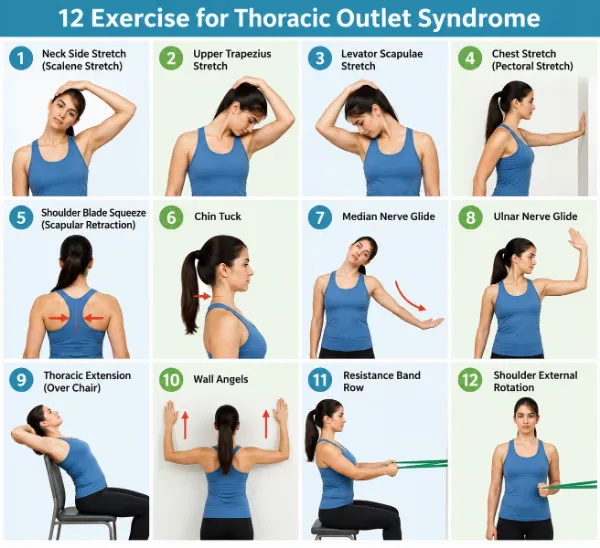
12 Effective Exercises for Thoracic Outlet Syndrome
Introduction
Exercise can help you manage thoracic outlet syndrome. The most effective exercises for thoracic outlet syndrome attempt to improve posture, strengthen the muscles surrounding the shoulder girdle, stretch tight muscles, and increase overall flexibility.
The ribcage is a ring formed by the upper ribs located directly below the collarbone. Thoracic outlet syndrome (TOS) occurs when the rib and clavicle bones, or the neck muscles at the top of the outlet, squeeze nerves or blood vessels in the brachial plexus.
Compression of the thoracic outlet may result in pain, weakness, numbness or tingling, discolouration, edema, muscle wasting, enlarged veins, chilly hands, and, in extreme cases, an aneurysm or embolism. You may be confident that about 1-2% of breast discharge cases are severe. Exercise can strengthen our shoulder and scapular muscles, increasing their strength.
There are three forms of thoracic outlet syndrome, and the symptoms vary according to which one you have. This syndrome is classified into the following types:
- Neurogenic thoracic outlet syndrome is the most prevalent kind, affecting around 95% of persons. It develops when the thoracic outlet nerves (brachial plexus nerves) get squeezed.
- Venous thoracic outlet syndrome develops when one or more veins, such as the subclavian vein, the axillary vein behind the collarbone, or the collarbone, get squeezed. This represents around 3-5 percent of cases.
- Thoracic artery leak syndrome: This is the most unusual and serious type of arterial thoracic leak syndrome, which affects arteries such as the subclavian and axillary arteries behind the collarbone, frequently resulting in an aneurysm. Thoracic outlet syndrome is an uncommon condition affecting about 1-2% of the population.
Causes of thoracic outlet syndrome
- Injuries: Collarbone (clavicle) or other injuries can result in scar tissue and inflammation.
- Bad or poor posture habits: When your shoulders sag owing to any habit, your collarbones may slip out of place and put stress on your nerves, causing the symptoms. When your shoulder muscles weaken, you acquire poor posture.
- Repetitive stress: It can affect people who repeat the same motion with their arms over and over again.
- Some patients are born with an additional rib, which leads to thoracic outlet syndrome.
- Obesity: Carrying too much weight or being overweight might strain the muscles supporting your collarbones.
- Pregnancy: When a joint is lost, the TOS changes.
- Sleeping problems
- Tumors: which can lead to thoracic outlet syndrome (a tumor in your upper chest)
- Stress or Depression
Symptoms
Thoracic outlet syndrome symptoms usually affect one side of the upper body (neck, upper chest, shoulder, arm, or hand), although they can occur on both.
You could have:
- Weaknesses
- Feeling heavy or swollen
- Pain that might get worse if you raise your arms
- Tingling
- Numbness
- Skin tone shifts (becoming pale or blue-looking)
- Cold skin to the touch.
The specific symptoms you encounter might vary depending on the type of thoracic outlet syndrome you have. This is because some tissues, such as blood vessels or nerves, become compressed, resulting in symptoms. Because of this compression, several components are unable to function properly.
The benefits of exercise:
- To relieve the symptoms and increase the thoracic outlet space.
- Assist in expanding the compressed vessels.
- Helps to normalize how they work.
- Gain an effect on muscular strength.
- Maintain a straight posture.
- Helps to reduce tingling and numbness sensations.
Do this before you begin your exercise routines:
- Seek medical guidance before starting any workout regimen. Working with a physical therapist will help you comprehend your diagnosis and offer you personalized workout routines based on your specific needs.
- Physical therapy is normally advised for people with neurogenic thoracic outlet syndrome; however, it may not be appropriate for those with venous or arterial thoracic outlet syndrome, as surgery is usually necessary. If conservative therapy is ineffective, consult a doctor.
- The prescribed activity may aid in your rehabilitation, but you should only do it when you and your doctor determine that you are ready. The exercise aims to improve the muscles in your upper back, shoulders, and posture stabilizers. Daily posture adjustment could reduce symptoms.
- Warming up the area around your neck and shoulders with warm water or a low-temperature heating pad is the right way to prepare your muscles for activity. Do this for 10 to twelve minutes, or until you’re comfortable. It is critical to avoid overheating, as this might cause burns.
- Gently extend your muscles until you feel a force rather than an ache. If you start to feel pain, try not to stretch anymore.
Exercises for Thoracic Outlet Syndrome:
When you and your doctor agree that you are ready, you should complete the following activities to help in your recovery. The purpose is to strengthen your upper back, shoulders, and postural stabilizers. You can also assist in reducing pain by frequently adjusting your posture.
Upper extremity neural mobilization
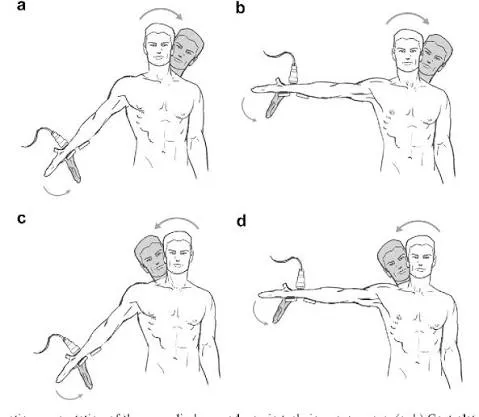
- To begin this exercise, place your hand against a wall, fingers pointing downward. Alternatively, you can lie supine with your shoulder 90 degrees abducted and your fingers pointing downward. Your neck moves in the other direction.
- After that, keep your shoulders down and your arm as straight as possible.
- Perform a neck-side flexion action on both sides while remaining in this posture. This mobilization is accomplished initially in front of your healthcare provider and subsequently at your house.
Sitting back extension
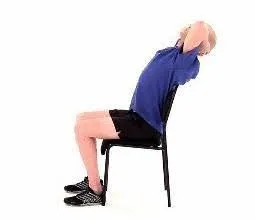
- Take a straight chair seat, put your hands behind your head, and stretch your elbows to the sides.
- Elevate your head gradually until your chest expands.
- Hold your position for a few seconds.
- Then return to the neutral position.
- Then relax.
- Repeat this exercise 5 to 10 times.
Doorway shoulder stretch
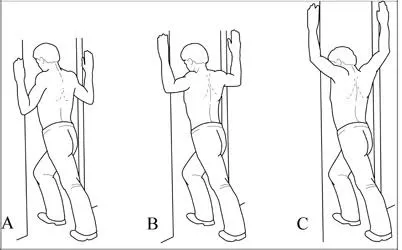
- Position yourself at a door’s opening, with both hands on either side of the frame.
- Keep your hands slightly above your shoulders.
- Next, expand your chest by leaning forward.
- Step forward with one foot and gently bend your knees for more support.
- Hold your position for a few seconds.
- Then return to the neutral position.
- Then relax.
- This is an activity you should repeat five or 10 times.
Scalene stretch
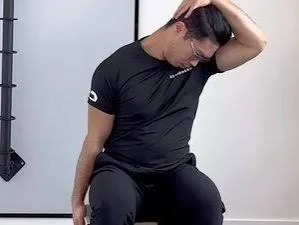
- Sit on a chair
- Feet flat on the ground.
- Using your right hand, grab the chair seat.
- Next, keep your head straight while leaning it to the left.
- Your right side of the neck should feel stretched.
- If the stretch causes pain, shorten it or stop.
- Hold your position for a few seconds.
- Then return to the neutral position.
- Then unwind.
- Repeat on the other side.
- Repeat this exercise five or 10 times.
Median nerve flossing
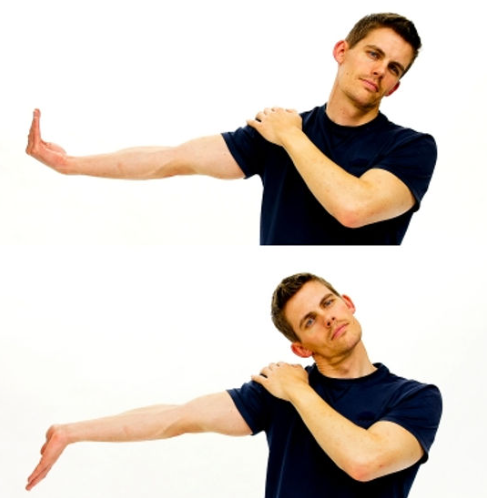
- When flossing with this technique, stand with the arm abducted to 90 degrees, palm facing front, and fingers straight.
- Move the opposing ear toward the opposite shoulder (side-bend your head) while bending your wrist forward and keeping your fingers straight.
- Then, move your ear to the same side’s shoulder, extending your wrist and maintaining your fingers straight.
- These two places need to be swapped.
- Then return to the neutral position.
- Then relax.
- Repeat this exercise 5-10 times.
Resistance band pull-apart
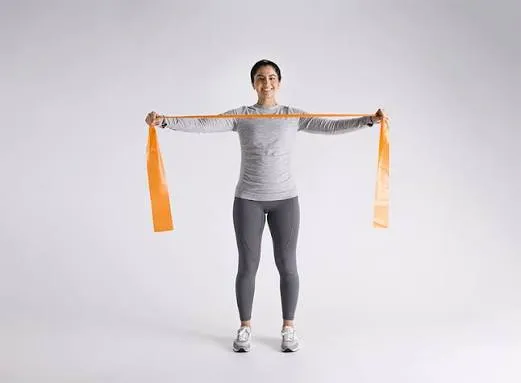
- For this workout, you will require a resistance band (depending on your strength), and you will stand with your elbows extended at around 90 degrees. Hold this resistance band in front of you for 5-10 seconds, palms facing up. Your resistance band should be parallel with the ground.
- Slowly move the band away from your abdomen while keeping your elbows bent at the sides. Move your arms outside of your body. Consider pressing your shoulder muscles together to initiate the movement while keeping your spine in neutral posture.
- Slowly return to the initial position and repeat the exercise.
- Perform 3-5 sets of 10-15 repetitions every day.
Scapula squeeze
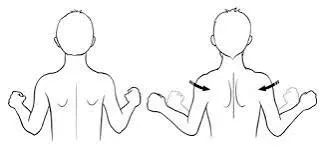
- This exercise may be done sitting or standing, with your arms by your sides.
- To prevent rounding your back, lean slightly forward.
- Keep your hips, shoulders, and ears in the proper position.
- Push your shoulders and elbows backward, bringing your shoulder blades together.
- Hold your position for a few seconds.
- Then return to the neutral position.
- Then relax.
- It is advised that you repeat this workout five to ten times.
Standing rows
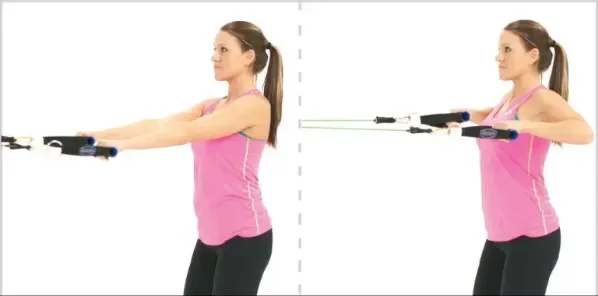
- Attach a resistance band to a sturdy structure.
- As an alternative, close the door after putting the band around the doorknob.
- Grip the resistance band with both hands and stand up straight.
- Bend at the elbows and slowly draw the resistance band back until your elbows are barely touching your sides.
- Hold your position for a few seconds.
- Then return to the neutral position.
- Then relax.
- Repeat this exercise 5-10 times.
Arms slide on the wall
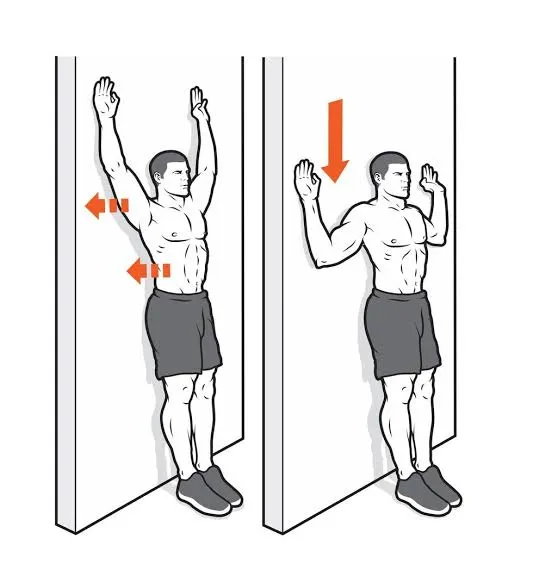
- This exercise is for the scapular muscle, and you must stand with your face in front of the wall.
- Place your hand on the wall and slide it as far as possible. Perform shoulder flexion and hold it for 4-5 seconds, with your elbow extended.
- If you’re comfortable, carefully pull your shoulders down the wall for a few seconds before returning to your regular position.
- You may do it at home without the need for any additional equipment. Repetitions should be 20-25.
Prone snow angel
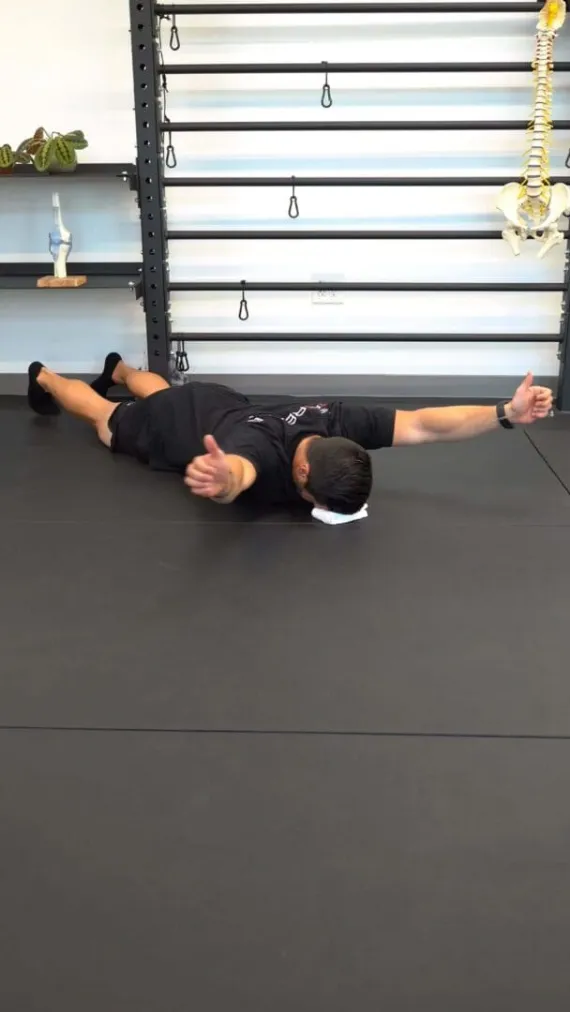
- Rest on your stomach, legs outstretched, arms at your sides (palms facing down), and forehead in touch with the floor.
- Pull your shoulder blades back and elevate your arms a few inches off the ground.
- This is where we start.
- Next, progressively stretch your arms to the sides until they are parallel to your torso.
- Continue once your arms are above your head, if it is comfortable for you.
- After that, gradually lift your arms to their original posture.
- You will notice that moving about is comparable to forming snow angels.
- Then relax.
- This is an activity you should repeat five or 10 times.
Quadruped thread the needle
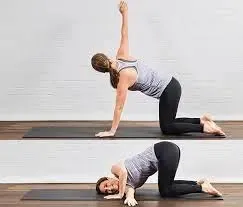
- Begin by kneeling with your palms flat on the floor, keeping your spine neutral.
- Examine how your knees, hips, hands, and shoulders are positioned.
- Raise your right hand, allowing it to make gentle contact with the ground before sliding it under your left arm.
- Allow the floor to contact your right shoulder and chest.
- Next, turn your chest to the right by gradually retracting and extending your right arm toward the ceiling.
- After that, drop your right arm and repeat the same actions.
- Then return to the neutral position.
- Then unwind.
- It is suggested to perform five to 10 repetitions of this workout.
Chin tuck
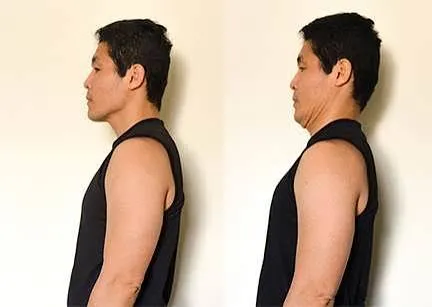
- First, maintain a relaxed stance for your shoulders and neck.
- Straight ahead.
- Pull your chin into the space around your neck without holding your breath.
- There will be a mild pressure on your upper neck.
- Additionally, remember not to tilt your head forward or backward.
- Maintain this posture for a few seconds.
- Then, return to a neutral stance.
- Then take it easy.
- You may do this workout 5 to 10 times each day.
What safety precautions must be taken before exercising?
- Maintain a straight posture throughout your exercise routine.
- Before beginning any activity, warm up and stretch.
- Allow yourself to rest between workouts.
- If you feel any unexpected pain while exercising, stop immediately.
- All exercises must be performed in accordance with the protocol, which includes warm-ups and cool-downs as well as the appropriate number of repetitions.
- Loose, easygoing attire that promotes mobility and relaxation is perfect for exercising. Do not wear stylish or tight attire.
- Stretching stiff muscles is natural and even important, despite the difficulty. Stretching or exercising should never induce stabbing or painful feelings, since this is dangerous and worsens the problem.
- Avoid doing hard activity.
When should you not exercise?
- Fever
- Headache
- You’re not feeling well
- Blurry vision
Activities to stay away from if you have thoracic outlet syndrome:
- Although no activities are strictly prohibited, you may need to limit some of them while recovering from neurogenic thoracic outlet syndrome.
- It is normally recommended that you limit or avoid overhead workouts or activities that require lifting heavy items (such as dumbbells or barbells) until your physical therapist or other healthcare professional provides the go-ahead.
- In many circumstances, waiting until you are farther along in your recovery before starting chest workouts (such as bench presses) might be a sensible move. The rear muscles must be strengthened more than the front muscles for treating thoracic outlet syndrome.
- During the healing process, it is critical to move gently and avoid overdoing it, as this might exacerbate your issue. Pay attention to your body and only practice exercises that are painless and relaxing.
Lifestyle Choices and Natural Remedies:
- Maintain a straight posture.
- When working, take frequent pauses to stretch and move about.
- Maintain a healthy body weight.
- Make sure your workstation does not worsen your problems and allows you to keep correct posture.
- Stretch your thoracic outlet and shoulders gently.
- Cover the area with a heating pad.
- Stretching, meditation, and deep breathing can all help you relax.
Conclusion
Compression of blood vessels or nerves in the upper chest or lower neck can cause thoracic outlet syndrome (TOS). The symptoms include pain, tingling, and numbness in your hands and arms. Traumatic events, birth defects in anatomy, and vigorous arm motions (particularly in sports) are all common causes.
Physical therapy and pain management are commonly used to treat thoracic outlet syndrome; however, surgery may be required in rare situations.
Consult a doctor to ensure you’re getting the best therapy for your condition.
FAQS
Can people with thoracic outlet syndrome exercise?
Although there are no workouts that are off-limits, you may need to limit your movements while recovering from neurogenic thoracic outlet syndrome. If you suspect you have venous or arterial thoracic outlet syndrome, consult your doctor first.
What should one do to avoid thoracic outlet syndrome?
If you are at risk of thoracic outlet compression, avoid lifting large things and performing repeated actions. If you are overweight, losing weight may help you avoid or treat the symptoms of thoracic outlet syndrome.
How does someone with thoracic outlet syndrome sleep?
Sleeping Positions: Avoid sleeping on the affected side. Although resting on your back is the optimum position, it is also OK to lie on your non-affected side with a cushion between your arms to prevent your shoulders from rounding.
What does thoracic outlet syndrome feel like?
Thoracic outlet syndrome (TOS) causes dull, aching, severe pain, numbness, or tingling in the neck, shoulder, chest, or arm. The feelings vary depending on whether nerves or blood vessels are squeezed.
How long does it take for TOS to go away?
Thoracic outlet syndrome (TOS) can persist from a few weeks to many months, or it can become chronic if left untreated, depending on the severity and treatment used.
References:
- December 13, 2023b; Tirgar, P. The Finest Thoracic Outlet Syndrome Exercises – Mobile Physio Practice. The ideal thoracic outlet syndrome exercises are available at https://mobilephysiotherapyclinic.in.
- Syndrome of the Thoracic Outlet. (2024d, August 26). Cleveland Medical Center. Thoracic outlet syndrome (TOS): https://my.clevelandclinic.org/health/diseases/17553
- 12 Activities for Thoracic Outlet Syndrome that Provide Long-Lasting Relief. 2024, June 19. Thoracic Outlet Syndrome Exercises: https://www.georgiauppercervical.com
- On October 4, 2022, Cpt. K. D. M. R. Activities to address Thoracic Outlet Syndrome. From Healthline: https://www.healthline.com/thoracic outlet syndrome exercises
- The Mayo Clinic provides diagnosis and treatment for thoracic outlet syndrome (2024b, June 4). Thoracic outlet syndrome: https://www.mayoclinic.org/diseases-conditions/thoracic-outlet-syndrome/diagnosis-treatment/drc-20353994