
Ankle Pain
Introduction
Ankle pain is a common musculoskeletal problem that can affect people of all ages. The ankle joint plays an important role in supporting body weight and allowing movements such as walking, running, jumping, climbing stairs, and maintaining balance. Because the ankle is involved in almost every step we take, pain or injury in this area can make normal daily activities uncomfortable and difficult.
Ankle pain may develop suddenly following an injury or gradually due to repetitive stress and overuse. One of the most common causes is an ankle sprain, which occurs when the ligaments supporting the joint are stretched or torn. Other possible causes include fractures, tendonitis, arthritis, bursitis, muscle strains, and repetitive activities. Wearing inappropriate footwear, walking on uneven surfaces, sudden changes in physical activity, and poor balance may also increase the risk of ankle problems.
The symptoms of ankle pain can vary depending on its cause and severity. Common symptoms include pain, swelling, stiffness, tenderness, bruising, weakness, and difficulty putting weight on the affected foot. Some people may also experience a feeling of instability or “giving way” while walking. Severe injuries may cause significant swelling, deformity, or an inability to walk normally.
Early and appropriate management can help reduce symptoms and restore normal ankle function. Treatment depends on the underlying cause and may include activity modification, cold or heat therapy, appropriate exercises, physiotherapy, medication, or medical intervention when required. Rehabilitation exercises can help improve ankle flexibility, strength, balance, and stability and may reduce the risk of future injuries.
Preventing ankle pain involves maintaining good lower-limb strength and flexibility, wearing comfortable and supportive footwear, warming up before physical activity, and gradually increasing exercise intensity. Paying attention to walking surfaces and using proper techniques during sports can also help protect the ankle.
Understanding the causes, symptoms, treatment, and prevention of ankle pain can help people take appropriate steps toward maintaining healthy ankles and comfortable movement.
What is the ankle joint?
The joint that joins your foot to your lower leg is called the ankle. It is sometimes referred to as the talocrural joint or the tibiotalar joint by medical professionals.
Your ankles are a component of your skeletal system, just like every other joint.
If you have ankle pain, see a doctor. They will identify the cause of your pain and other symptoms and recommend therapies that will enable you to resume your regular activities.
What does the ankle joint do?
Every time you move, your ankles flex and bend to keep you steady and balanced.
There are two ways your ankles can move:
Plantar flexion: Moving away from your body and down.
Dorsiflexion: Moving upward in the direction of your body.
Where is the ankle joint located?
Your ankle is located at the bottom of your leg. It is the point where your foot and lower leg meet.
What type of joint is the ankle?
There are numerous joints, and healthcare experts classify them in a variety of ways. Typically, joints are categorized according to what they are composed of.
How they move and their role.
A synovial joint is the ankle. The ankle is a hinge joint in terms of functionality. Consider the hinges that secure a door. Your ankle can move in either direction.
What is the structure of the ankle joint?
Your ankles are made of:
- Bones.
- Cartilage.
- Ligaments.
- Muscles.
- Nerves.
- Blood vessels.
Bones in the ankle
Three bones make up your ankle joint:
- Tibia (shin bone).
- Fibula (calf bone).
- Talus.
Ankle cartilage
Hyaline cartilage lines your ankle.
Ankle muscles
Your ankle movements are controlled by muscles in your legs and foot.
Plantarflexion muscles allow you to flex your foot downward and away from your body. Among them are:
- Gastrocnemius.
- Soleus.
- Plantaris.
- Tibialis posterior.
- Flexor digitorum longus.
- Flexor hallucis longus.
- Peroneus brevis.
- Peroneus longus.
Dorsiflexion muscles allow you to raise your foot closer to your body. Among them are:
- Tibialis anterior.
- Extensor digitorum longus.
- Extensor hallucis longus.
- Peroneus tertius.
Ankle nerves
Ankle nerves include the following:
- Tibial nerve.
- Superficial peroneal nerve.
- Deep peroneal nerve.
Blood vessels in the ankle
Blood travels to and from your ankle via three arteries, including:
- Anterior tibial artery.
- Posterior tibial artery.
- Peroneal artery.
Causes Of Ankle Pain
Ankle discomfort may result from damage to any of the ligaments, tendons, or ankle bones. Chronic illnesses or specific medical disorders affecting the bones and joints can be additional factors. Ankle discomfort can be caused by:
Ankle pain-causing injuries
- Achilles tendon rupture
- Avulsion fracture
- Broken ankle
- Broken foot
- Sprained ankle
- Stress fractures
Ankle discomfort may result from chronic problems.
- Achilles tendinitis
- Osteoarthritis
- Plantar fasciitis
- Tarsal tunnel syndrome
Ankle pain-causing medical problems
- Gout
- Juvenile idiopathic arthritis
- Lupus
- Osteochondritis dissecans
- Osteomyelitis
- Pinched nerve
- Pseudogout
- Psoriatic arthritis
- Reactive arthritis
- Rheumatoid arthritis
When to see a doctor
Ankle injuries can be extremely painful, at least initially. For a brief time, using home remedies is usually safe.
- Get medical help right now if you:
- Experience excruciating pain or swelling, particularly following an injury.
- Experience worsening pain.
- Have an open wound or a malformed ankle.
- Exhibit symptoms of infection, such as a fever above 100 degrees Fahrenheit (37.8 degrees Celsius) or a change in skin color, warmth, and soreness in the affected area.
- Unable to place weight on the foot.
How Is Ankle Pain Diagnosed?
- X-ray
- MRI
- CT scan
- Ultrasound
Treatment for Ankle Pain
Treatment for ankle pain depends on its cause, severity, and whether the problem is related to an injury or an underlying condition. Mild ankle pain may improve with activity modification, appropriate rest, gentle movement, and gradual rehabilitation. Physiotherapy can help restore ankle range of motion, improve muscle strength, balance, and joint stability. Exercises should be introduced gradually and should not significantly increase pain or swelling.
Medical Treatment Of Ankle Pain
Medical treatment depends on the underlying diagnosis. A healthcare professional may recommend pain-relieving or anti-inflammatory medicines when appropriate. For certain injuries, supportive measures such as an ankle brace, taping, or temporary immobilization may be required. Fractures, severe ligament injuries, or persistent symptoms may require imaging and specialist assessment. Procedures or surgery may be required in some situations. It is important to follow professional advice when using medications and other medical procedures.
Physiotherapy Treatment for Ankle Pain
Exercises for Ankle Pain
Achilles tendon and plantar fascia stretch
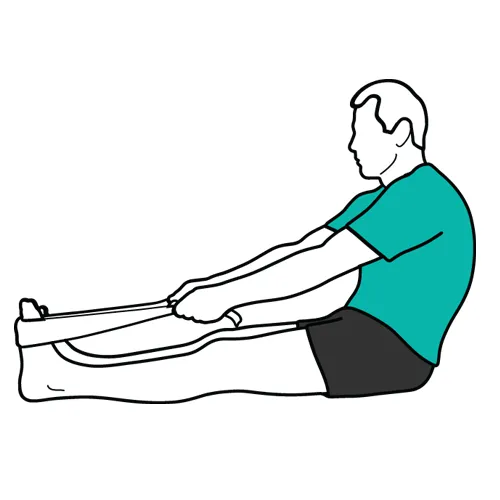
Keeping your knee straight, wrap a towel around the ball of your foot and bring your toes closer to your torso. Hold for thirty seconds. On each foot, repeat three times.
Plantar fascia stretch
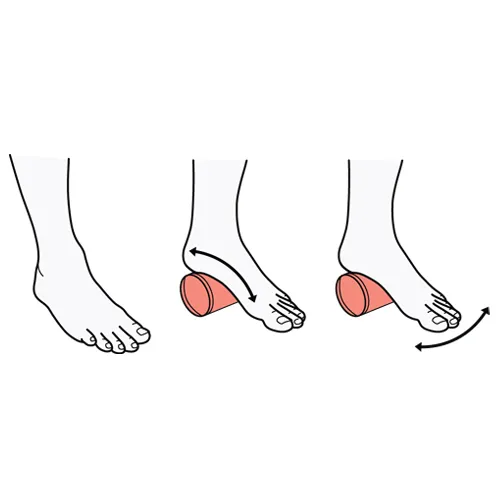
Take a seat and place the arch of your foot on a circular object, such as a bean can. For a few minutes, roll your foot in all directions on the tin. Do this twice a day.
Sitting plantar fascia stretch

Cross one foot across your knee while seated. To achieve a comfortable stretch, grasp the base of your toes and bring them back toward your body. Hold for 15 to 20 seconds. Do this three times.
Wall push
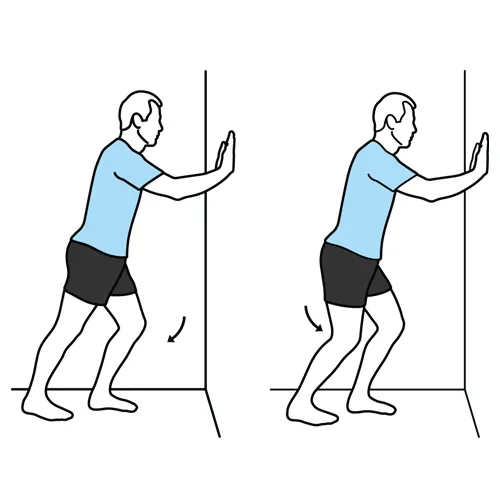
Place one foot in front of the other while facing a wall and placing both hands at shoulder height. The distance between the front foot and the wall should be about 30 cm (12 inches). Bend your front knee toward the wall while keeping your back knee straight until your rear leg’s calf feels tight. Repeat ten times while relaxing.
Repeat, but gently bend the back knee by bringing the rear foot forward. Do this ten times.
Ankle range of motion
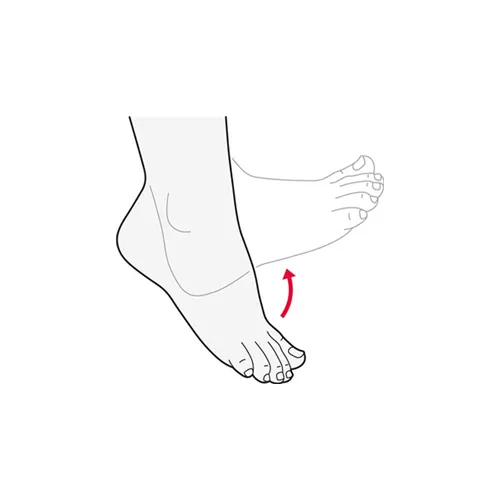
Point your toes away from your body after bending your ankle as close to your body as you can. Do this ten times.
Ankle rotation
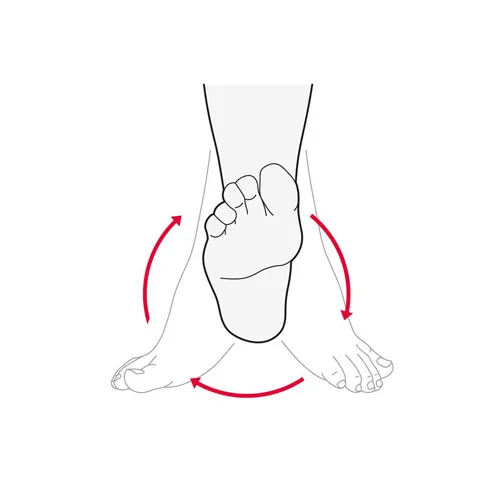
Make a gentle circle with your ankle. Repeat in the opposite direction after doing this ten times in one direction.
Towel pickup
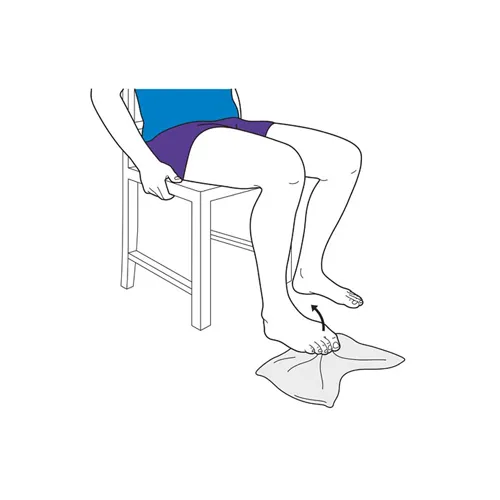
Place a towel on the ground in front of you and take a seat. Scrunch the towel between your toes to lift it while keeping your heel on the ground. Repeat ten to twenty times. As you get better, add a tiny weight to the towel, like a tin of beans.
Standing heel raise
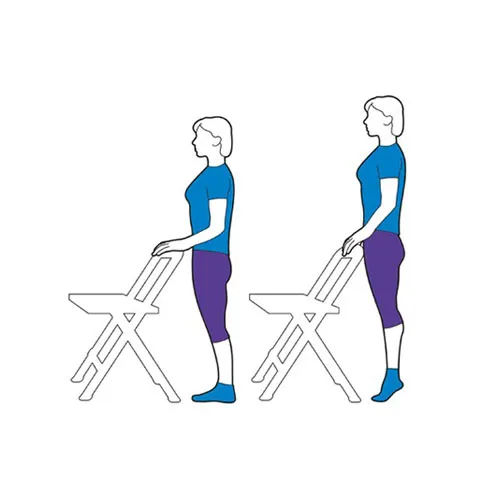
With your knees straight, stand up on your tiptoes using a chair or counter for support. Return your feet slowly. Do this ten times.
Toe spread
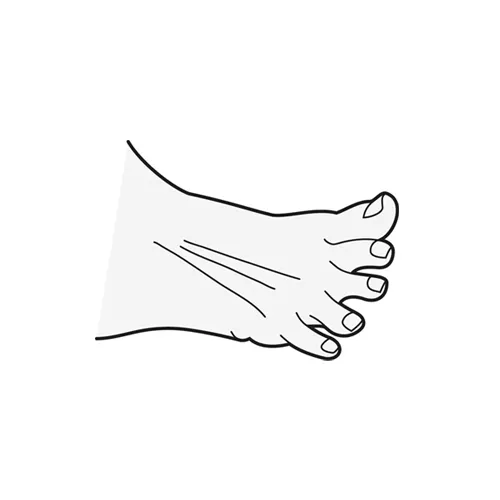
Spread your toes as widely apart as you can while keeping your feet on the ground. Hold for five seconds. Do this exercise ten times.
Alphabet writing
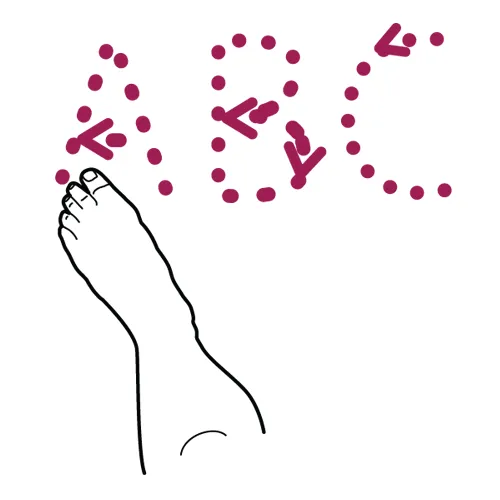
Write the alphabet in the air with your big toe while seated, using only your ankle. Twice a day, try writing the entire alphabet.
Ankle out
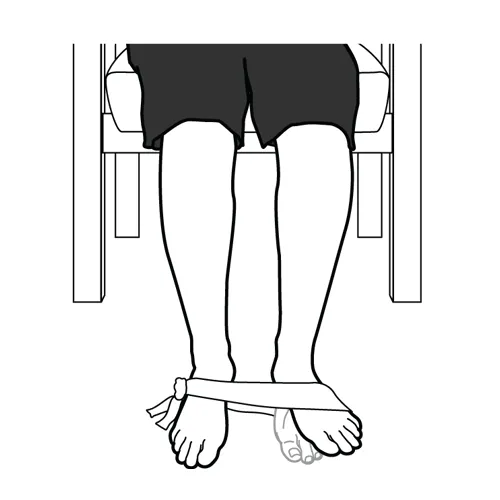
Using a piece of elastic exercise band, form a loop and secure it with your other foot or the leg of a table or chair. Put one foot inside the loop. Turn your toes outward against the band’s resistance while maintaining your heel on the ground. Return your foot carefully to its initial position. Work your way up to doing the set three times a day and ten times.
Basic balance
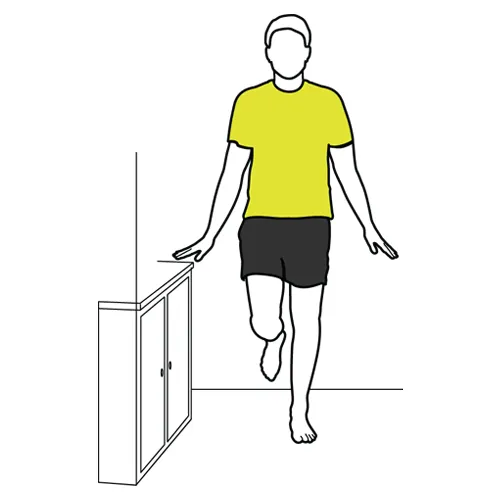
Balance on one foot while using a sturdy item, such as a kitchen counter. Increase the amount of time you spend doing this; aim for one minute. Repeat the set twice a day and try to complete this three times.
Practice standing on one leg whenever you can; incorporating it into your everyday routine will help you get better.
You can increase the difficulty of this simple balance exercise by standing on a pillow or cushion once you feel comfortable performing it. Gradually increase the number you do.
Return to standing on the floor and repeat the fundamental balance exercise with your eyes closed after you are comfortable balancing on a pillow.
Home Remedies for Ankle Pain
How to manage ankle pain at home will depend on its causes as well as any previous operations or treatments. You might be required to:
Give your ankle a few days of rest. Aim to avoid placing a lot of weight on your ankle.
Apply an ACE bandage. Additionally, you can purchase an ankle support brace.
To relieve the strain on a painful or shaky ankle, use crutches or a cane.
Keep your foot up above your heart. Put two pillows beneath your ankle when you are sitting or sleeping.
Immediately ice the area. For the first day, apply ice for ten to fifteen minutes per hour. For the next two days, apply ice every three to four hours.
Try ibuprofen, acetaminophen, or other over-the-counter medications.
You could require a boot to rest your ankle or a brace to support it.
You might still need to take extra weight and stress off your ankle for a while as the swelling and soreness subside.
It could take many weeks to several months for the damage to completely recover. The injured ankle will remain somewhat weaker and less stable than the uninjured ankle even after the pain and swelling have subsided.
To strengthen your ankle and prevent more injuries, you must begin exercising.
Don’t start these workouts until a medical professional says it’s okay to do so. To prevent another sprain or injury, you will also need to improve your range of motion, balance, and agility.
Your healthcare physician may also advise you to do the following:
- Avoid gaining excess weight, as this may place further strain on your ankles.
- Before working out, warm up. The tendons and muscles that support the ankle should be stretched.
- Avoid sports and activities that you are not ready for.
- Verify if the shoes fit you correctly. Avoid shoes with high heels.
- Use ankle support braces if you are prone to ankle pain or twisting your ankle during specific activities. These consist of lace-up ankle supports, ACE bandages, and air casts.
- Practice your balance, range of motion, and agility.
Ergonomic Care Of Ankle Pain
Proper body mechanics can reduce unnecessary stress on the ankle during daily activities. Wear comfortable, well-fitting footwear with adequate support, particularly when walking or standing for long periods. Avoid walking or exercising on uneven surfaces when the ankle is painful or unstable. During prolonged standing, distribute your weight evenly between both feet. Take regular breaks if your work requires extended periods of standing or walking.
When using stairs, use the handrail if necessary and avoid rushing. Keep frequently used items within easy reach to reduce unnecessary climbing or awkward movements. During exercise and sports, use appropriate footwear and maintain correct movement techniques.
Prevention Of Ankle Pain
Several simple habits can help reduce the risk of ankle pain and injury. Perform regular exercises to strengthen the calf, foot, and ankle muscles and include balance exercises to improve stability. Stretch regularly to maintain flexibility and warm up before sports or strenuous activities.
Increase exercise intensity and duration gradually, especially after a period of inactivity. Wear supportive footwear appropriate for the activity and replace worn-out shoes when necessary. Be careful on wet, slippery, or uneven surfaces, particularly during the monsoon season. Avoid continuing an activity when significant pain or swelling develops.
If ankle pain is severe, follows a significant injury, causes deformity, or makes it difficult to bear weight, seek professional medical assessment.
FAQs
What causes pain in the left ankle?
Common Causes of Left Ankle Pain: Acute injuries (sprains and strains); underlying health conditions (arthritis)
Common Injuries
Ankle Sprain: When the ligaments that hold your ankle bones together stretch or tear — usually because you twisted your foot to the side.
Fracture: A break or crack in one of the bones of the lower leg or ankle (tibia, fibula, or talus) that causes intense pain.
Tendonitis: Inflammation of the tendons connecting muscles to bones, often resulting from overuse or repetitive stress.
Achilles Tendinitis: Pain, tightness, or inflammation of the large tendon at the back of the ankle above the heel.
Health Conditions
Arthritis: Inflammation of joints, or wearing down of cartilage between bones, causing stiffness and aches.
Gout: A painful accumulation of uric acid crystals in the joint that results in intense redness and swelling.
Flat feet: Collapsed arches that change the distribution of your body weight and increase the strain on the alignment of your ankles.
What could be causing pain in both of my ankles?
Systemic health conditions, foot alignment problems, or repetitive overuse can all cause pain in both ankles. If you want to read more about joint problems in general, see the Cleveland Clinic Ankle Pain Guide.
Common Reasons for Pain in Both Ankles
Arthritis: Rheumatoid arthritis and osteoarthritis cause deep pain, stiffness, and swelling in the joints. Rheumatoid arthritis often affects the same joint on both sides of the body.
High Arches or Flat Feet: Not enough arch support will alter how weight is spread across your body. This malalignment causes additional physical stress to both ankle joints.
Tendinitis: Inflammation of the tendons, such as Achilles tendinitis, causes tender, warm o, or aching pain at the back of the ankles. This is often caused by overuse or strain from walking.
Autoimmune Diseases: Diseases such as lupus cause your immune system to attack healthy tissue. This leads to diffuse inflammation of the joints and fluid accumulation.
Circulation problems: Venous insufficiency makes it difficult for blood to flow back up to your legs. It gives a heavy, aching feeling and swelling in the ankles of both legs, usually getting worse as the day goes on.
What are the symptoms of ankle inflammation?
Inflammation of the ankle causes swelling, pain, and stiffness, usually because of injury (such as sprains) or a medical condition (such as arthritis).
Common causes
Sprains: A tear in the tissue or ligaments that hold the bones together in the ankle, usually caused by rolling the foot sideways.
Tendonitis: An inflammation of a tendon caused by overuse or repetitive stress.
Arthritis: Inflammation of the joints, such as osteoarthritis or rheumatoid arthritis.
Gou. A buildup of uric acid crystals that causes sharp pain and swelling.
Home care
RICE Method: Rest the ankle, Ice it for 20 minutes, apply a compression bandage, and elevate the foot above your heart.
Pain Relief: If needed, take anti-inflammatory drugs that are available over-the-counter.
When to call your doctor
You cannot put any weight on the foot or walk on it.
The ankle is numb or looks out of shape.
Home care for a few days doesn’t help with pain and swelling.
You get a fever, your skin feels hot, or it looks red.
Is walking good for ankle pain?
It is possible for walking to be beneficial for mild, chronic, or arthritic ankle pain, but if you have a serious recent injury, such as a strain or gout flare, it could be counterproductive.
Reasons to Walk
Increases blood flow: Slight movement allows for blood circulation, which provides nutrients and allows for healing.
Lubricates joints: Walking helps release synovial fluid in the joint to help reduce friction.Builds strength: Walking helps to strengthen the tendons and muscles, which contribute to proper joint functioning.
Reasons to Avoid Walking
Acute strains or fractures: Putting pressure on a serious recent injury can cause further rupturing of tissues and swelling.
Active inflammation: Walking during the time of a gout or severe tendonitis attack can lead to more pain in the joint.
Difficult terrain: Walking on hilly or rocky surfaces can hurt a weak ankle.
Walking Tips to Prevent Damage
Listen: Stop walking if pain increases past a 1 on a 10-point scale or there is any further swelling afterwards.
Choose good shoes: Select supportive shoes with a comfortable sole.
Start slow: Keep early walks short and flat.
What are the early signs of ankle arthritis?
Early indicators of ankle arthritis are joint discomfort during movement, early morning pressure, and some soft swelling around the joint.
The Early Indications Are:
Pain related to movement: An ache in the ankle that becomes worse with walking, exercising, and standing for an extended period of time.
Morning stiffness: suffering from stiffness in the ankle after waking from sleep.
Minor swelling: A small swelling or feeling of fullness of the ankle caused by inflammation or excess fluid.
Lesser flexibility: a reduction in the range of motion of the ankle,e making it difficult to point and move the foot.
Sensitivity: experiencing pain upon touching the ankle.
What deficiency causes ankle pain?
A vitamin D deficiency can cause ankle discomfort by weakening bones and increasing the risk of stress fractures or joint-related muscle aches.
Will ankle pain ever go away?
Indeed, ankle pain tends to resolve, but the recovery duration relies completely on the root cause and adequate treatment.
Healing Timeline
Mild sprains or strains: Generally heal within 1-3 weeks with rest and simple home care.
Moderate to serious injuries: Can take anything from a few weeks to a couple of months to recover.
Chronic pain: Pain that lasts for more than 3 months may be due to underlying problems like incomplete healing, tendonitis, or arthritis, which may need targeted physical therapy or medical treatment.
References
- Ankle pain: MedlinePlus Medical Encyclopedia. (n.d.). https://www.medlineplus.gov/ency/article/003167.htm
- Cool Runnings Business Solutions. (2022, October 28). Nine exercises to relieve foot and ankle pain. Charlestown Podiatry Clinic. https://www.charlestownpodiatryclinic.com.au/nine-exercises-to-relieve-foot-and-ankle-pain/
- Exercises for patients following an acute ankle injury or operation. (n.d.). Cambridge University Hospitals. https://www.cuh.nhs.uk/patient-information/exercises-for-patients-following-an-acute-ankle-injury-or-operation/
- Exercises for the toes, feet and ankles. (n.d.). Arthritis UK. https://www.arthritis-uk.org/information-and-support/living-with-arthritis/health-and-wellbeing/exercising-with-arthritis/exercises-for-healthy-joints/exercises-for-the-toes-feet-and-ankles/
- Foot and ankle conditioning program – OrthoInfo – AAOS. (n.d.). https://www.orthoinfo.org/recovery/foot-and-ankle-conditioning-program/
- Foot and ankle pain treatment. (n.d.-a). https://www.iodex.co.in/treatment-by-pain-type/foot-and-ankle/treatment/
- Larson, J. (2025, December 4). What can bring on sudden ankle pain when you didn’t injure it? Healthline. https://www.healthline.com/health/sudden-ankle-pain-without-injury
- Marcin, A. (2017, July 13). 8 ankle stretches to try at home. Healthline. https://www.healthline.com/health/fitness-exercise/ankle-stretches
- NHS Inform. (2026, July 28). Exercises to help with ankle pain | NHS Inform. NHS Inform. https://www.nhsinform.scot/illnesses-and-conditions/muscle-bone-and-joints/leg-and-foot-problems-and-conditions/exercises-for-ankle-pain/
- Professional, C. C. M. (2026, January 28). Ankle pain. Cleveland Clinic. https://my.clevelandclinic.org/health/symptoms/15295-ankle-pain
- Tilsley, R. (2026, March 10). Understanding ankle pain: causes, risks and physiotherapy treatments. Pure Physiotherapy. https://purephysiotherapy.co.uk/ankle-pain/
- Why does my ankle hurt? 15 possible causes of ankle pain. (n.d.). WebMD. https://www.webmd.com/pain-management/ss/slideshow-ankle-problems-pain